The ruins of the ancient Kourion city are one of Cyprus’ most impressive and large archaeological sites. Located in the Limassol district on the southwest coast of the island, Kourion was once one of the most important city-kingdoms in antiquity. Excavations on the site have unearthed plenty of fascinating finds you can explore at your own pace or through guided tours. Here’s a complete guide to the best ways to explore this beautiful ancient city and everything else you need to know before visiting Kourion.
The archaeological site of Kourion is just a short distance from Limassol, the second-largest city in Cyprus.
It is in Episkopi, a village partly in the Limassol district and partly in the British Overseas Territory of Akrotiri and Dhekelia.

The archaeological site of Kourion is just a short distance from Limassol, the second-largest city in Cyprus.
It is in Episkopi, a village partly in the Limassol district and partly in the British Overseas Territory of Akrotiri and Dhekelia.
The ancient city is perched on a hill overlooking Episkopi Bay and is surrounded by other small archaeological sites such as the ancient stadium and the Sanctuary of Apollo Hylates.
The aerial view of Ancient Kourion shows the central area that includes the Roman Agora, Early Christian Basilica, and the Public Baths. Not seen at the top of the image is the theatre, and at the other end of the site are the Houses with their mosaics.
Kourion is about 18 kilometers from Limassol city center. So, if you’re planning to rent a car, it is an easy drive of about half an hour west of the city via the A6 junction.
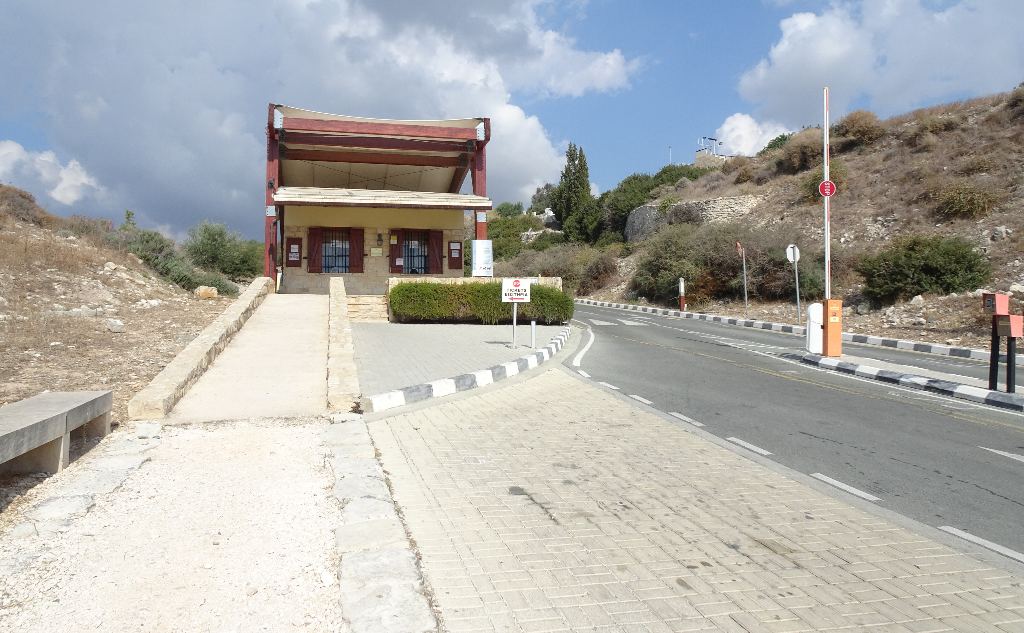
If you’re planning to explore Cyprus via public transportation, you can take bus line 16 from Archiepiskopu Makariou III Avenue in Limassol and go towards Kourion Beach.
The bus ride is about 40 minutes. From there, you will need to walk for less than 10 minutes to arrive at the Kourion archaeological site.
If you prefer to travel to Kourion hassle-free, consider booking a guided tour, as several tour operators organize daily tours to the archaeological site from Limassol and other cities.
Tip: There’s no shade, no food, and it’s a good day if you can get a drink vending machine to work here, so bring a hat and some water!
There’s evidence that the area of Kourion has been inhabited since Neolithic times, making it at least 4000 years old.
However, it became a prominent city-state in the 13th century BC when the Mycenaeans immigrated to Cyprus and established Kourion.
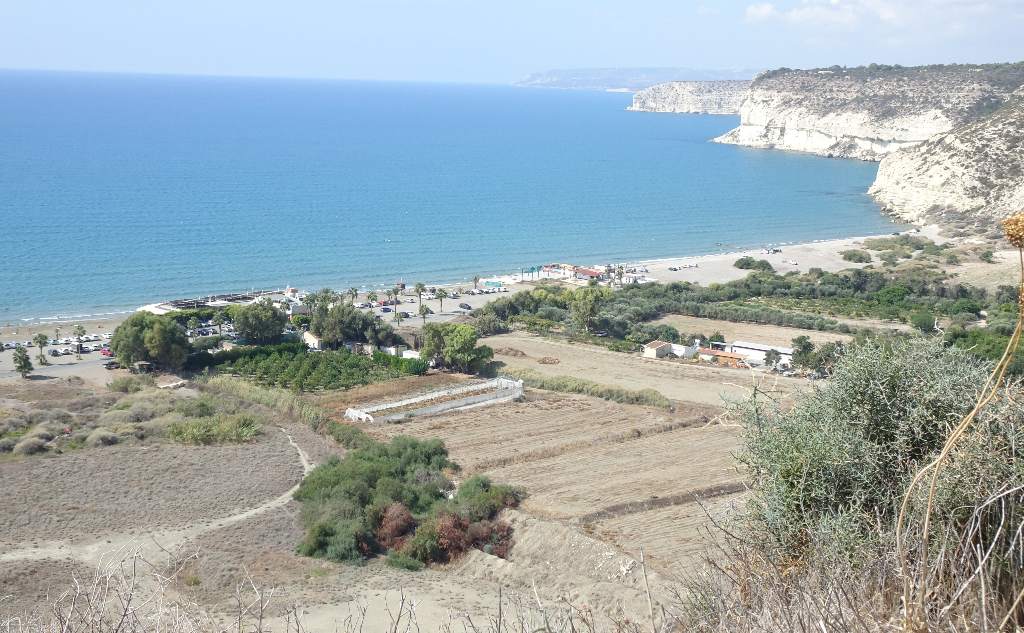
Kourion offered a strategic coastal location that Cyprus’ various colonizers and conquerors found appealing as, through the years, it became an essential hub for trade and commerce in the Eastern Mediterranean.
For instance, while exploring the ruins of this once-flourishing city-state, you’ll discover Hellenistic and Roman ruins, artifacts influenced by Phoenicians and Persians, and early Christian architectural finds.
Unfortunately, this powerful kingdom was severely damaged by massive earthquakes in the 4th century AD and then found its complete collapse in the 7th century due to the Arab raids.
Excavations in Kourion are still ongoing, but they have already revealed the kingdom’s rich and long history and significance in Cyprus.
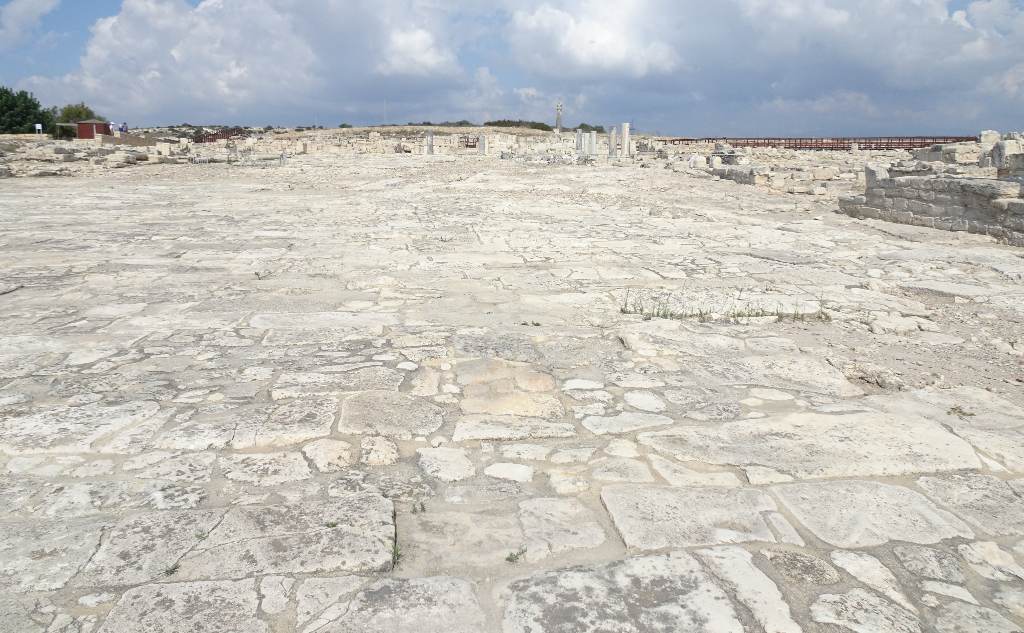
Here is a list of the main must-see attractions within the archaeological site.
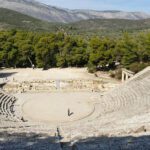
For many tourists, the most remarkable site within Kourion is the restored Roman theatre. What makes it impressive is its stunning coastal views rather than its structure.
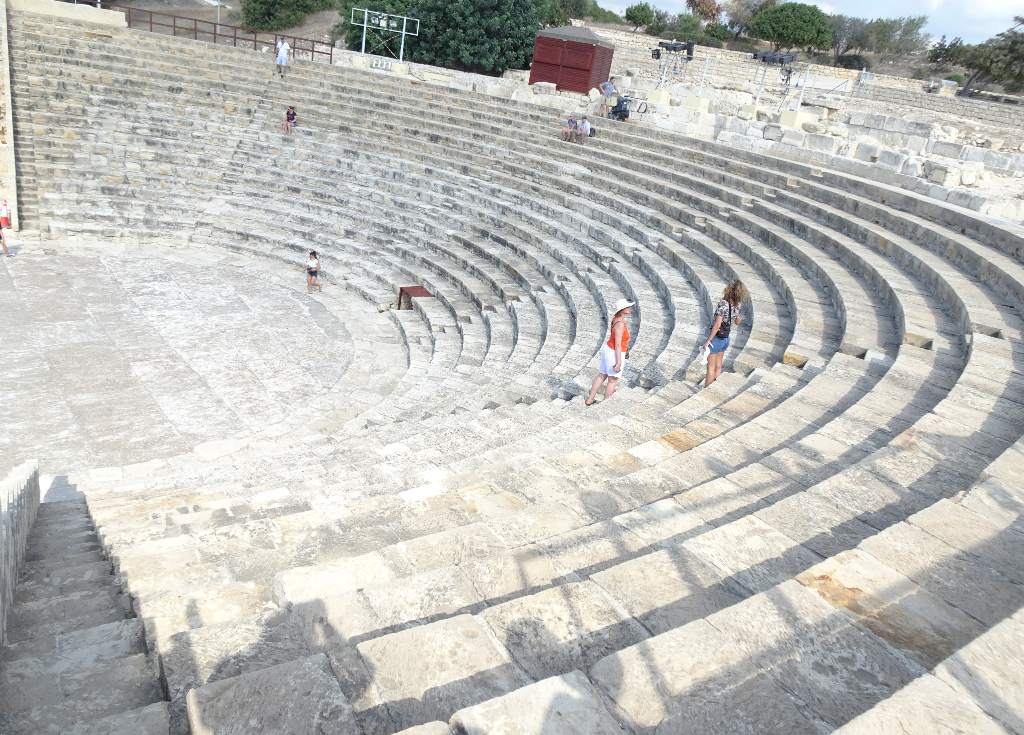
The theatre was built in the Hellenistic period but was then reconstructed in its present form by the Romans on the hill overlooking the Mediterranean Sea in the 2nd century AD.
Unfortunately, the theatre was destroyed during the seismic events in the 4th century AD that completely devastated the city, leaving intact only the foundations.
However, today, the theatre has been remodeled to its original form and is used for various cultural events and performances by Cypriot and Greek artists.
The Kourion Theatre is used as one of the venues for the International Festival of Ancient Greek Drama.
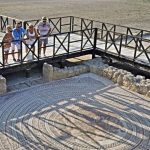
The House of the Gladiators is a Roman villa dating back to the 3rd century AD. Its name comes from its gladiator mosaics decorating the central courtyard.
I think this is the most impressive part of the whole complex.

The villa is home to two fairly well-preserved floor mosaics depicting gladiators.
One of the mosaics features two gladiators named Hellenikos and Margaritis practicing with weapons, and the other gladiators being separated by a referee.
Due to the villa’s flooring and wide space, it is believed it was an elite private residence or a public palaestra since it is built around a central peristyle courtyard.
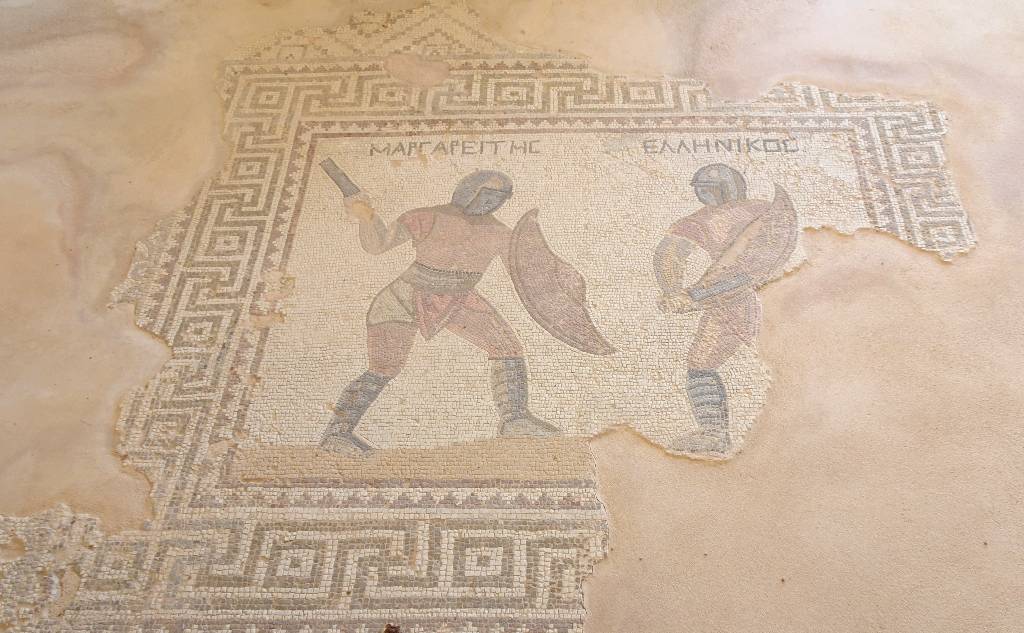
Like most buildings in Kourion, the structure was extensively damaged in the earthquakes in the 4th century, but some rooms seem to have been used until the 7th century before the Arab raids.
Just above the theatre on the southern cliffs of the ancient city, you’ll find the House of Eustolios, an early Roman complex that was extensively altered in the 3rd century AD.

Named after the builder of the complex, who was a Christian, the House of Eustolios features a communal space with mosaic floors depicting Eustolios, Christian motifs such as crosses, fish, and birds, as well as the non-Christian patron of the city, Apollo.
The complex is spacious, with more than thirty rooms, beautiful courtyards, baths, and a central pool.

According to finds, the complex was first an elite residence and was then converted into a public space.
Located in the northwestern part of the ancient city, the 4th century BC House of Achilles acted as the reception hall or residence to Kourion for official guests like imperial and provincial delegates.

Arranged around a central peristyle courtyard, the House of Achilles structure features mosaic pavements, with the most important depicting the scene of Achilles’s identity revelation to Odysseus in the court of King Lycomedes of Skyros and Thetis bathing Achilles for the first time.
The baths surround the Nymphaeum, a monument dedicated to spring nymphs that was later used as a temporary Christian church.
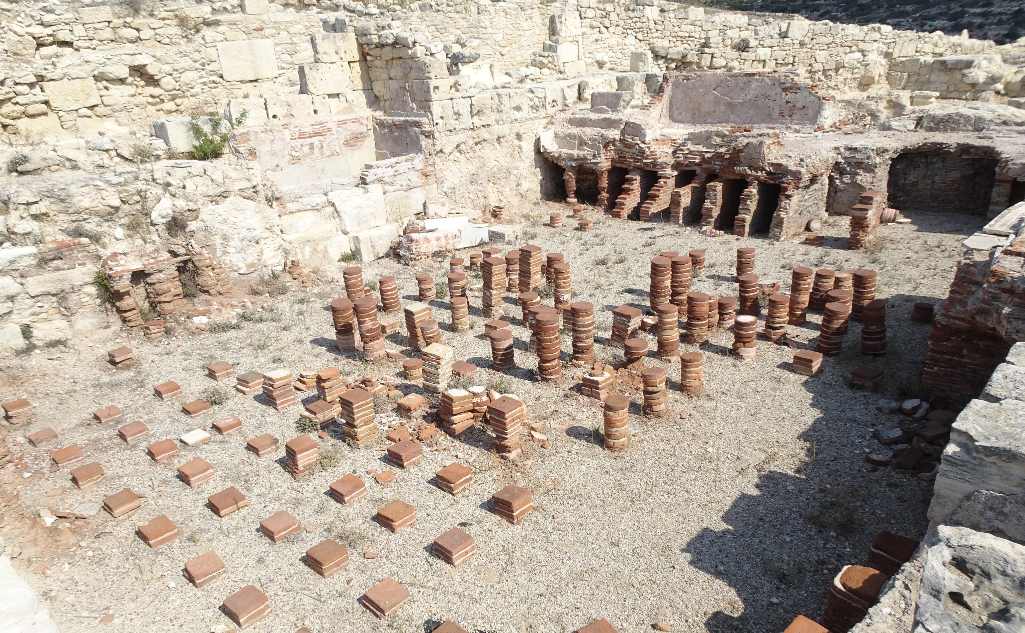
The baths are separated into the east and west wings by the Nymphaeum.
The eastern baths surround a central corridor, and until today, you can explore the remains of the various rooms, including cold baths (frigidarium), medium-heated baths (tepidarium), steam rooms (sudatorium), and hot baths (caldarium).
The western baths feature the remains of a series of axially aligned baths.
The ruins of this early Christian basilica in Kourion are one of the most important Christian monuments on the island.
Established in the 5th century AD, they’re some of the oldest church ruins in Cyprus and beyond.

The church features colorful mosaic floors, an atrium, and a baptistery.
As part of the complex, there was a narthex, a space for worshippers to place their offerings, a residence for the bishop, and a courtyard.

The basilica was abandoned in the 7th century after the Arab raids.
The Sanctuary of Apollo Hylates is 2 miles west of Ancient Kourion. Hylates was a god worshipped in Cyprus who was likened to the Greek god Apollo.
Dedicated to Apollo Hylates, the god of the forests, the temple is an ancient monument of worship, as according to inscriptions found in the area, it is believed that Apollo was the protector of Kourion.

The temple dates back to the eighth century BC, but evidence suggests that the worship of Apollo only began in the 3rd century BC and lasted until the 4th century AD, when Christianity started to overtake archaic beliefs.
In fact, on the site of Apollo’s sanctuary, there are remains from different periods, as you’ll notice various extensions and alterations.
For instance, the temple features a circular monument with cobbled floors, believed to have been used for processions and performances around the sacred tree garden during the Roman period.
Later, an archaic altar was added during the early Christian period.
The sanctuary also provided public baths for the athletes when they exercised, an arena, and a central courtyard surrounded by colonnades.
Kourion stadium lies between the Sanctuary of Apollo Hylates and Ancient Kourion. There’s a small free carpark in front of it.

Kourion’s stadium is the only excavated stadium in Cyprus, making it a significant archaeological find. It was constructed during the Roman period in the late 2nd century AD.
The stadium was 229 m long with seven rows of seating that could accommodate up to 6,000 spectators.
The stadium was abandoned in the latter half of the 4th century after the catastrophic earthquakes.
There are plenty more things to see at this large site. However, one of the best ways to understand this ancient city’s history is through the Kourion Museum.
The museum is at the village of Episkopi’s eastern edge, and its entrance is included in the ticket for Kourion. The ticket is only €4,50.
It is not open on weekends, and on weekdays it is open from 8 am to 3.30 pm.
☎️ Tel: +357 25 932 453
Kourion still celebrates Cyprus’ Hellenistic identity and the city’s fascinating history and culture through various events at the Kourion Theatre.
So, if you want to experience the ancient glory of Kourion in an immersive way, check for events happening in the Roman theater over the summer months.
🎫 Tickets for festivals at Kourion: https://www.greekdramafest.com/tickets/
There are other important archaeological sites outside of the Ancient Kourion archaeological zone that shouldn’t be missed.
The Penn Museum has a Digital Kourion collection that is worth taking a peek at if you’re interested in what was found during the excavations of Ancient Kourion:
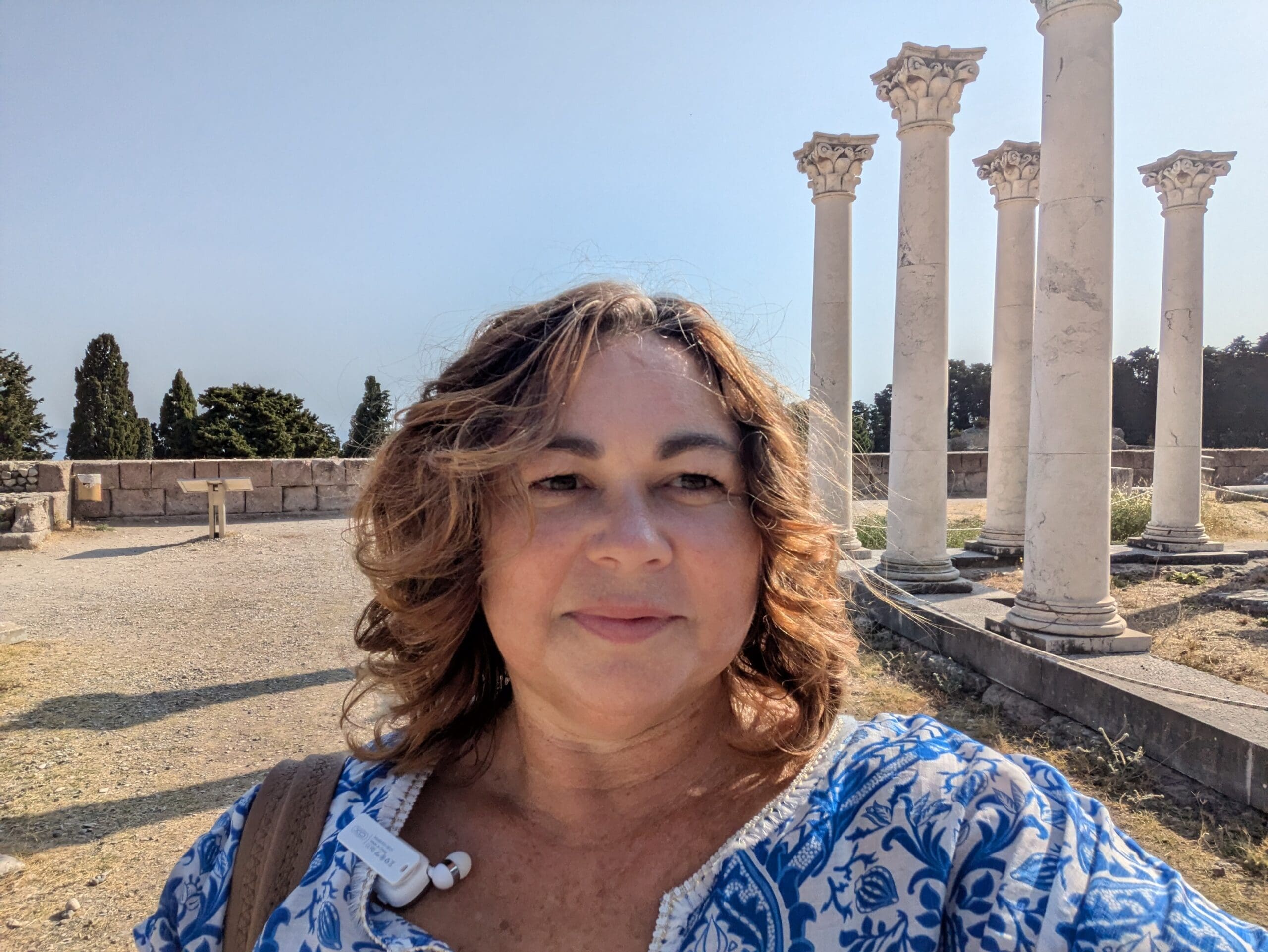
Dr. Monique Skidmore is an award-winning anthropologist and travel expert who has spent more than 25 years exploring and documenting cultures around the world. As the founder of Take Me To Europe Tours, she combines her deep academic expertise with a passion for cultural immersion and archaeology. Monique creates small-group journeys across Cyprus, Greece, Italy, Malta, and the wider Mediterranean.
On her small-group Cyprus tour, she visits Ancient Kourion, Salamis, and the island’s other great archaeological sites, and this guide draws on those visits as well as her own independent travels in and around Cyprus.
For more on her work and travels, visit her About Monique page.