
Meet the founder of Take Me To Europe Tours, our local distinguished archaeologists, and expert tour leaders.
Hi there! My name is Monique Skidmore. I have a passion for ruins and beaches – and preferably ruins perched above beaches! (And I like beach bars too…)
With my husband, Stephen Parker, we divide each year between the Mediterranean and our home in the mountains near Melbourne, Australia.
I’m a globally renowned anthropologist and Myanmar expert, and I’ve conducted deep, immersive fieldwork in several countries. I speak, read, and write four languages. For more information about my story and my career, including my books and TV appearances, see my About Monique page and my entry in Wikipedia.
Through Take Me To Europe Tours, I’ve fostered an expertise that goes beyond tourism. I love to share my experiences and the experiences of my local team that will make you fall in love with the beauty of the people, the landscape, and the food and wine of the hidden parts of Europe.
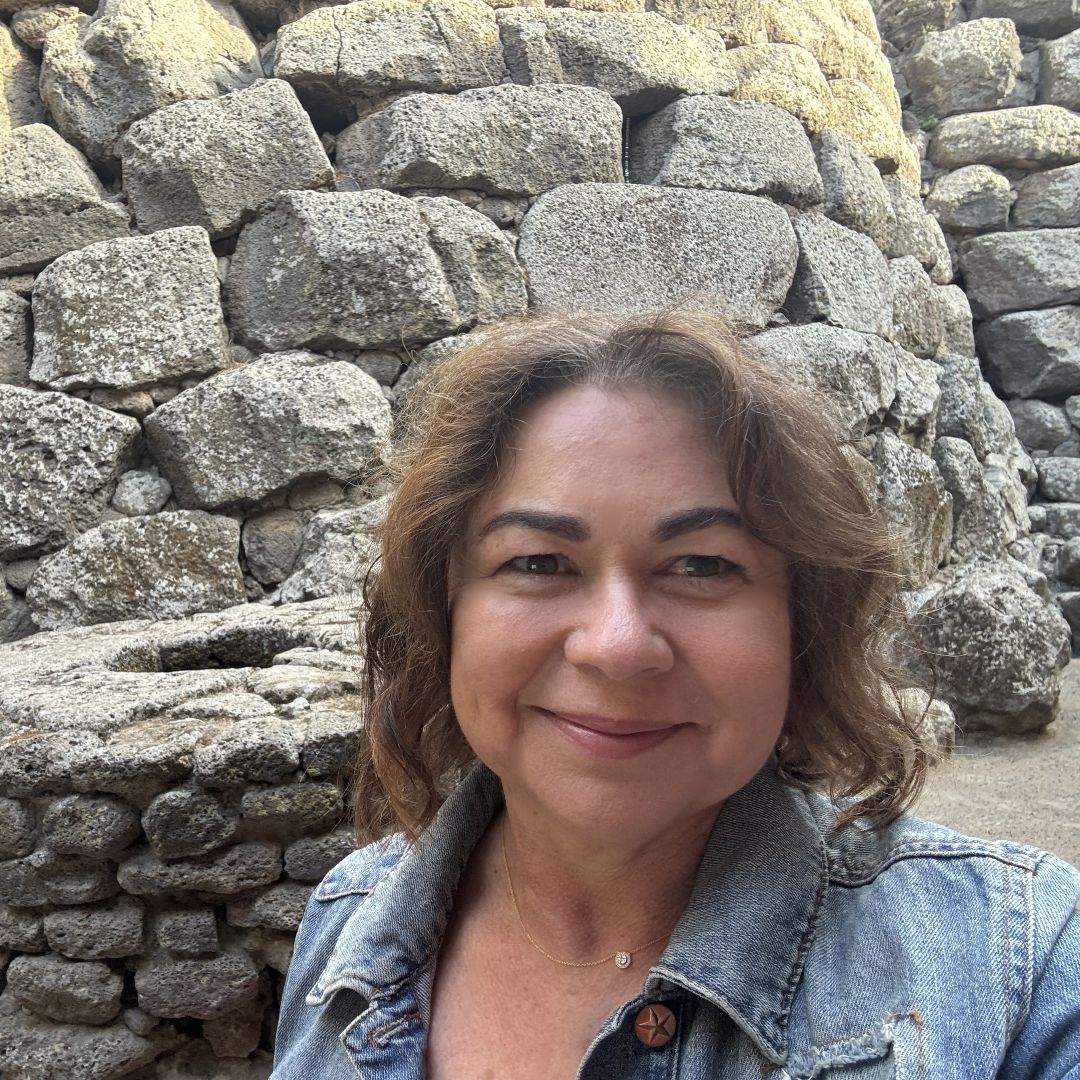
Professor Monique Skidmore and her team of eminent local archaeologists and tour leaders guide small groups through Greece, Malta, Italy, Corsica and Cyprus. Over thousands of years these islands and coasts were settled, traded with and fought over, and the remains of those peoples are still there to see.
Greece, Malta, Sardinia, Sicily and Cyprus lie where Europe, Africa and Asia meet. Unknown prehistoric peoples, Phoenicians, Punics, Mycenaeans, Minoans, Egyptians, Romans, Byzantines and Crusaders all lived or traded here, and their influence shows in the architecture, food and daily life of each place today.
You might stand among ancient temples, visit UNESCO World Heritage sites such as the Tombs of the Kings in Paphos, or eat fresh local food by the sea. Our Cyprus Tours, Greece Tours, Italy Tours, Corsica Tours, Malta Tours and Multi-Country Mediterranean Tours are built around the history, archaeology and cosmopolitan character of the Mediterranean.
Our local archaeologists and guides know these sites from years of fieldwork, and they explain them clearly on the ground. You’ll also meet local people over meals and visits, and see how the past still shapes life here.
Many of our tours can be combined into a longer trip. Along the way you can swim in clear water, visit ancient sites without the crowds, and walk the old streets of historic towns and cities.
If you have any questions, please get in touch or book a one-to-one call with our founder, Monique Skidmore. You don’t need to know any history before you come. Our tours are for curious travelers who want an interesting holiday, good food and wine, like-minded company and no stress over the arrangements. And if you would like to dig something up yourself, we offer dig experiences too.
Our tours are for travelers who want to see Europe’s great historical and archaeological sites without the crowds, with local archaeologists and guides who know them well. We handle every detail, so you can enjoy the sites, the food and wine, and comfortable, carefully chosen hotels.
Our tours are fully escorted. An eminent local archaeologist accompanies you to every archaeological site, and one of our tour leaders travels with you for the whole tour.
Many tour operators cover the best-known routes across Europe. We focus on the Mediterranean and the Megalithic world, the crossroads that shaped Western civilization. That focus gives us close links with local archaeologists, and access to UNESCO World Heritage sites and lesser-known places that wider European tours rarely include.
Local people welcome our groups and share what matters to them, from the frescoes of painted monasteries to family recipes. You might taste fruit from the orchard, eat fish caught that morning beside a quiet cove, and visit ruins that have stood for thousands of years.
We take a maximum of 12 travelers, which means more time with our archaeologists and access to sites and experiences that larger groups can’t reach. Tours include carefully chosen boutique hotels, private transport and expert guiding throughout.
Professional archaeologists explain what you are looking at and what it tells us about the people who built it.
Enjoy local specialities and regional wines, and learn how Mediterranean food and wine traditions developed, often with hands-on experiences.
Follow the region’s turbulent history through its historic cities, architecture and museums.
Some tour companies bring in outside lecturers. Our archaeological guides are locals who have spent their careers working in these landscapes, and they have excavated the sites themselves. Our Cyprus archaeologist has excavated in Cyprus since 1977, including work at the Aceramic Neolithic site of Kalavasos-Tenta and Late Bronze Age tombs at sites such as Ayios Dhimitrios. Our Malta guide excavates at Malta’s major prehistoric sites when not teaching at the University of Malta. Our Greek team includes archaeologists whose research has added to what we know about Minoan and Byzantine colonization of the Mediterranean.
Our partnership with the Greek Mycenaean Foundation gives us behind-the-scenes access to sites such as Mycenae, hands-on archaeological experiences, and themed tours in Greece that we design together.
Many archaeological tour companies take groups of 16 to 18. We take no more than 12. You get more time with our archaeologists, we can visit smaller sites, and there is room for discussion and questions at every stop.
We work only in the Mediterranean, so our knowledge of the region runs deep. We know how Phoenicians, Romans, Byzantines, Ottomans, Crusaders and Egyptians moved across these waters, and we show you the layers of culture they left behind.
With a small group, discussion happens naturally as we walk around a site. There are no long morning lectures to a crowd. We can stop at whatever catches your interest, follow up your questions and talk about what we are seeing.
We are an independent company, and running tours is all we do. Our local archaeological team plans every tour. We can adapt to your interests, spend longer at sites that fascinate you, and give you the personal attention that is hard to find with a large organization.
We are members of Responsible Travel, and we want our tours to support the communities where we work. We hire local archaeologists and guides first, which supports universities and archaeological programs in Cyprus, Malta, Italy and Greece. Your trip helps fund the people who study and look after these sites.
We are a young company and do not run decades-old scripted tours. Our guides bring current research and recent discoveries to every tour, and we add new excavations and exhibitions as they open.
Our guides are part of the archaeological community in each destination. They know, and in some cases are, the site directors, conservators and researchers working there today, so you hear from the people who are excavating and protecting these sites now.
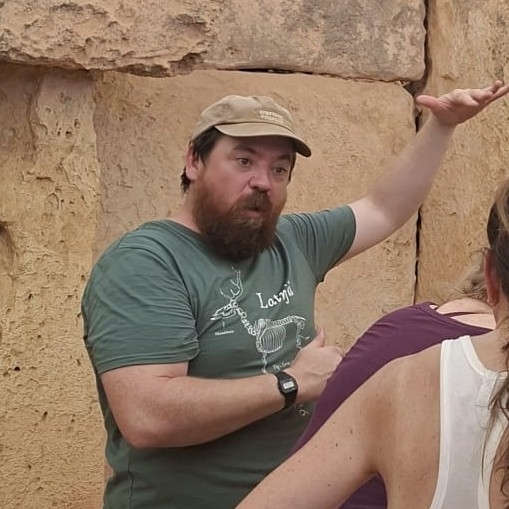
Internationally renowned Malta-based Welsh archaeologist, Dr Huw S. Groucutt, specializes in the intersection of climate change and human prehistory. He currently digs at two sites in Malta and is a lecturer in Mediterranean prehistory. Trained at Sheffield (BA Archaeology, MSc Palaeoanthropology) and Oxford (DPhil Archaeological Science), he investigates how environmental shifts influenced human evolution and cultural development.
His research uses stone tool analysis to understand human adaptations across the Mediterranean, Southwest Asia, and Northern Africa. With fieldwork experience spanning Malta, Arabia, and Senegal, Dr Groucutt explores how prehistoric communities responded to environmental challenges throughout the Quaternary period.
Dr Elena Soulioti is a specialist in Aegean Bronze Age and Minoan archaeology with a PhD from Durham University on the social role of Minoan symbols. For more than 25 years, she has combined cutting-edge research with inspiring on-site storytelling as a licensed Greek tour guide throughout mainland Greece and the islands.
Elena’s research focuses on the intersection of material culture, symbolism, and religious practice in Bronze Age Aegean societies, especially the Minoans. She has presented at international conferences in Greece and the UK on topics such as Minoan religious symbols, the “sacred knot,” and semiotic approaches to ancient imagery.
Her fieldwork includes major Minoan sites across Crete, with three seasons at the Palace of Zakros, studies at the Makrygialos Minoan Villa, and extensive work on unpublished pottery in the museums of Heraklion and Aghios Nikolaos. Beyond Crete, she has participated in projects from the Neolithic site of Dispilio in northern Greece to the Epidaurus Limera surface survey in Laconia, a direct link to the landscapes explored on Peloponnese itineraries.
Elena graduated from the National School of Tourist Guides in Athens and has worked as a licensed professional guide across Greece since the late 1990s, guiding in Greek, English, Spanish, and German. Over nearly three decades she has designed and led highly specialised tours for universities, alumni groups, schools, cultural associations, agrotourism and economic-life programs, ANZAC and modern history tours, as well as bespoke family and small-group journeys.
She has served as Vice President and Secretary of the Association of Tourist Guides in Athens, organising multi-day training seminars and educational excursions that help other guides stay current with new archaeological discoveries and interpretive approaches. Elena also collaborates with the Municipality of Athens and leading museums to offer free public guided tours of sites and collections such as the Archaeological Site of Aristotle’s Lyceum and the Museum of Cycladic Art, where her narratives make the city’s layered past accessible to a wide local and international audience.
Elena’s tours are characterised by clear, engaging narratives that connect archaeological evidence with myth, philosophy, and everyday life, always tailored for an intelligent general audience. Guests frequently comment on how she weaves complex historical and philosophical themes into vivid stories that make sites feel alive without overwhelming them with jargon.
Her passion for education extends beyond the road: she has organised interdisciplinary workshops on symbolism, contributed to conferences on cultural tourism, and even created radio-style “guided tour” broadcasts for Greek audiences. These activities reflect her belief that a guide is an “invisible ambassador” of Greece, responsible not only for accurate information but also for creating meaningful, human experiences of place.

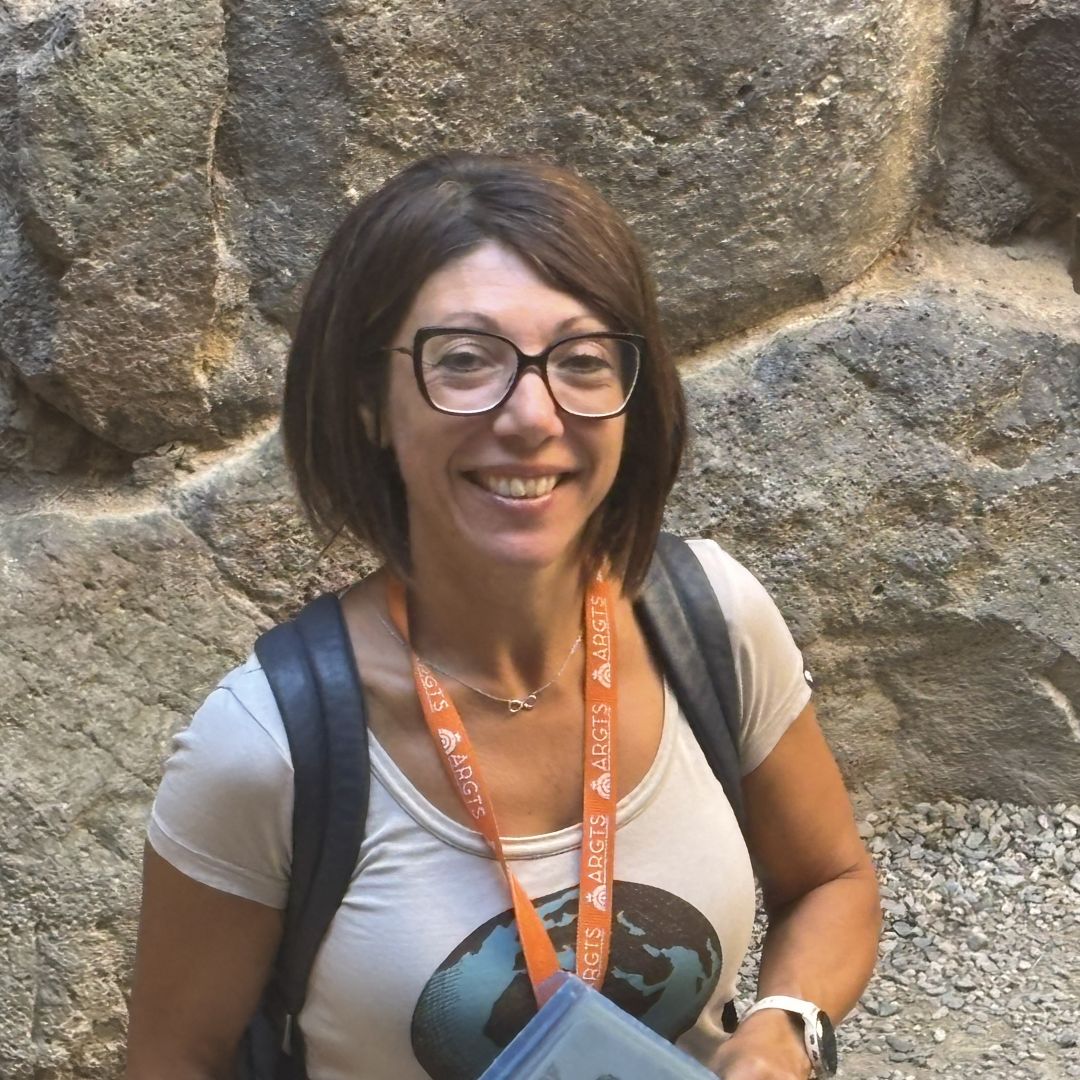
Dottore Sedda is a specialist in the prehistory of Sardinia with an M.A. (Dottore Magistrale) in Classics and Archaeology as well as a Postgraduate specialization in Archaeology, both from the University of Cagliari.
Laura has excavated at prehistoric sites across the island, including the Neolithic village of Su Coddu in Selargius (CA), and three different nuraghes: Nuraghe Su Mulinu, Villanovafranca; Nuraghe Sa Reggia, Burgos; and Nuraghe Asusa, Isili. She continues to practice archaeology and has been an accredited tour guide since 2010.
🏛️ Sardinia Tour: Guardians of the Nuragic Legacy, Historic Cities & Island Culture
🏛️ Sardinia and Corsica Tour: Civilizations of the Tyrrhenian Sea
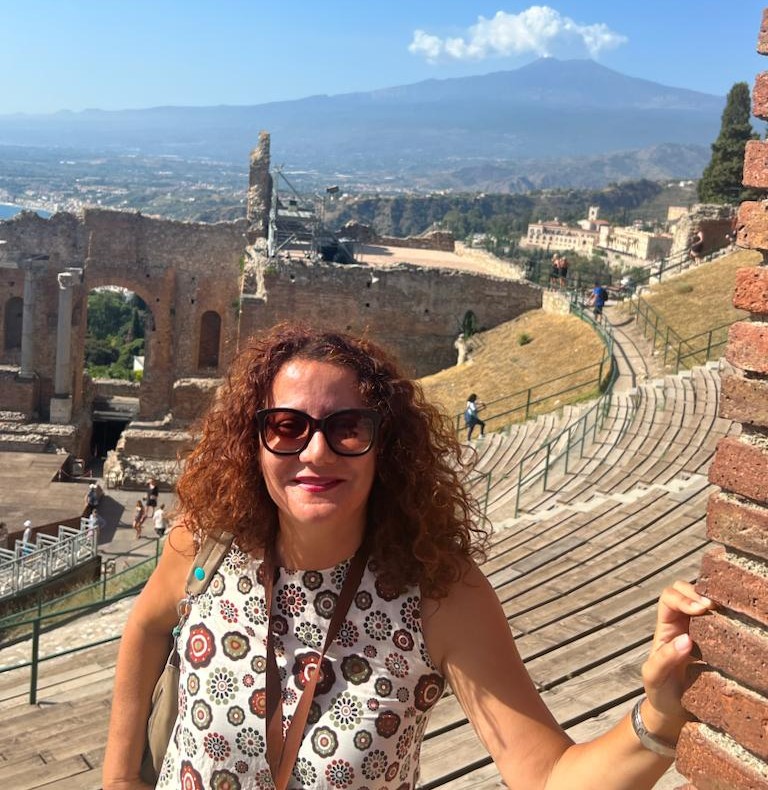
Dr Annalisa Costa is a Sicilian archaeologist and licensed regional tour guide. Born and based in Sicily, she combines advanced academic training with years of field experience.
Annalisa holds multiple degrees in archaeology from La Sapienza University in Rome and the University of Milan, where she specialised in prehistoric developments in the Ancient Near East. She went on to conduct her PhD research at the University of Trento, focusing on pottery production techniques and experimental archaeology, and has contributed to projects on firing pits, ceramic technology, and prehistoric material culture. Her academic work includes collaborations with universities, museums, and cultural institutions across Italy and Europe, reflecting a career firmly rooted in ongoing research.
In the field, Annalisa has taken part in numerous excavation campaigns in Italy and abroad, including projects in Turkey and Switzerland. She has also studied rock art engravings at Valcamonica, one of Italy’s UNESCO World Heritage sites, deepening her expertise in how ancient communities used landscape and imagery to express belief and identity.
As a guide, Annalisa leads small-group and private tours around Sicily, particularly in and around Catania and Taormina, where Greek, Roman, medieval, and modern layers of history overlap. Guests consistently praise her warmth, clarity, and ability to make complex archaeological topics accessible and memorable.
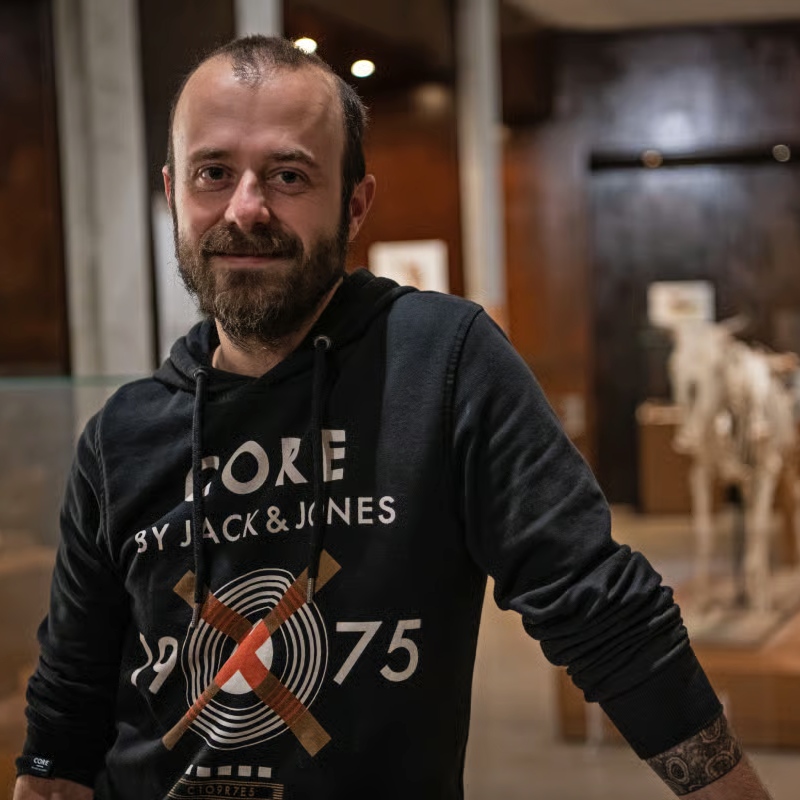
Dr Kewin Pêche-Quilichini is a Corsican archaeologist and specialist in the prehistoric archaeology of Corsica and the western Mediterranean. Born in Ajaccio and based in Corsica, he has devoted much of his career to understanding the island’s Bronze Age and Iron Age communities through archaeological excavation, research, and the study of their material culture.
Kewin holds a PhD in Prehistoric Archaeology from Aix-Marseille University, completed through a joint research programme with La Sapienza University of Rome. His doctoral research focused on the pottery of Corsica during the Bronze Age and Early Iron Age, and he subsequently undertook postdoctoral research with the Archimède research programme at the University of Montpellier. His academic work has concentrated particularly on the societies of Corsica, Sardinia, and the western Mediterranean between the Bronze Age and the Early Iron Age.
His expertise is grounded in extensive archaeological fieldwork. Through his work with France’s Institut national de recherches archéologiques préventives (INRAP), the Corsican archaeological service, universities, and research institutions, Kewin has participated in and directed excavations at numerous prehistoric sites across Corsica. He has been responsible for archaeological investigations at sites including Cuciurpula, Cucuruzzu, Nuciaresa, Monti Barbatu, and Puzzonu, making him particularly knowledgeable about the prehistoric settlements, fortifications, ceramics, and everyday lives of Corsica’s ancient communities.
Kewin is also closely involved in the interpretation and preservation of Corsica’s archaeological heritage. Since 2021, he has been Director of the Musée de l’Alta Rocca in Levie, at the heart of southern Corsica’s archaeological landscape. The museum brings together some of the most important archaeological discoveries from the Alta Rocca and provides a setting in which his research and field experience connect directly with the island’s cultural heritage.
For guests of Take Me To Europe Tours, Kewin brings something particularly special: an archaeologist whose research is not simply about Corsica, but has been shaped by years of working on the very sites and landscapes we explore.
 Corsica Tour: From Standing Stones to Napoleon
Sardinia and Corsica Tour: Civilizations of the Tyrrhenian Sea
Professor Christofilis Maggidis is a Greek archaeologist, President of the Mycenaean Foundation, and Field Director of the Lower Town Excavations at Mycenae. Since 2001, he has led archaeological excavations investigating the extensive settlement that lay beyond the famous Cyclopean walls of Mycenae, giving him an exceptional first-hand knowledge of one of Greece’s most important Bronze Age sites.
Christofilis holds a PhD in Classical Archaeology from the University of Pennsylvania and completed postdoctoral research at Brown University, following his undergraduate degree in Archaeology and History at the University of Athens. His research focuses on the Minoan and Mycenaean civilizations, including architecture, pottery, religion, burial practices, political organization, trade, and contacts between the Aegean and the wider Mediterranean.
His archaeological career began in 1985 and has taken him to many of Greece’s most important prehistoric sites. He has worked at Akrotiri on Santorini, the Idaian Cave and Archanes in Crete, the Mycenaean citadel of Glas in Boeotia, and Mycenae in the Peloponnese. At Mycenae, his long-running excavations in the Lower Town have revealed new evidence about the size, organization, and development of the settlement beyond the citadel, offering a broader understanding of the people and communities who lived at this powerful Bronze Age centre.
Christofilis has also directed archaeological and geophysical research at the Mycenaean citadel of Glas and in the Spercheios Valley. His work combines archaeological excavation with modern survey and geophysical techniques, allowing researchers to investigate ancient structures and landscapes that are not visible on the surface.
For guests of Take Me To Europe Tours, Professor Maggidis offers a rare opportunity to explore Mycenae with an archaeologist who has directed excavations there for more than two decades, and he gives us special ‘behind the rope’ access to this blockbuster site.
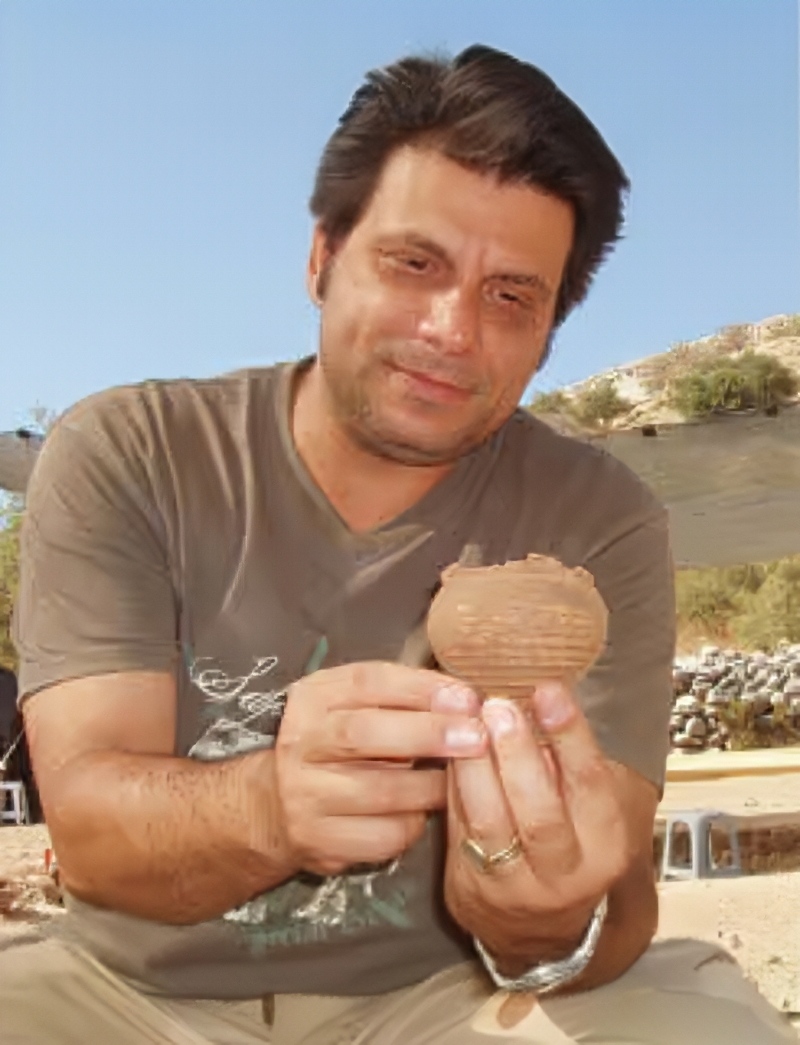

David Pearlman is an archaeologist with nearly five decades of field experience across Cyprus and the wider Mediterranean, combining scholarship with a lifelong passion for exploring landscapes on foot. He holds a B.A. in Classics from the University of Cincinnati (1980) and an M.A. in Archaeology and Soil Science from the University of Minnesota (1984), and has been at the heart of some of Cyprus’s most important excavation and survey projects since the late 1970s.
David’s fieldwork began in 1976 on the multinational excavation of the prehistoric settlement at Kastellatio in Sicily’s Belice Valley, followed in 1977 by Brock University’s excavation of the Late Bronze Age temple site at Larnaca‑Kition in Cyprus. For nearly a decade (1978–87) he served as supervisor of the Vasilikos Valley Project, excavating Neolithic and Bronze Age settlement and cemetery sites at Kalavasos and contributing to the publication of this key aceramic Neolithic and Bronze Age landscape.
From 1980–84, he held leadership positions with the Canadian Palaipaphos Survey Project, serving as crew leader and ethnographic consultant as the team systematically mapped four western river valleys and identified more than a hundred new sites. His expertise was also sought at major archaeological sites across Cyprus, including Kissonerga‑Mosphilia, Peyia‑Maa‑Paliokastro, Pyla‑Kokkinokremmos, and Hellenistic/Roman tomb rescue excavations at Kato Paphos ahead of modern development.
Since 2004, he has worked as a freelance guide and excursion architect all over Cyprus, and today leads small‑group archaeological and historical journeys. A veteran of hundreds of overland excursions and trekking expeditions, and the author of several articles and documentary scripts on Cypriot archaeology, landscapes, and tourism, he describes himself as a “hunter‑gatherer of off‑the‑beaten‑track exploration experiences,” always looking for new ways to open “the right doors for sophisticated travellers to walk through.
On tour, David weaves together archaeology, geology, environment, and everyday Cypriot life, moving easily from Bronze Age tombs and Neolithic round houses to modern farming, village coffee‑house politics, and the practical realities of living on a divided island.

Experienced Cypriot tour guide, Eleni Ellinas was born in Famagusta in what is now Northern Cyprus and has curated private walks of the border zone of Cyprus for several years now. Here’s Eleni’s perspective on the authenticity she brings to Take Me To Europe Tours:
“My purpose is simple yet profound: to provide you with an insider’s perspective of Cyprus. Together, we’ll embark on a journey that allows you to perceive our island in a way few get to experience. Like many avid travellers, I yearn to uncover the hidden paths, to immerse myself in the essence of the places I visit. My passion extends to engaging with locals, exploring their cuisine, traditions, culture, and history – all integral components of a truly authentic experience.”
Eleni’s community involvement includes her work with Home for Cooperation (H4C), a community center situated in the UN buffer zone, which is the dividing line between the Greek Cypriot and Turkish Cypriot communities.
If you’re lucky, Eleni will show you the apartment on Palm Beach in Varosha that her family fled during the Turkish occupation in 1974. We feel extremely lucky to have such a warm, intelligent, and genuine human being as Eleni as our primary Cypriot tour leader.

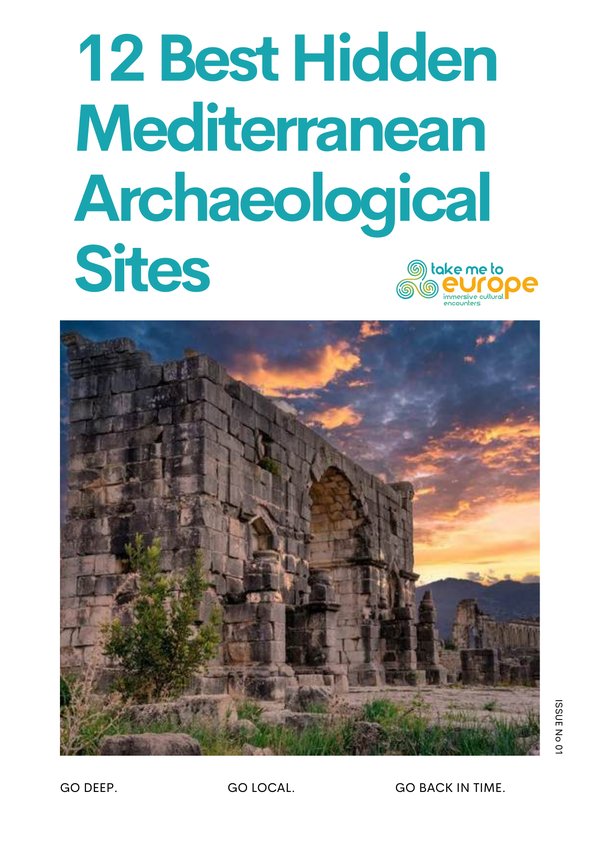
Free 16-page guide
Written by archaeologists. Submerged Roman villas, underground cities and abandoned Greek quarries –, with maps, access details and what to see at each.
One email a week. Unsubscribe anytime.