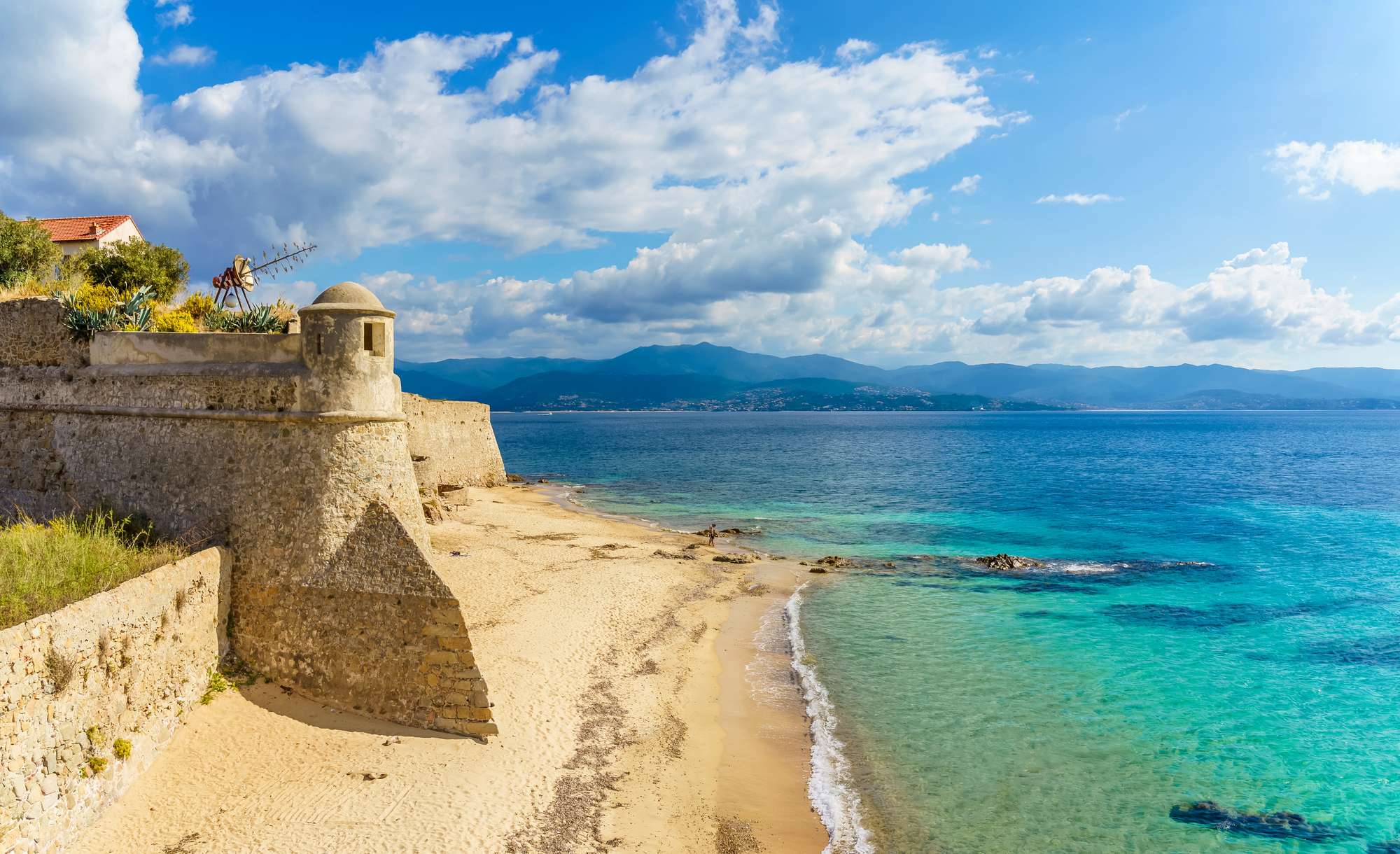
Twenty thousand years ago, Sardinia and Corsica were a single island. The sea has risen between them, and people have been crossing it ever since. Bronze Age builders raised stone towers on both sides of the strait, and every power that sailed the Tyrrhenian, from the Phoenicians and Greeks to Rome and Genoa, came for one island or both. On Day 10, we cross that strait by ferry, the same crossing Corsica’s first settlers made eleven thousand years ago.
Join our expert-led Sardinia and Corsica archaeology and history tour and follow two islands that have shared one sea for thousands of years. We begin in Cagliari and travel north through Sardinia to Olbia, then cross by ferry from Santa Teresa Gallura to Bonifacio and continue north through Corsica to Bastia.
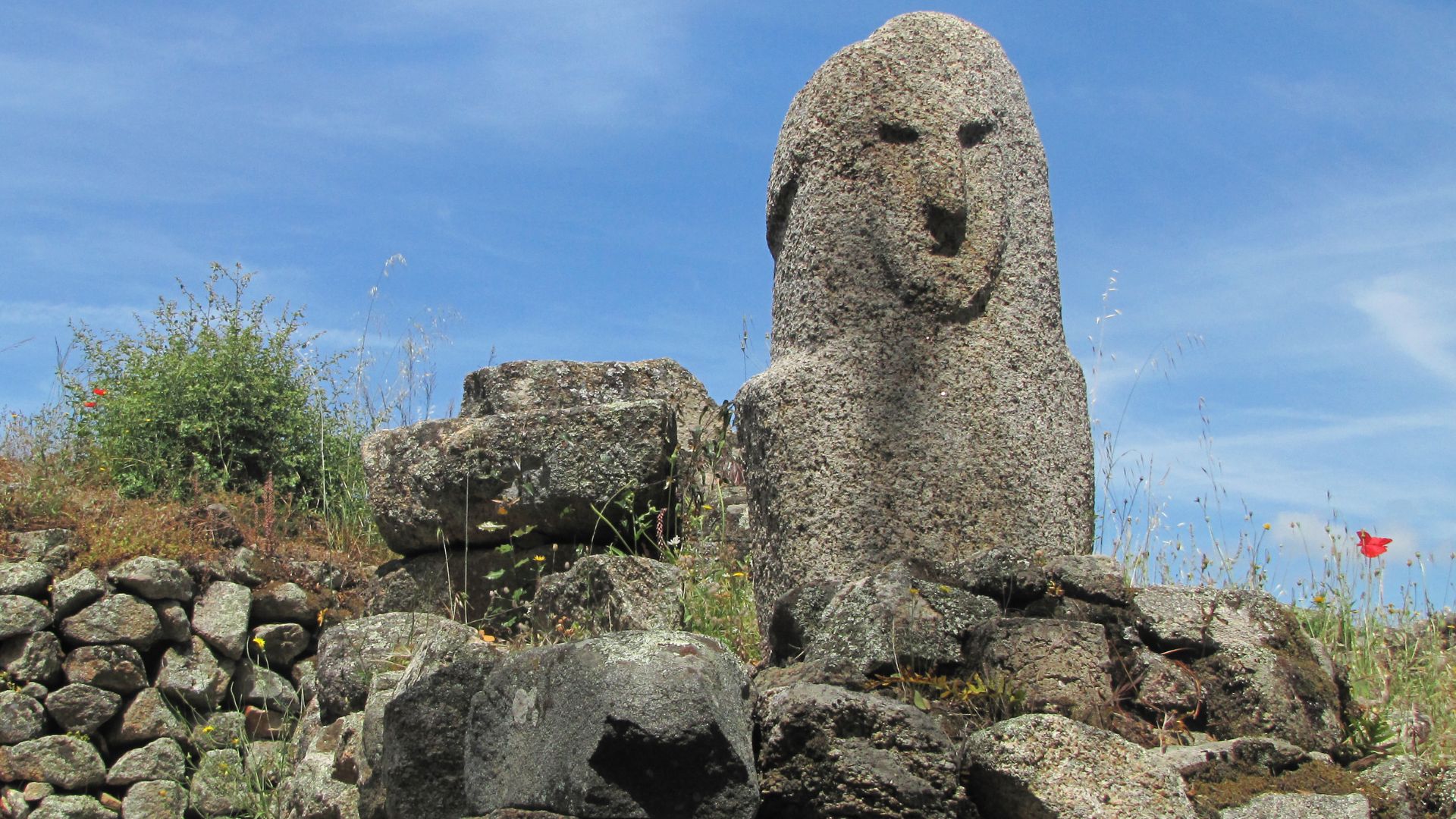
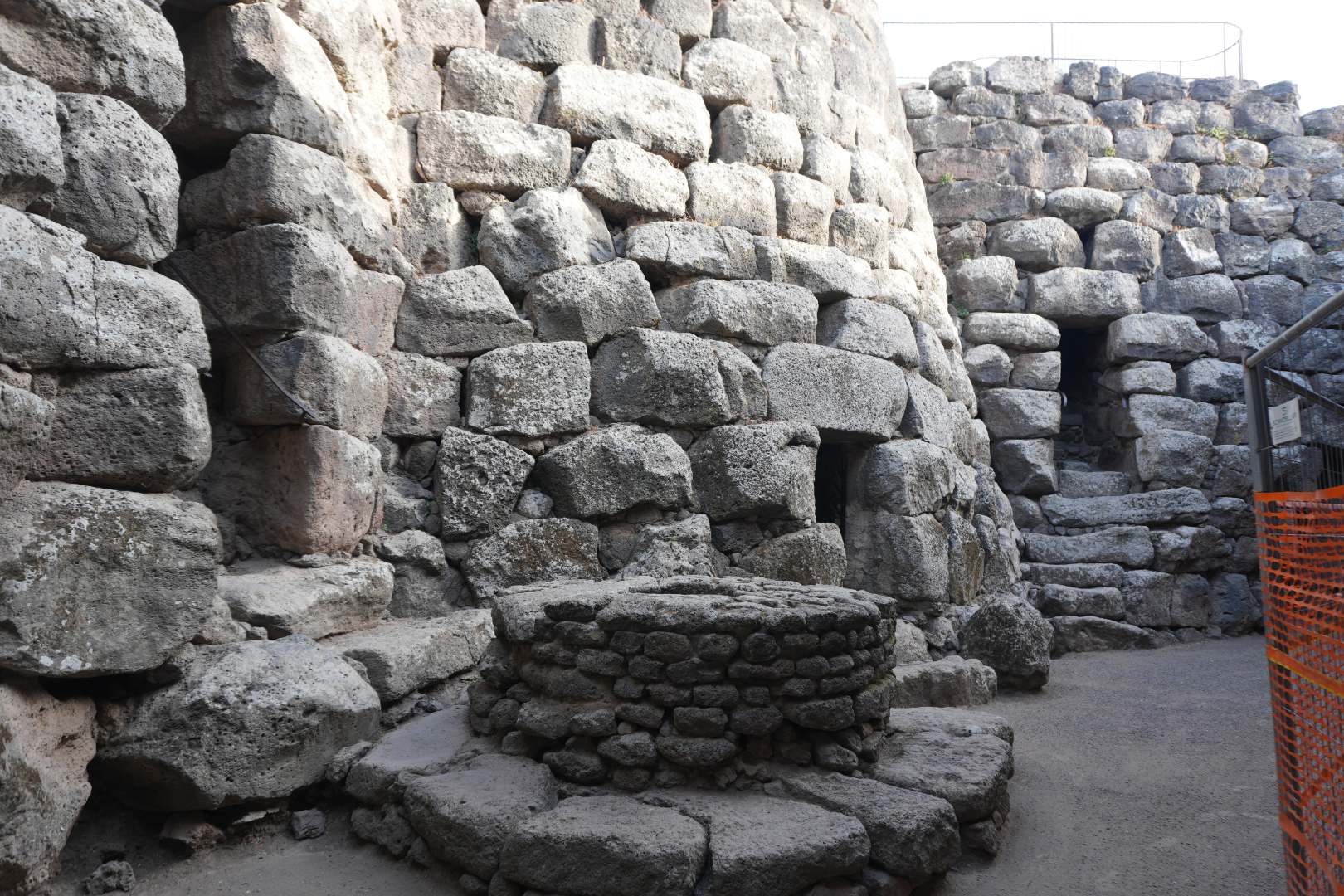
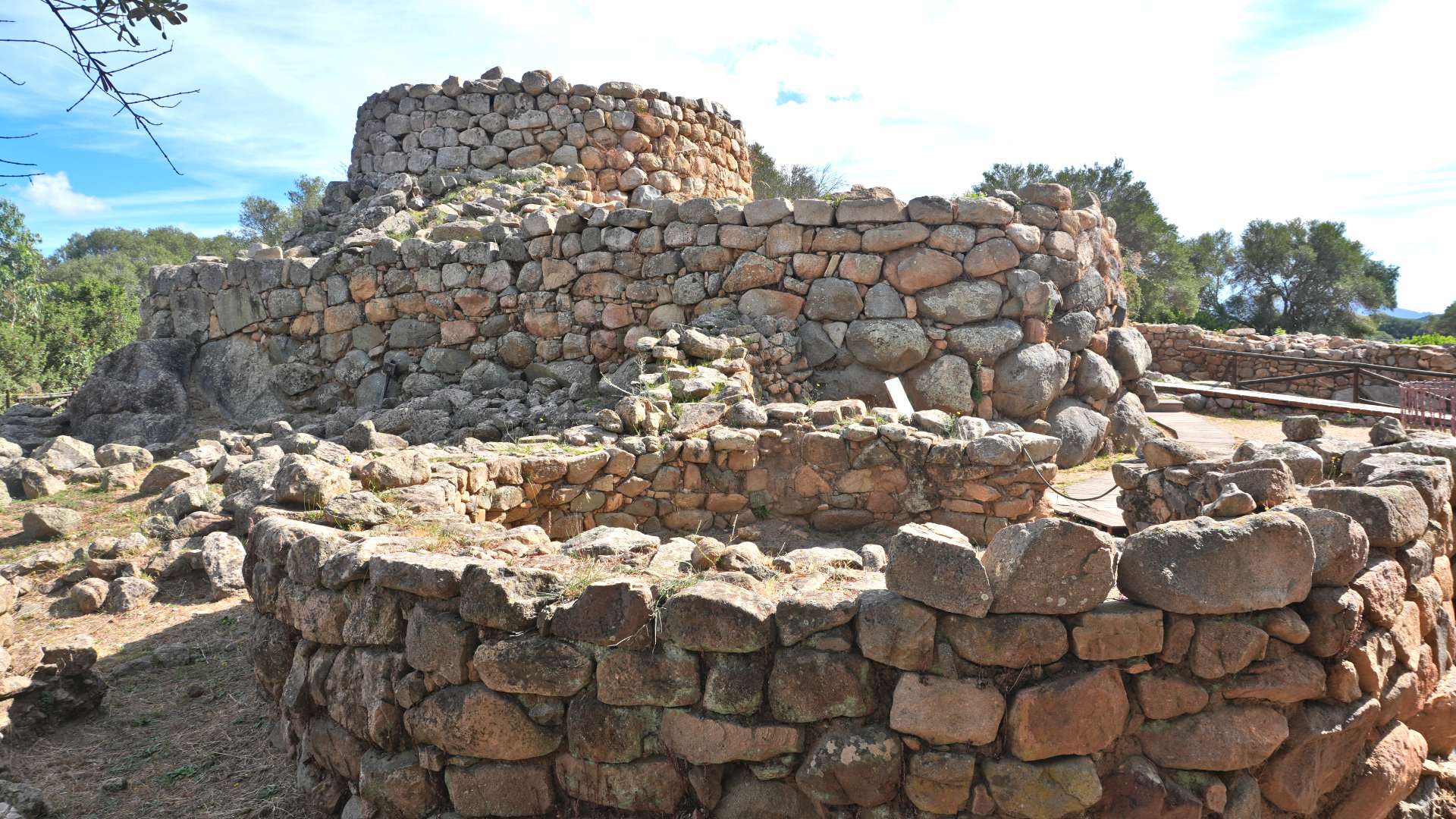
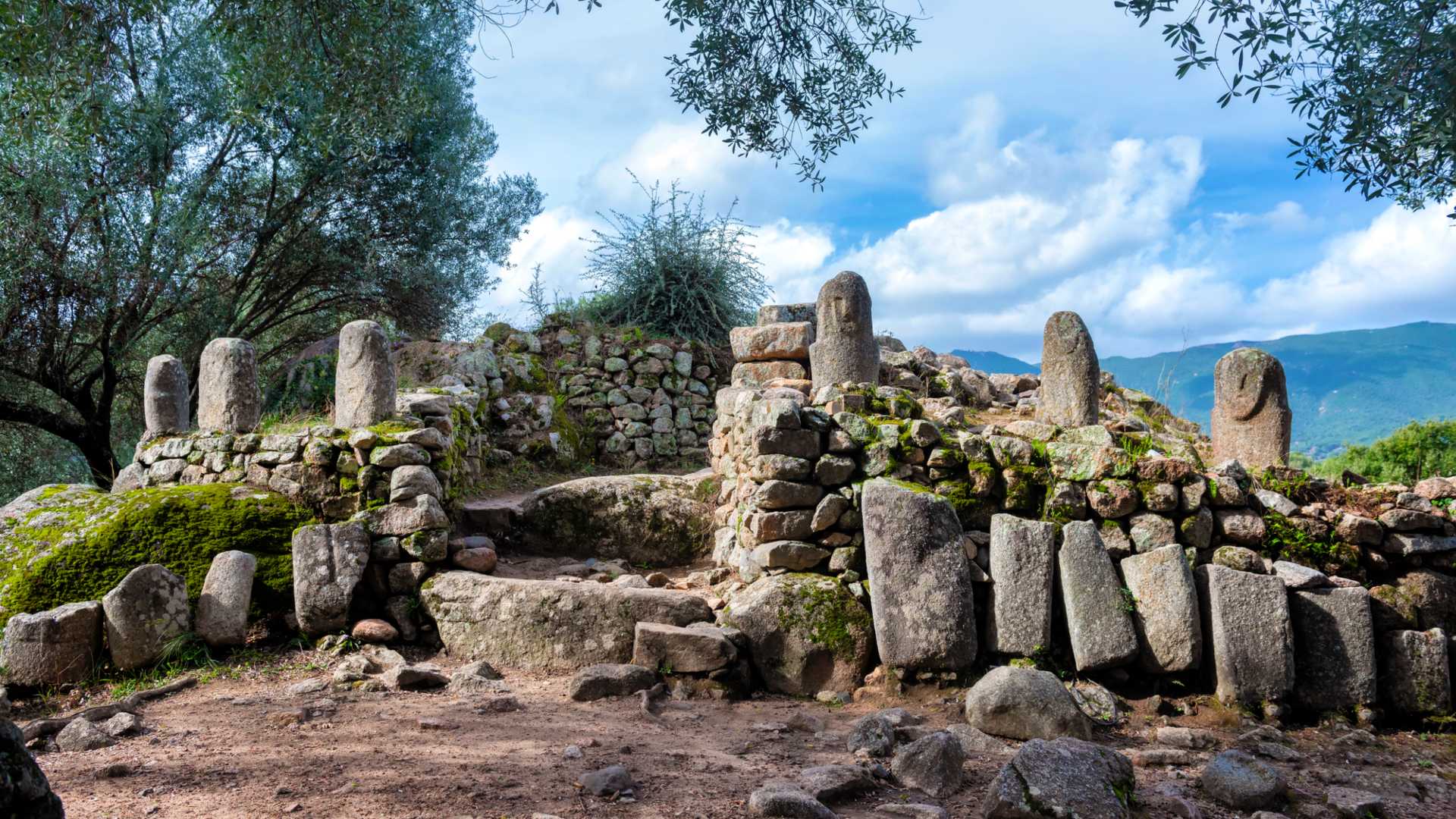
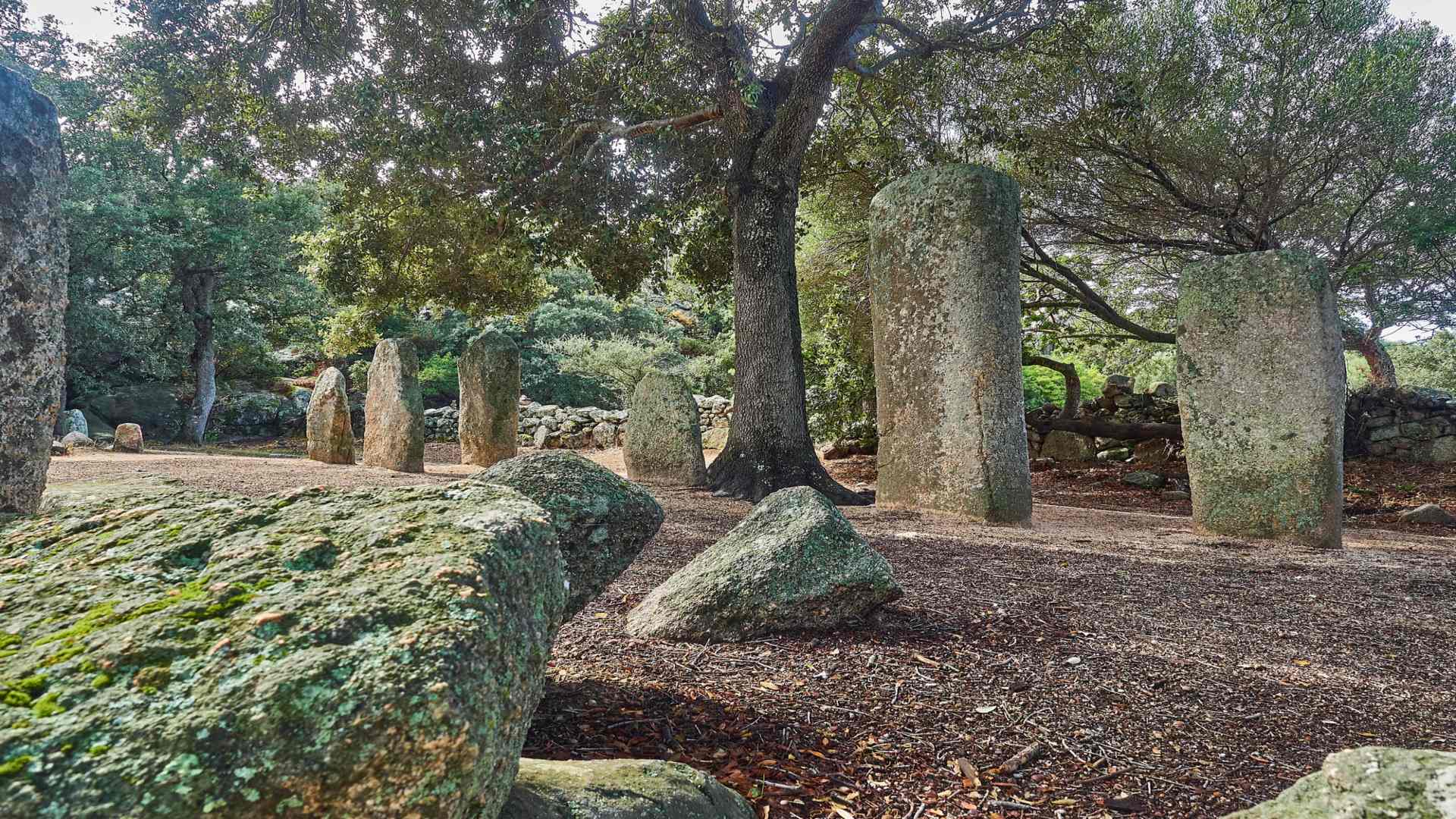
During the last Ice Age, when sea levels were lower, Sardinia and Corsica were joined as a single landmass, and they have shared much of their history ever since. Corsica’s first people came from Sardinia, and Neolithic traders carried Sardinian obsidian north. In the Bronze Age, the islands followed related but distinct paths: the Nuragic civilization in Sardinia, with its towers, Giants’ Tombs, and sacred wells, and in southern Corsica, the Torrean towers and the warrior statue-menhirs of Filitosa, carved from standing stones first raised in the Neolithic.
The Tyrrhenian takes its name from Tyrrhenoi, the Greek name for the Etruscans, and Phoenicians, Greeks, Etruscans, Carthaginians, and Romans all settled or fought along these coasts. Rome governed both islands as a single province, Sardinia et Corsica, and in the Middle Ages, Pisa, Genoa, and Aragon fought over them both.
In Sardinia, your archaeologist-guide is Dottoressa Laura Sedda, a specialist in the island’s prehistory. In southern Corsica, it is Dr Kewin Pêche-Quilichini, whose research covers the Bronze Age societies of both Corsica and Sardinia. Each island explains the other.
Should you have any questions about this tour, please don’t hesitate to get in touch with our team.
A Comprehensive Itinerary: You experience the key archaeological periods of both islands, from the Neolithic and the Bronze Age to Phoenician-Punic, Greek, Roman, and medieval times, each in its geographic and historical setting as we travel from south to north.
Famous and Less-Visited Sites: Visit Su Nuraxi, Tharros, Mont’e Prama, and Filitosa, as well as sites many tours miss, such as the Giants’ Tombs of Li Lolghi and Coddu Vecchiu and the Bronze Age trail at Cucuruzzu.
Expert Guidance: Our local archaeologists share their knowledge and stories in accessible language, with plenty of time for questions.
A Balanced Itinerary: Free afternoons in Cagliari, Alghero, and Bastia give you time to explore at your own pace and enjoy local life, food, and scenery.
Small-Group Camaraderie: With no more than 12 guests, the atmosphere is friendly and personal, with easy conversation over meals and a glass of Cannonau after a day’s discoveries.
Comfort & Care: All logistics are managed for you, including the crossing between the islands, and hotels are chosen for comfort and location, close to evening walks, shops, and local life.
No prior knowledge of archaeology or history is needed, just curiosity.
Our tour begins in Cagliari, the island’s southern capital, where pastel façades, domes, and bastions rise above the harbor. After settling into our elegant hotel in the historic center, you meet your tour leader and fellow travelers for informal introductions.
In the evening, we enjoy our first Sardinian dinner together in a carefully chosen local restaurant, tasting regional dishes and wines.
Meals: D
Overnight: Cagliari
After breakfast, we set out on a guided walking tour of Cagliari’s Castello district, the hilltop quarter where medieval walls, baroque churches, and quiet stone lanes look out over the harbor. As you explore its bastions, viewpoints, and narrow streets, your guide explains how Phoenician, Roman, Pisan, Aragonese, and Savoy rulers left their mark on this rocky promontory.
We then visit the National Archaeological Museum, home to some of Sardinia’s most important finds, including Nuragic bronzes and artifacts from the Phoenician, Punic, and Roman sites you visit later in the tour. Here you see the island’s “towers and giants” in the galleries before visiting them in their landscapes.
In the late morning, we stop in the lower town for a light lunch of local specialties, perhaps pane carasau, pecorino, seasonal vegetables, and a glass of Vermentino. The afternoon is free to wander Cagliari’s arcades and cafés, stroll along the marina, or sit with a coffee and watch the city go by.
Meals: B, L, D
Overnight: Cagliari
After breakfast, we leave Cagliari and follow the coast road south to Nora, an ancient city on a promontory, where waves break just beyond its Roman mosaics and temple steps. Our archaeologist-guide leads us through its streets and baths and tells the stories of the Phoenician sailors, Punic merchants, and Roman citizens who lived here.
We then continue to the nearby coastal town of Pula, where we meet Maria, who teaches us how to make culurgiones and another traditional Sardinian pasta shape. We also try our hand at making seadas, a Sardinian dessert, before enjoying what we’ve made, along with an aperitivo, wine, and a tasting of local liqueurs.
In the late afternoon, we return to Cagliari to visit the Roman Amphitheater and the Necropolis of Bonaria, carved into the city’s hillside, with views over the city and the sea.
The evening is free to walk along the waterfront, have a drink as the harbor lights come on, or dine at a trattoria suggested by your guide.
Meals: B, L
Overnight: Cagliari
After breakfast, we leave Cagliari and drive inland through rolling fields, low hills, and grazing flocks.
Our first stop is Pimentel and its Domus de Janas of S’Acqua Salida-Pranu Efis, prehistoric rock-cut tombs.
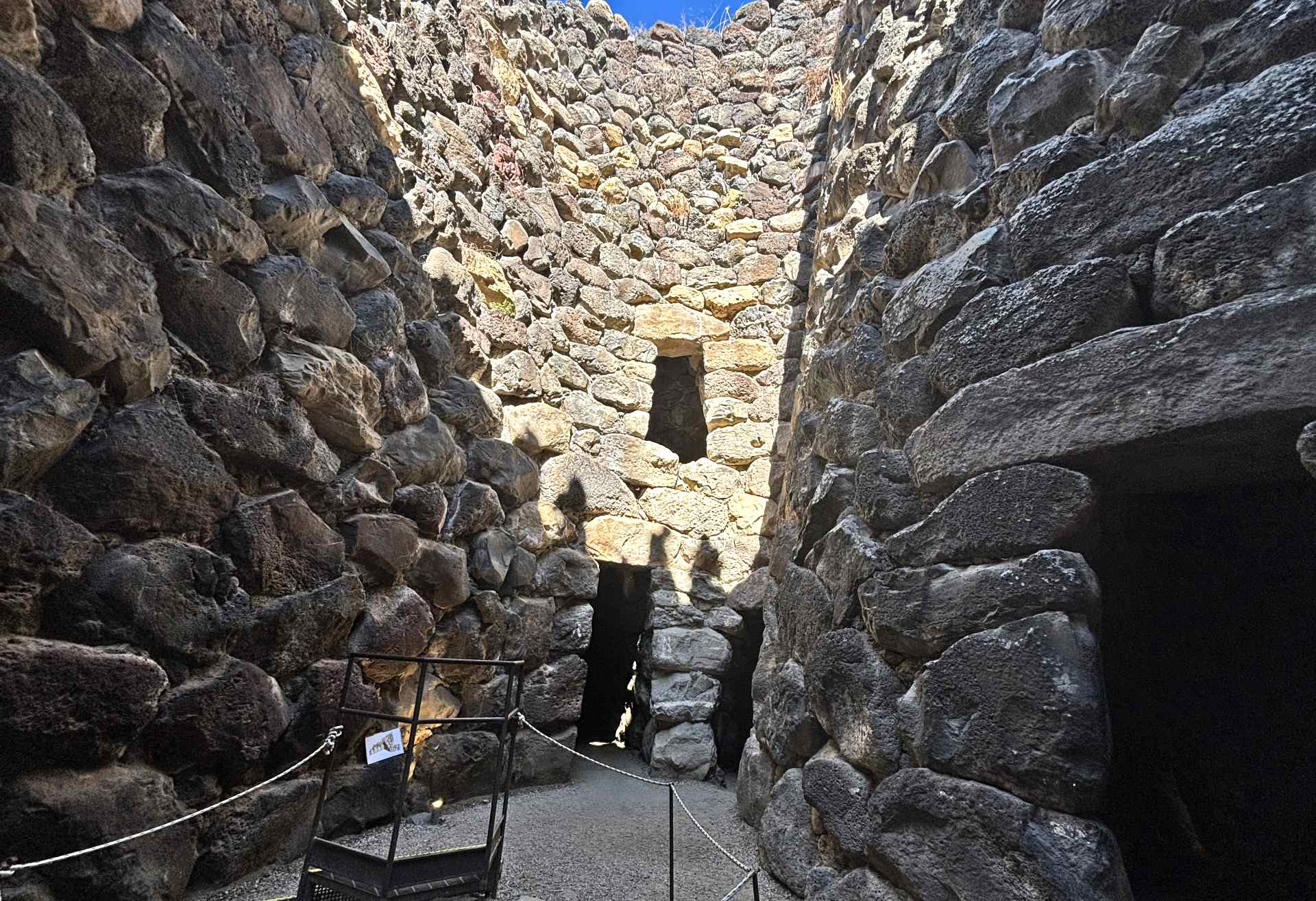
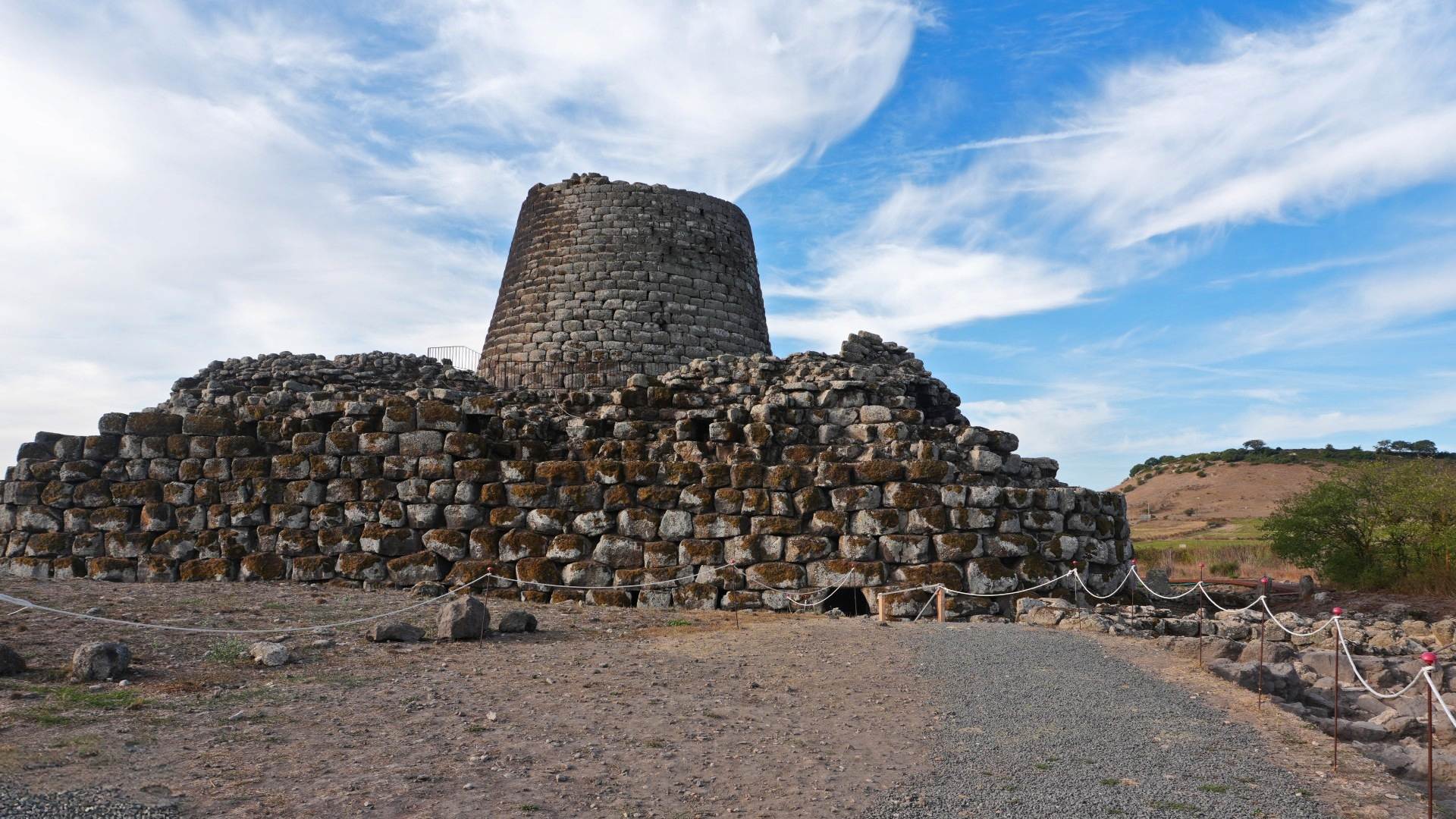
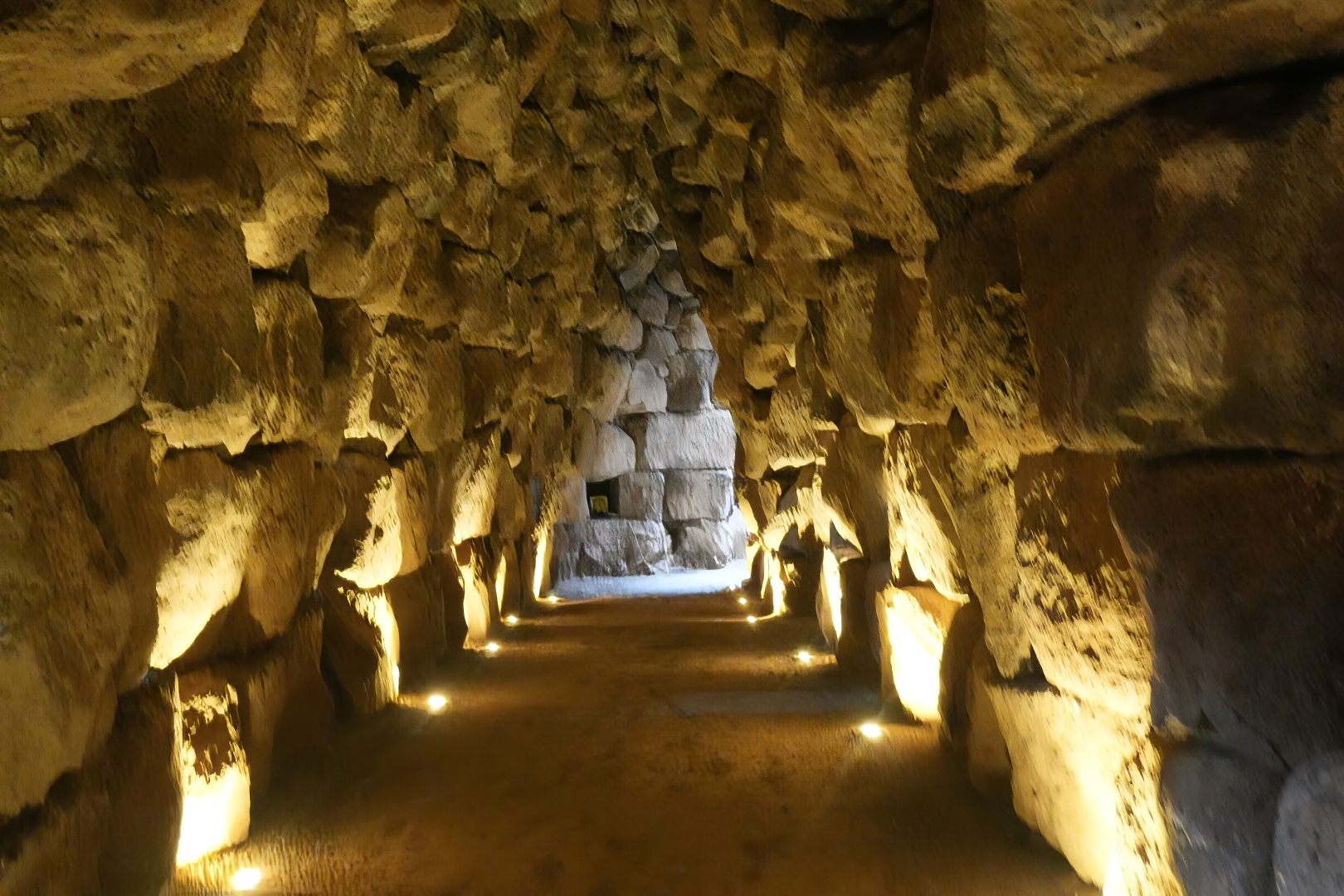
From there, we continue north to Su Nuraxi di Barumini, Sardinia’s most important nuraghe and a UNESCO World Heritage site, where a complex of towers, walls, and stone huts rises from a grassy ridge. With our archaeologist-guide, we walk into the heart of this Bronze Age tower village, through narrow passages and beehive-like chambers that show how Nuragic communities lived, gathered, and watched over their land.
We then visit nearby Casa Zapata, a Spanish palazzo hiding a Nuragic village.
We continue to a family-run agriturismo in the nearby countryside for a relaxed lunch. Here you taste dishes rooted in Sardinia’s pastoral traditions, such as crisp pane carasau, local pecorino, seasonal vegetables, and perhaps slow-cooked meats, paired with regional wines.
In the afternoon, we travel on to Oristano, a welcoming town on the western plain, and settle into our hotel before sharing dinner in a local restaurant.
Meals: B, L, D
Overnight: Oristano
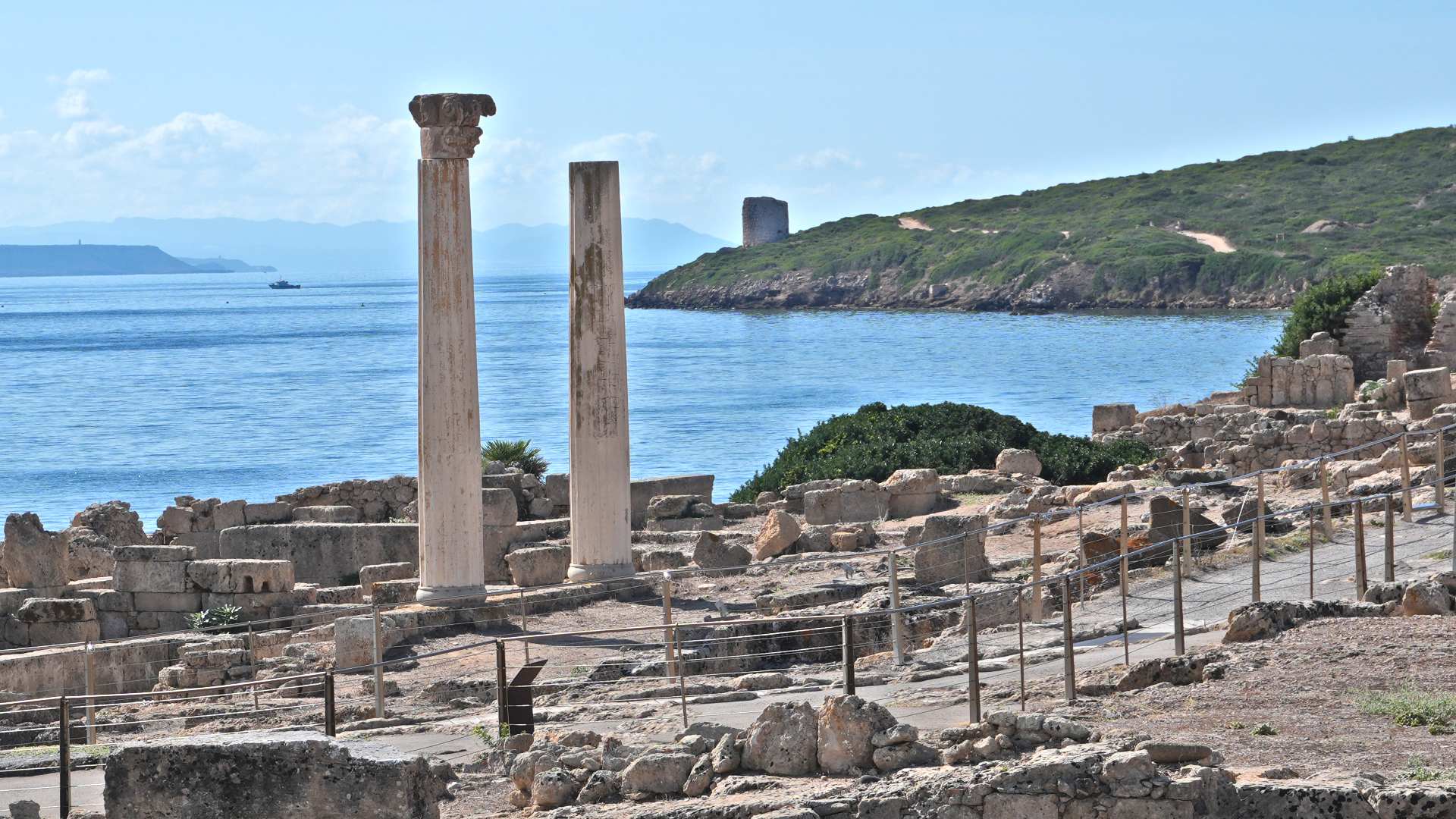
After breakfast, we drive across the western plain to the Sinis Peninsula, where low dunes, lagoons, and headlands surround one of Sardinia’s great ancient sites. At Tharros, on a narrow spit of land, our archaeologist-guide leads us along streets, temples, baths, and fortifications that once served Phoenician sailors, Punic merchants, and Roman citizens, with waves breaking just beyond the ruins.
We continue to the small sanctuary village of San Salvatore and its hypogeum, where early Christians worshiped in underground chambers carved into much older rock.
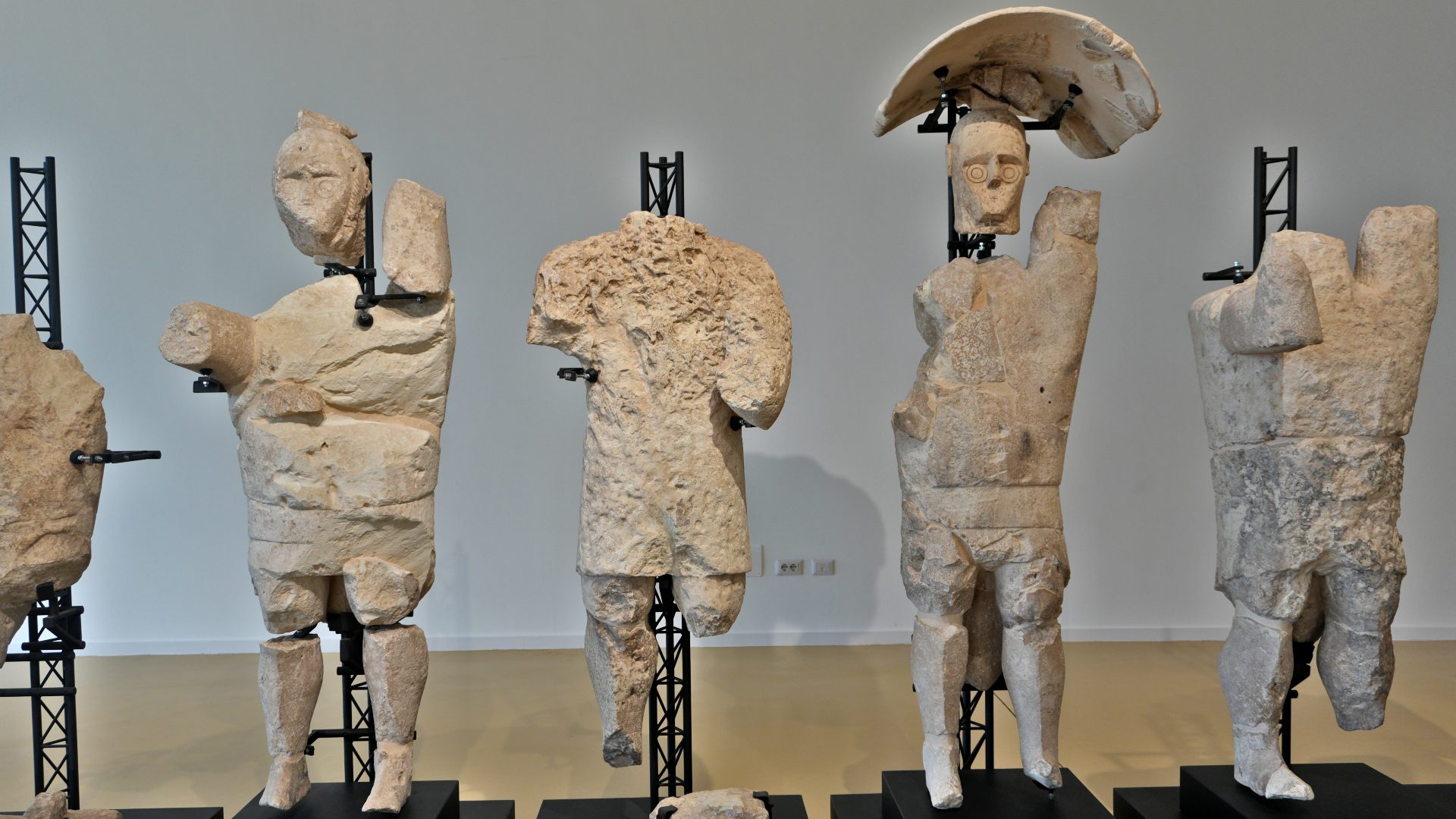
We then visit the Cabras Museum to meet the Giants of Mont’e Prama, life-sized Nuragic stone statues. Later, there is time for a stroll in Oristano’s historic center.
The evening is free to dine at your leisure in Oristano, with suggestions from your guide for favorite trattorie and wine bars.
Meals: B, L
Overnight: Oristano
After breakfast, we leave Oristano and head north into the island’s interior, along country roads through rolling pastureland, cork-oak woods, and small stone villages. Along the way, we stop for an espresso in a village bar.
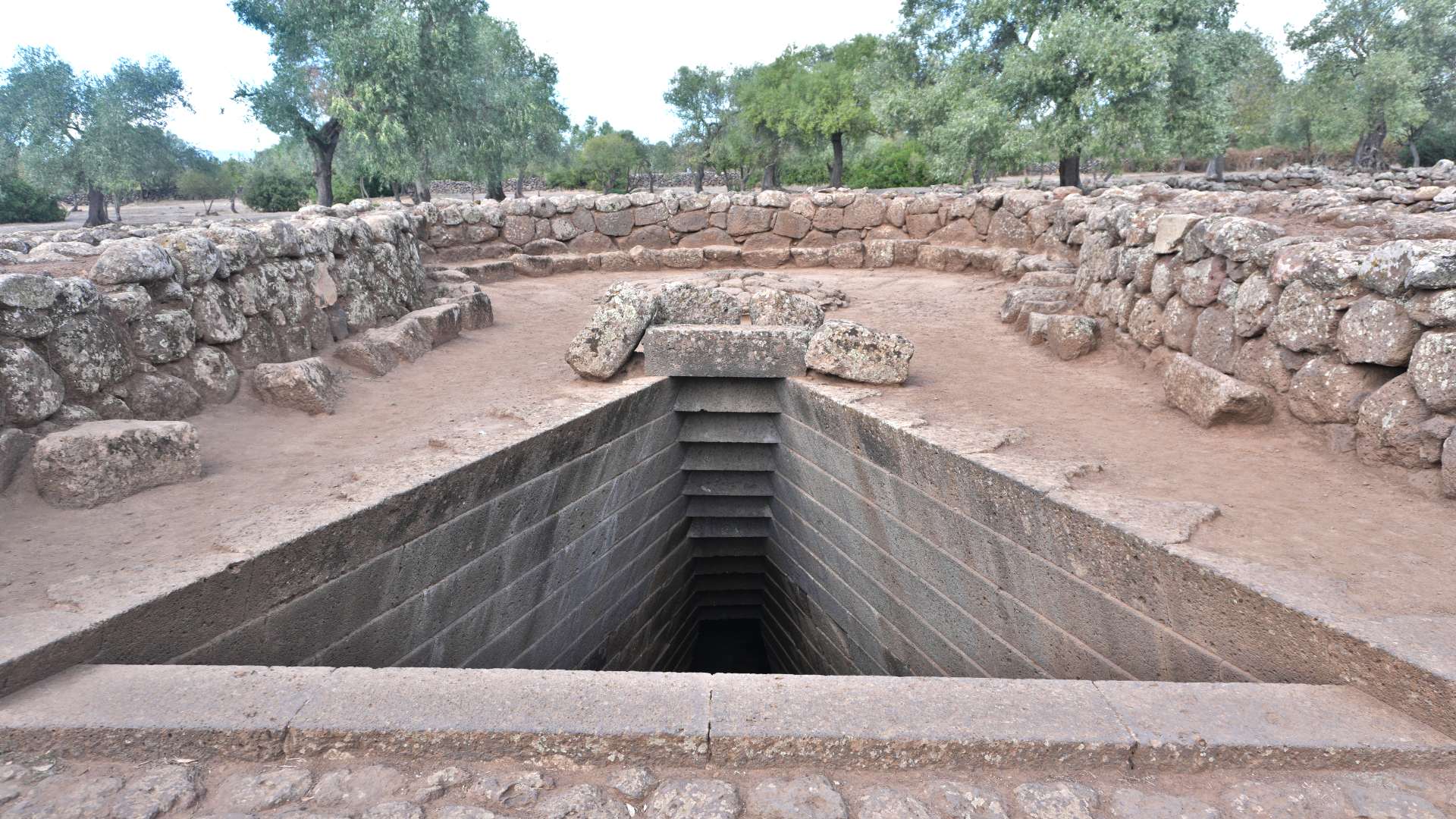
Our first major stop is the sacred well of Santa Cristina, a beautifully preserved Nuragic water temple whose precise, stair-lined chamber opens to the sky. Here your archaeologist-guide explains how water, light, and stars shaped ritual in the Nuragic world.
We continue through farming country to Santu Antine, one of Sardinia’s most imposing nuraghi, its central tower and surrounding bastions rising from the plain. As we walk through its stairways, corridors, and inner courts, you see how these towers watched over land and routes, and how daily life was lived within their walls.
A relaxed country lunch along the way introduces more of central Sardinia’s flavors, with simple dishes made from local produce and wines. In the late afternoon, we arrive in Alghero on the northwest coast, where medieval walls, Catalan-Gothic churches, and a palm-lined seafront give the town its own character.
Meals: B, L, D
Overnight: Alghero
After breakfast, our local guide leads a walking tour of Alghero’s old town, where medieval walls and Catalan-Gothic churches look out over the bay. As you follow narrow cobbled streets between coral-jewelry shops, small piazzas, and sea-battered bastions, you hear how Catalan sailors, Aragonese rulers, and local Sardinians shaped this corner of the island.
The rest of the day is yours to enjoy Alghero at your own pace. You might stroll along the walls and watch the light change on the water, wander the lanes in search of boutiques and cafés, or head to a nearby beach for a seafood lunch.
We can help arrange optional experiences such as a coastal boat excursion to sea caves and cliffs, or a hands-on Sardinian cooking class.
Meals: B
Overnight: Alghero
After breakfast, we leave Alghero and head north to our second Domus de Janas site, the necropolis of Anghelu Ruju.
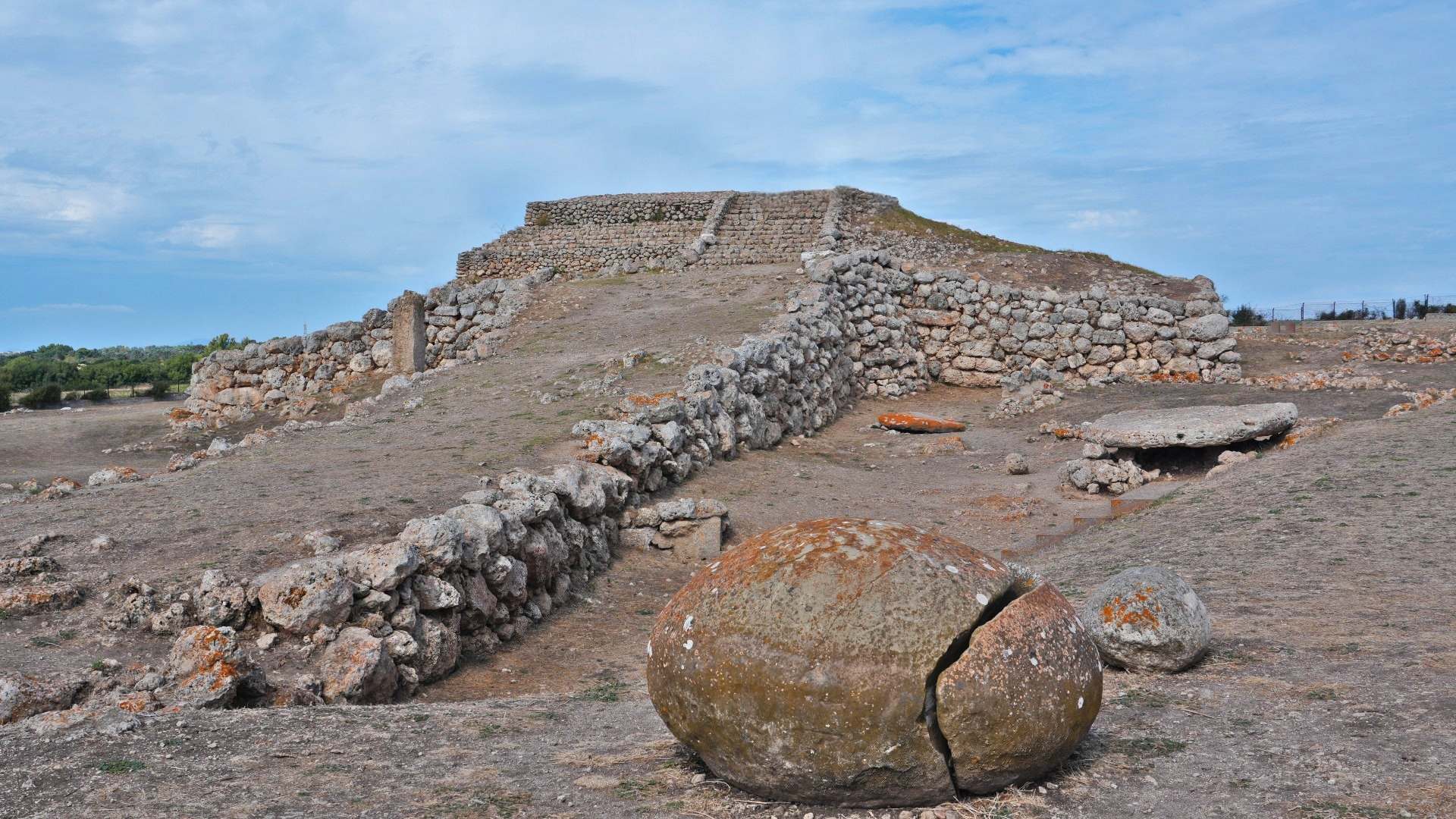
We then continue to Monte d’Accoddi, a prehistoric monument often likened to a small stepped pyramid or “Sardinian ziggurat”, standing alone among fields. Your archaeologist-guide explains what is known, and still debated, about its function and the communities who built it. What we do know is that it is one of the oldest buildings in the world.
In Sassari, we visit the Museo Sanna to see its Nuragic collections and the finds from Monte d’Accoddi.
In the afternoon, we drive east into Gallura, a region of granite outcrops, vineyards, and scattered farmsteads, and stop at a local wine estate to taste native varietals such as Vermentino and Cannonau and to hear how this land shapes Sardinia’s wines today.
By late afternoon, we reach Olbia, on the northeast coast, where we settle into our hotel and share dinner in a local restaurant.
Meals: B, L, D
Overnight: Olbia
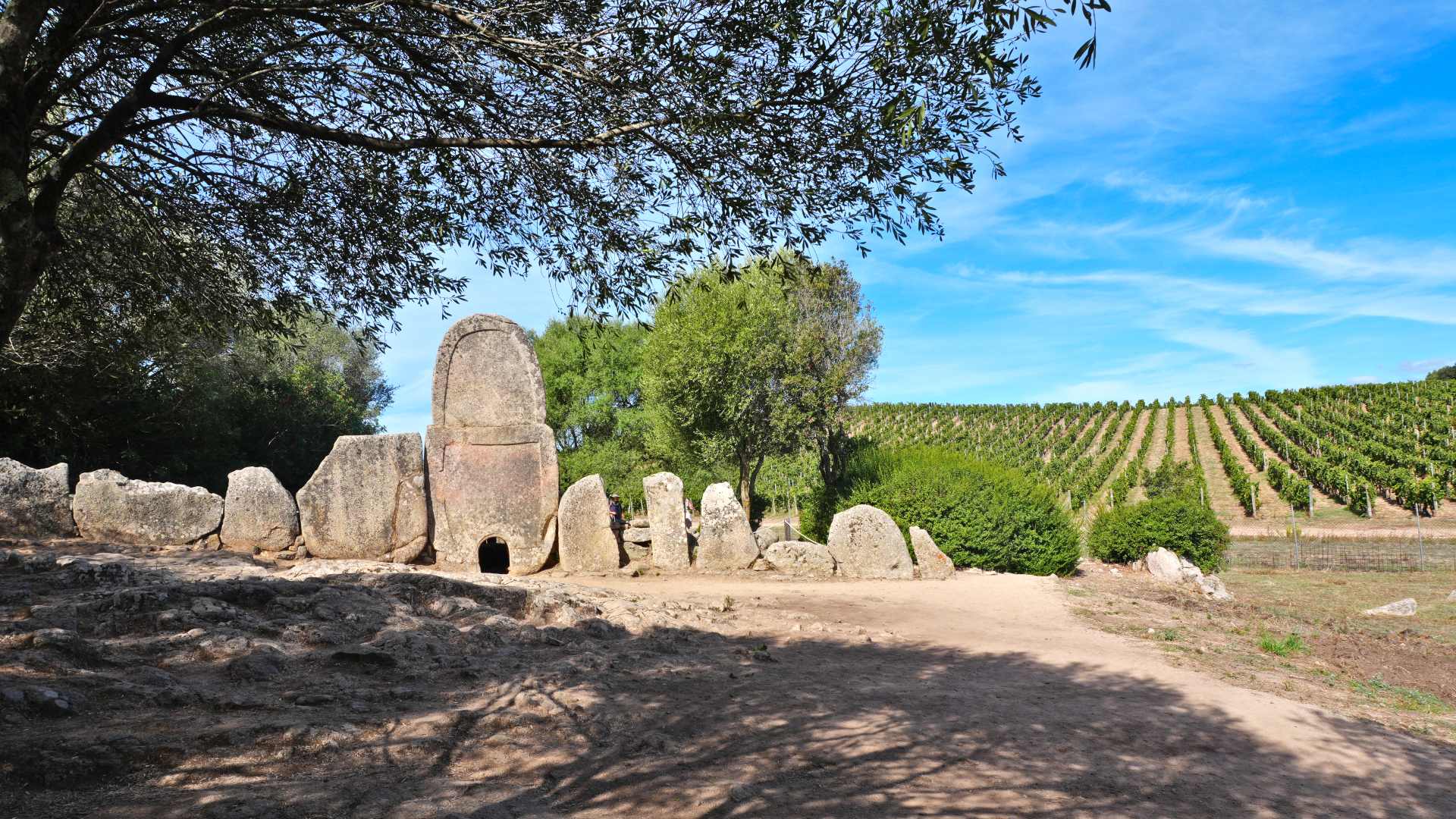
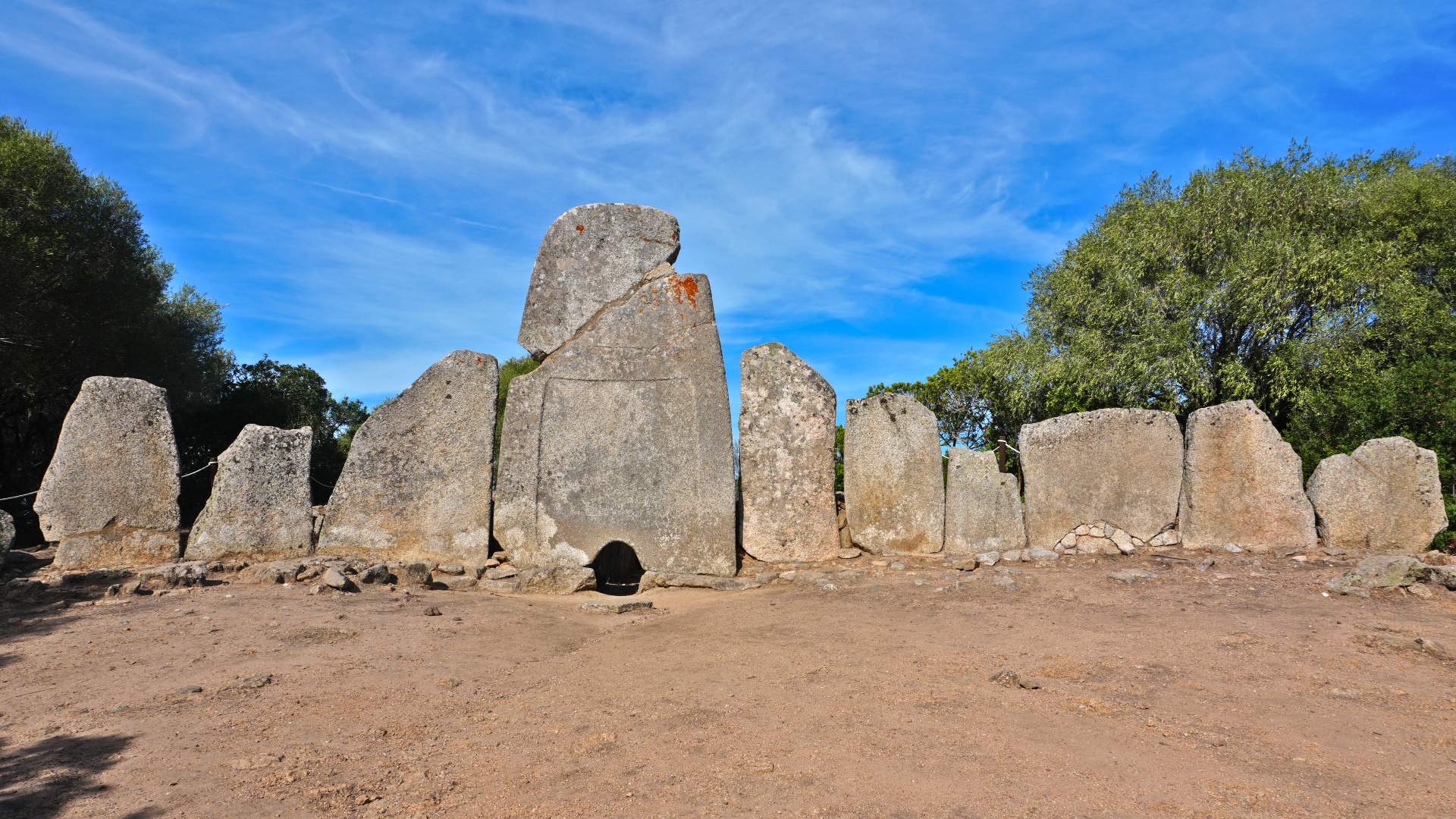
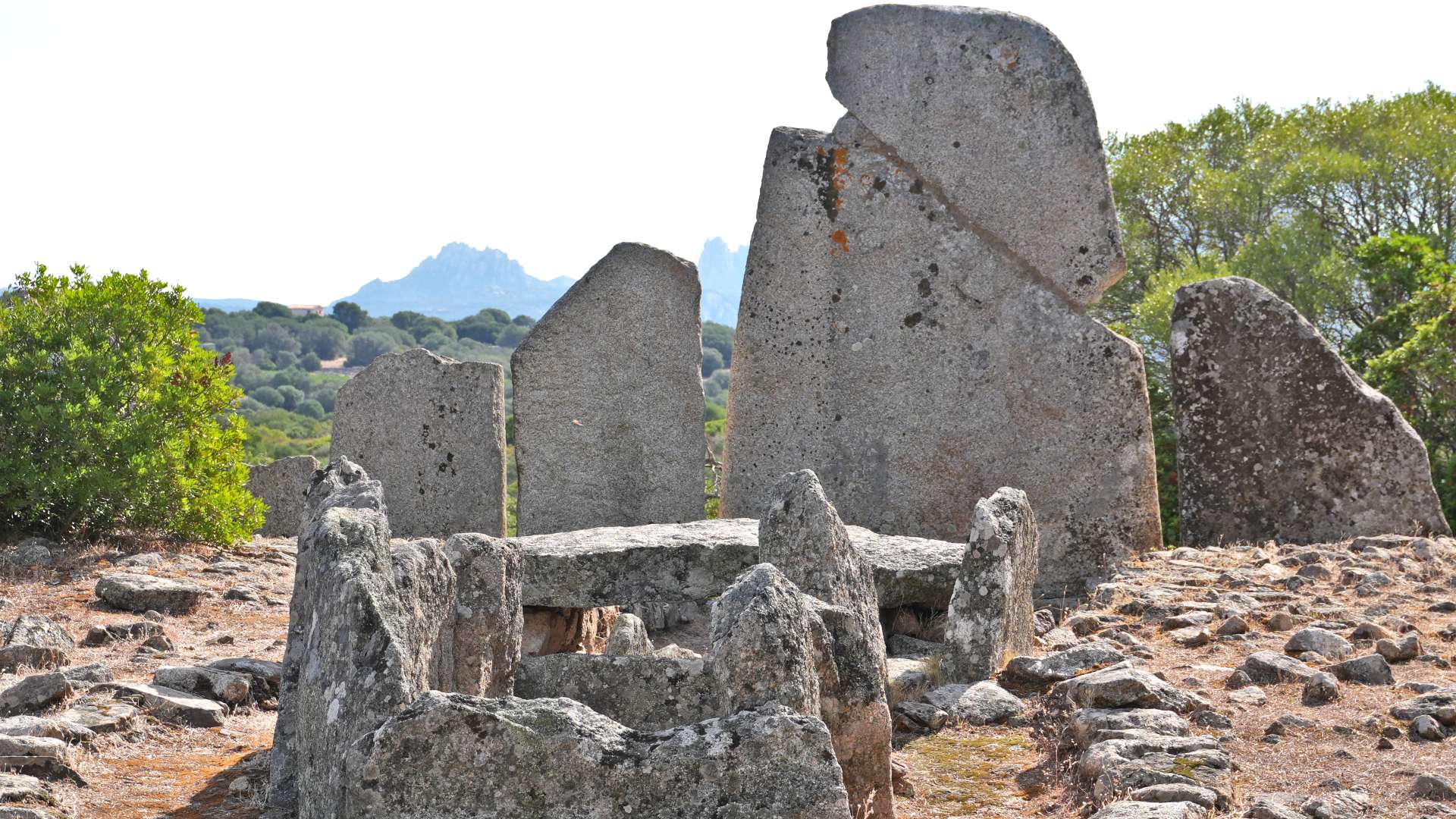
After breakfast, we set out into the low granite hills around Arzachena, a landscape of vineyards, scrub, and great pale boulders. Our first visits are to the Giants’ Tombs of Coddu Vecchiu and Li Lolghi, among the finest and best-preserved of the hundreds of “Tombe dei Giganti” across Sardinia.
These great communal graves, with their long stone corridors and curving forecourts, were built by the Nuragic people for collective burials and ancestor rites. They are among the clearest evidence of Nuragic beliefs about death and community, and together with the nuraghi, they are among the strongest symbols of Sardinian identity.
We stop in Arzachena for a lunch of Gallura cuisine, perhaps hearty soups thick with local grains and vegetables, pecorino, and simple sweets, paired with regional wines.
In the afternoon, we continue to Nuraghe La Prisgiona, where a central tower and surrounding village huts sit among fields and terraces. Here you can connect the world of the tombs to the everyday life of the people who built them.
Nearby, we visit the sacred well of Sa Testa, where stone steps lead down to its water chamber.
By late afternoon, we return to Olbia for our last dinner in Sardinia, with Sardinian dishes and wines
Meals: B, L, D
Overnight: Olbia
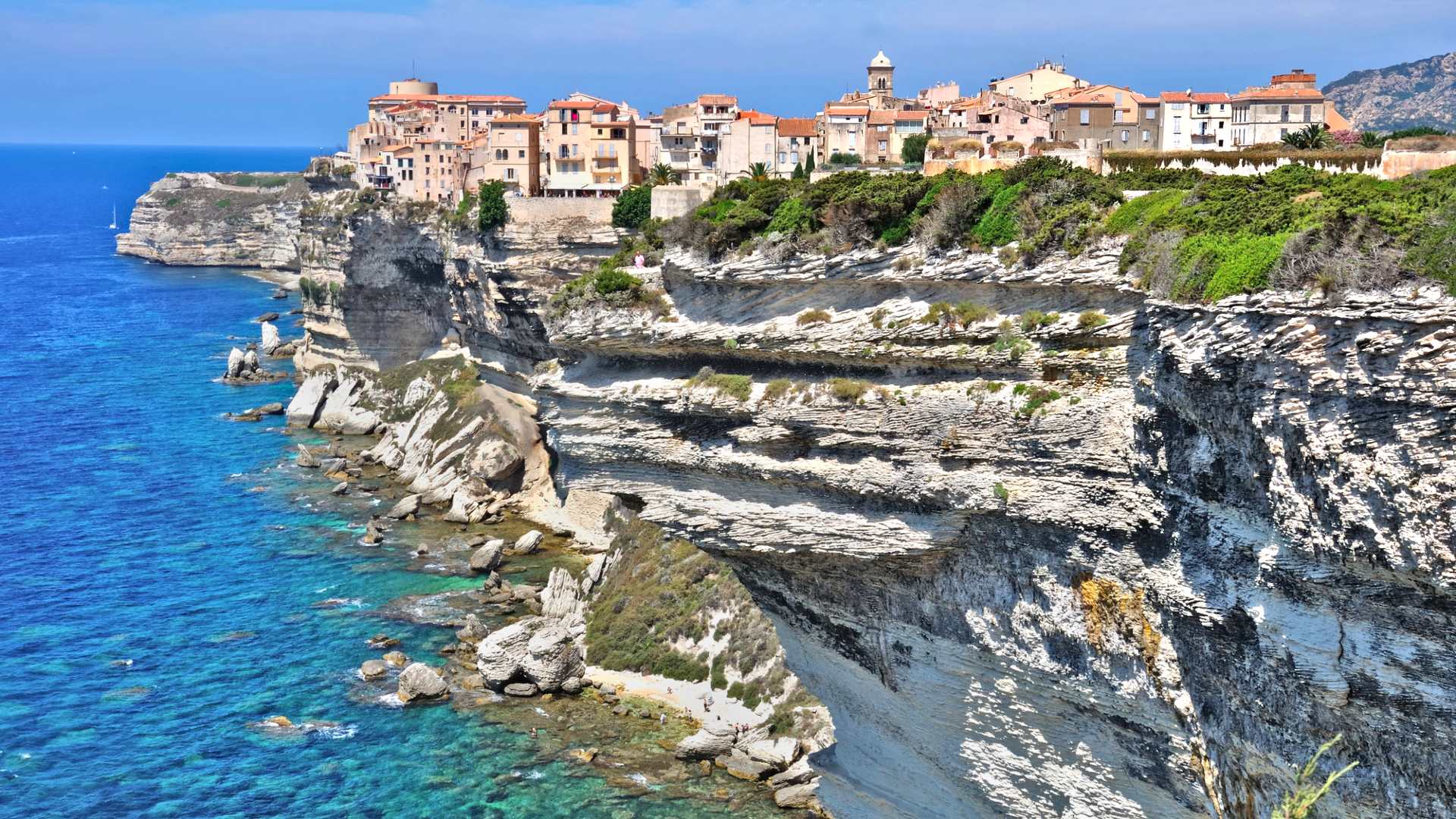
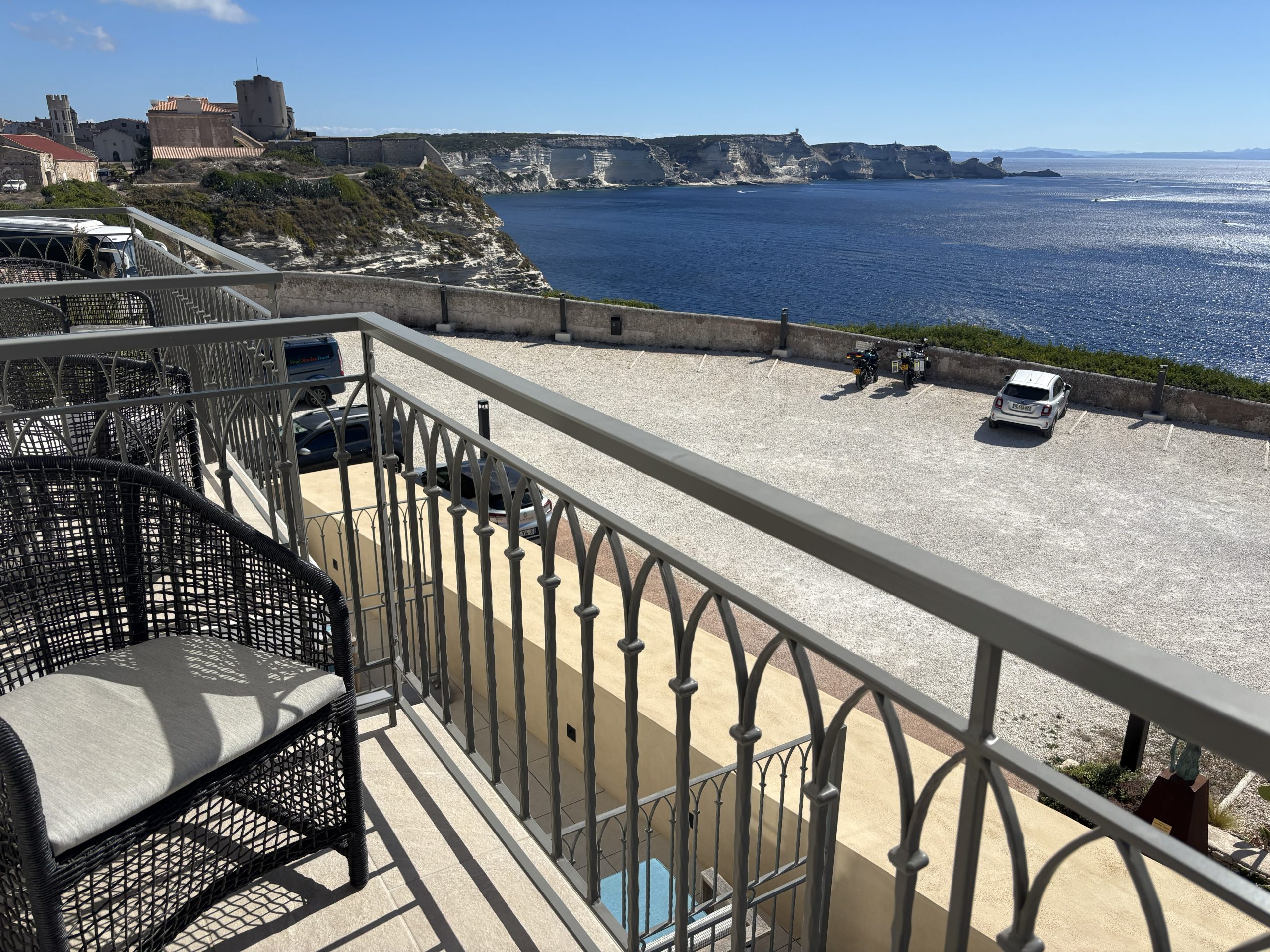
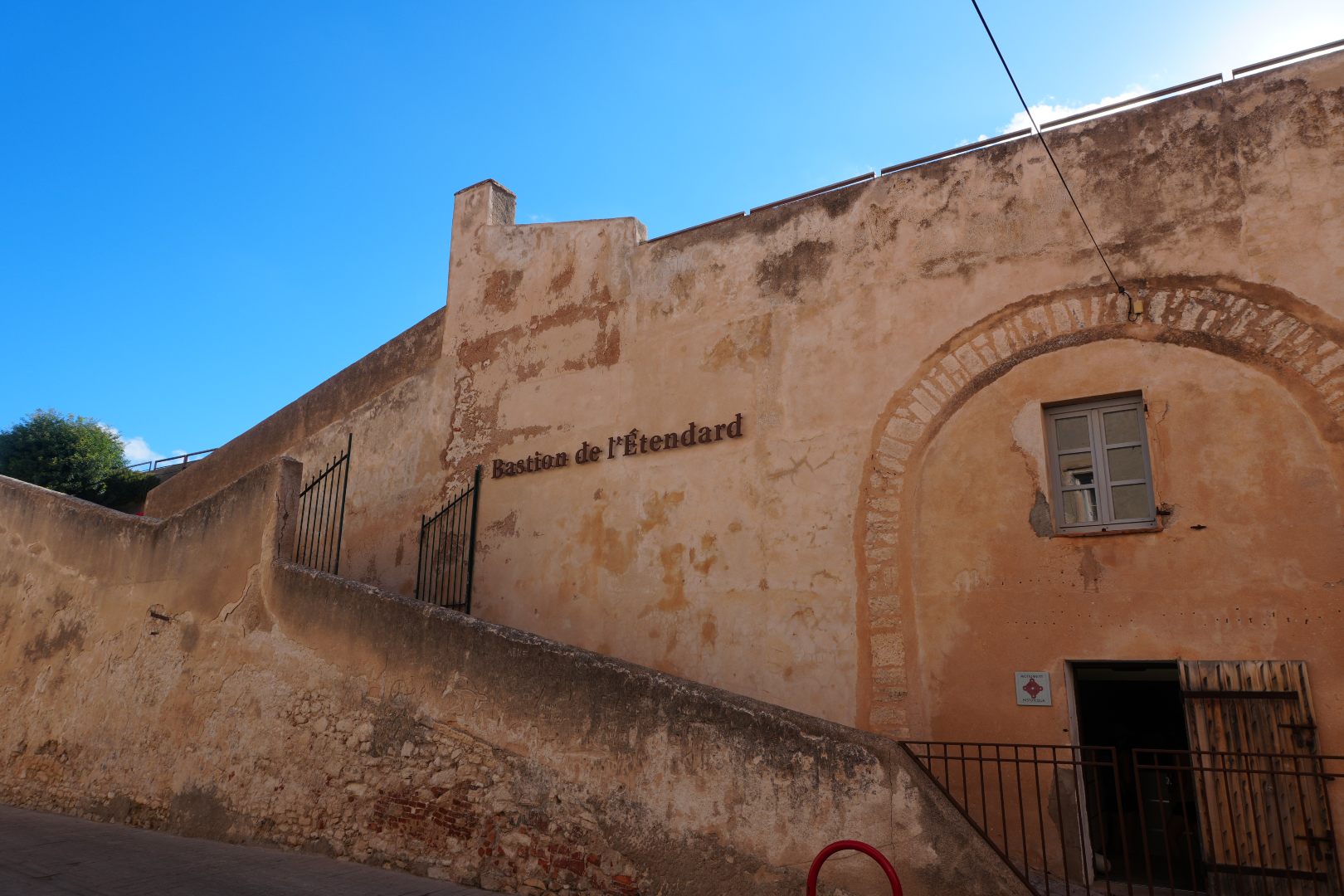
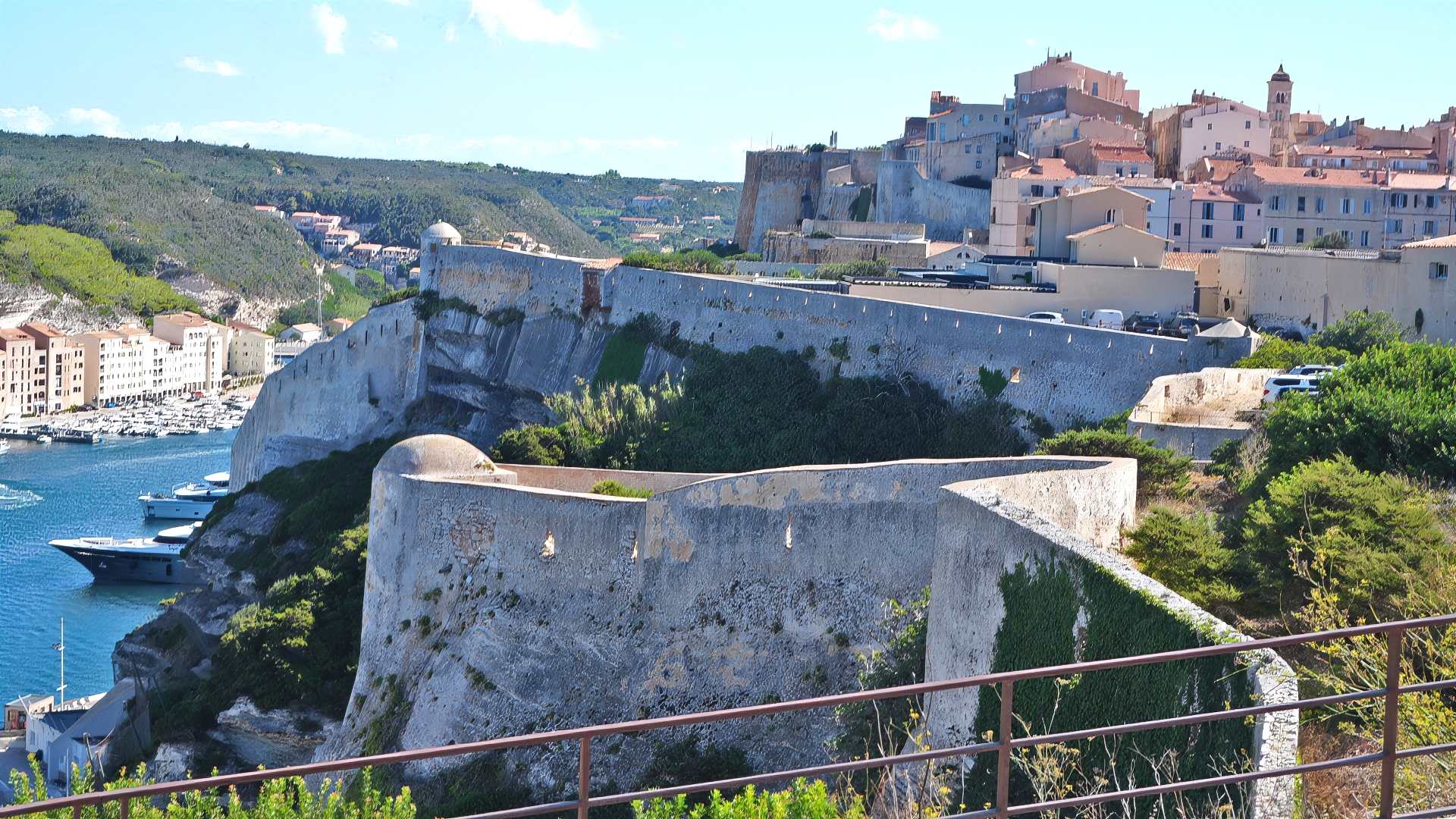
After our last breakfast together in Sardinia, we travel north through Gallura to the port of Santa Teresa Gallura and board the ferry to Corsica. After an hour at sea, we sail into the harbor of Bonifacio, the medieval city on the imposing white limestone cliffs of southern Corsica, and transfer to our centrally located hotel.
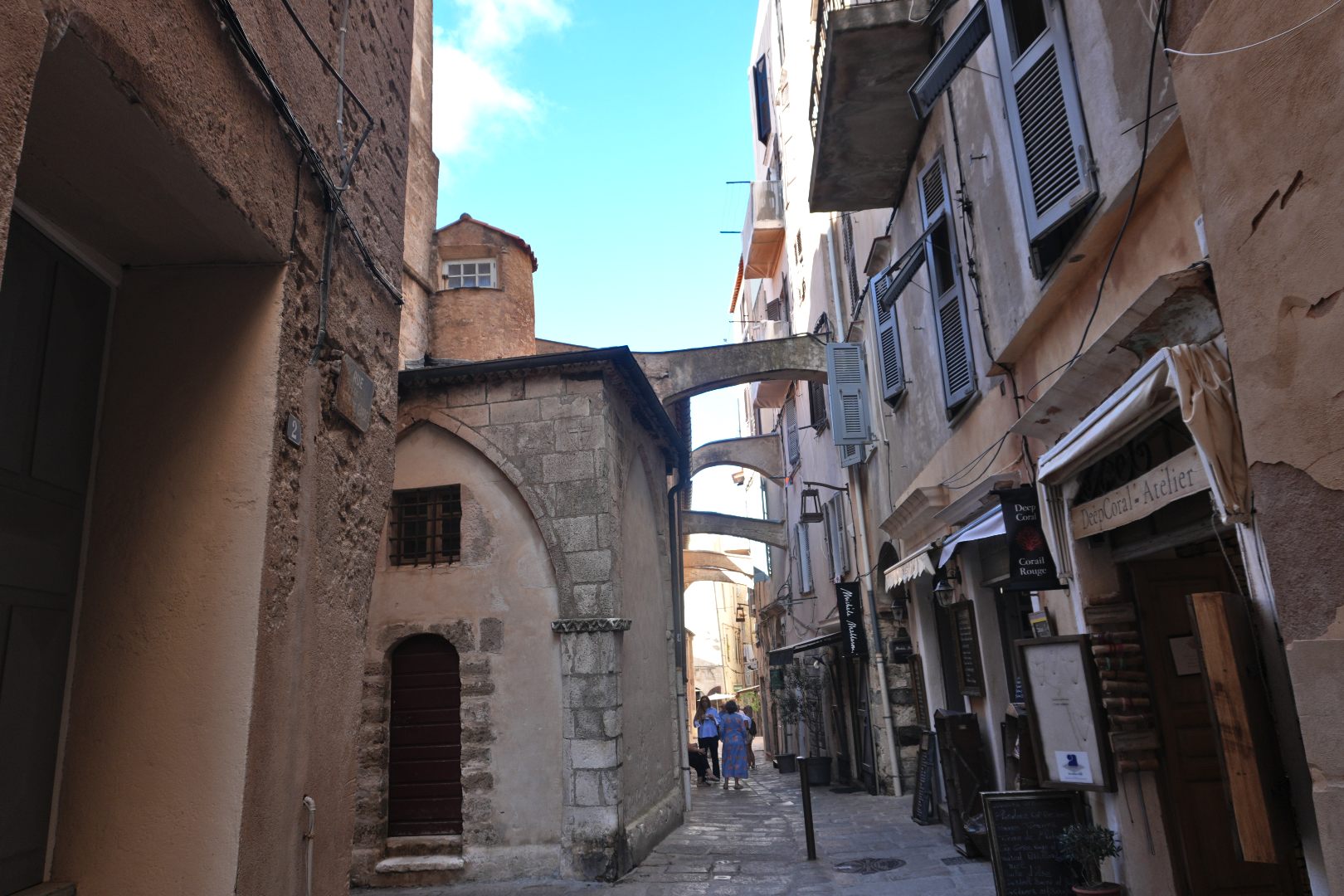
In the late afternoon, our Corsica tour leader, Virginie Seren, leads us on a walking tour beside the Genoese defensive fortifications and through the narrow cobblestone alleys of the historic citadel, introducing Bonifacio’s haute ville and the rich cultural and religious life its walls defended.
Meals: B, D
Overnight: Bonifacio
After breakfast, we leave Bonifacio and travel to Sartène and the Cauria Plateau to meet our archaeologist guide, Dr Kewin Pêche-Quilichini, Director of the Musée de l’Alta Rocca.
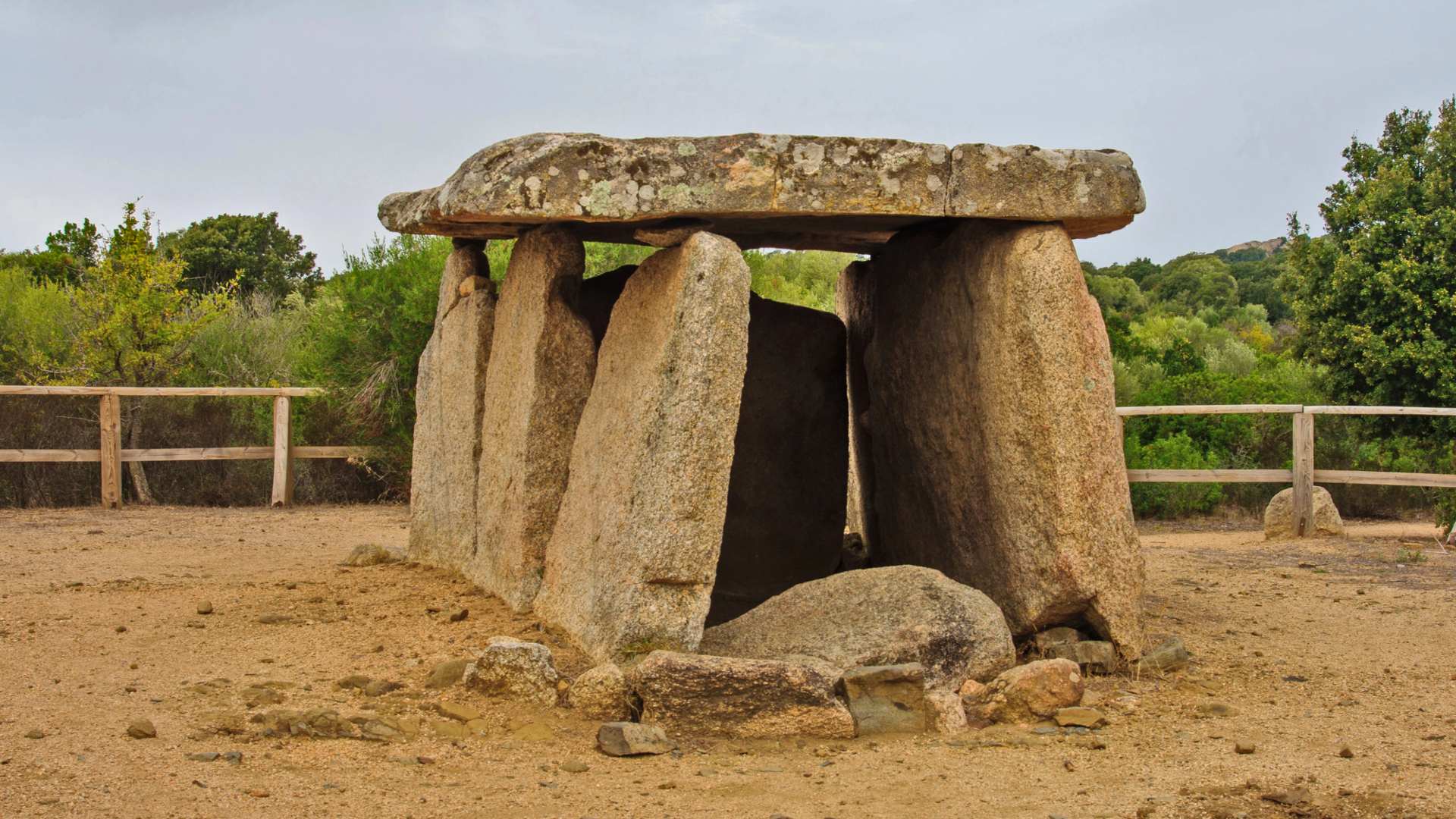
After lunch in Sartène, Kewin guides us around three sites: the Funtanaccia dolmen, the menhirs of Rinaghju, and the anthropomorphic standing stones of Stantari.
Later, Virginie leads us on a walking tour of Sartène, and we gather together for a local Corsican meal.
Meals: B, L, D
Overnight: Sartène
After breakfast, we head into Corsica’s mountainous interior to Alta Rocca, where we meet up again with our archaeologist-guide.
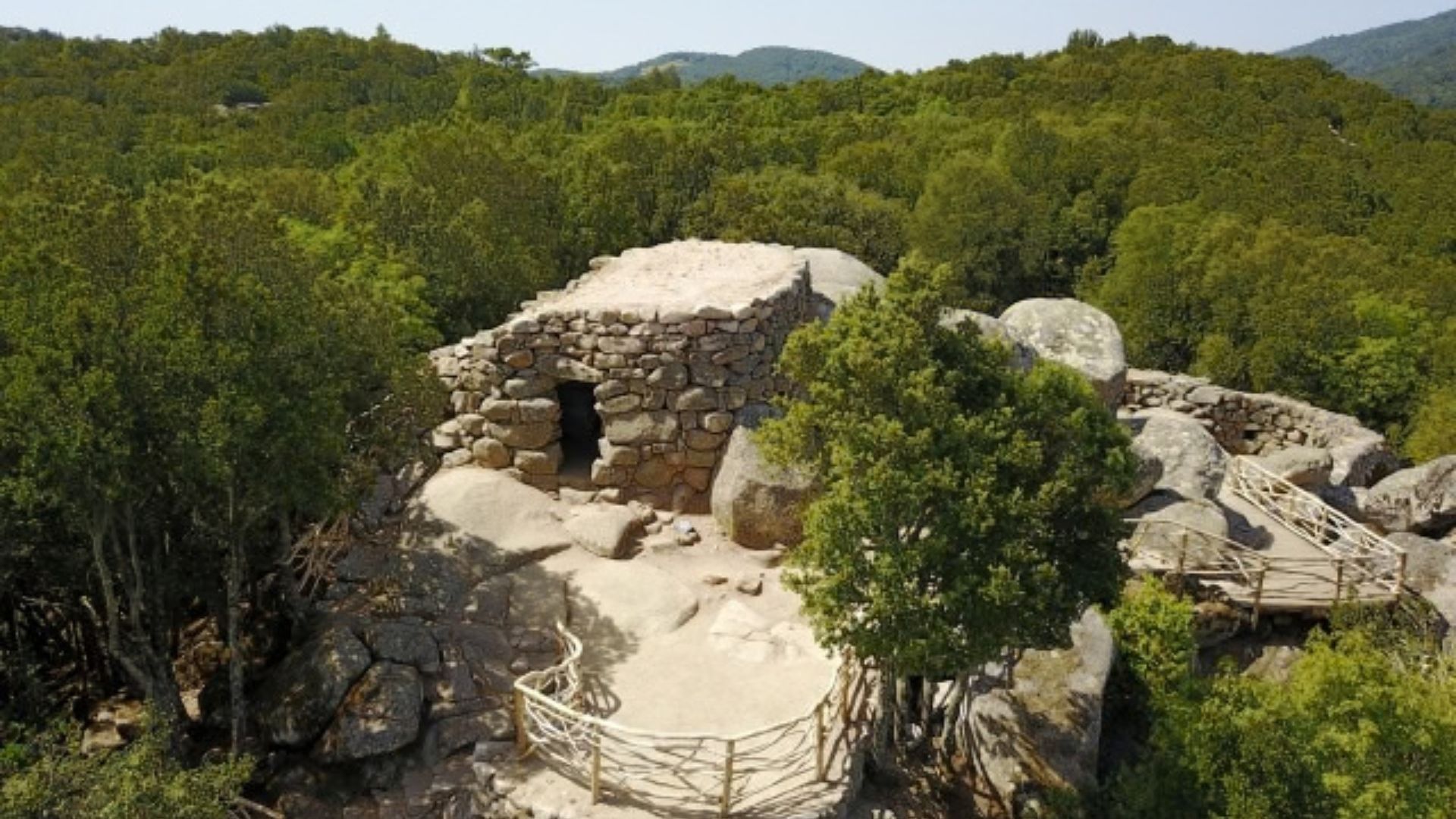
Kewin leads us on a 2-mile circular walking trail between a Bronze Age and a medieval site. The first is Cucuruzzu, a castellu, or fortified Bronze Age settlement, abandoned in the 3rd century BC. Its impressive tower is 8 meters in diameter and 4 to 5 meters high.
The second is Capula, where the Lords of Rocca built a defensive castle on top of a Bronze Age settlement in the 12th century.
After lunch in nearby Lévie, Kewin, the museum’s Director, leads us on a behind-the-ropes tour of the Musée de l’Alta Rocca. Here we see a replica of a Corsican Bronze Age house, the finds from the sites we explored this morning, and the Lady of Bonifacio, one of the oldest human burials found in Corsica.
Dinner tonight is at your leisure in Sartène.
Meals: B, L
Overnight: Sartène
After breakfast, we travel to Casteddu di Cuntorba, a small fortified settlement with a panoramic sea view, and enjoy a tour of the site with our archaeologist.
After lunch, we travel a little further north to the prehistoric site of Filitosa, occupied for some 6,000 years, from the Early Neolithic to the Roman era. It holds Corsica’s greatest concentration of megalithic sculpture and art.
For many visitors, this is the most fascinating site in Corsica, thanks to the detailed carvings on its warrior statue-menhirs. Kewin gives us a private guided tour.
In the late afternoon, it’s time to bid farewell to Kewin, as we travel onwards to the lovely port city of Ajaccio, where we settle into our hotel and enjoy an evening meal together.
Meals: B, L, D
Overnight: Ajaccio
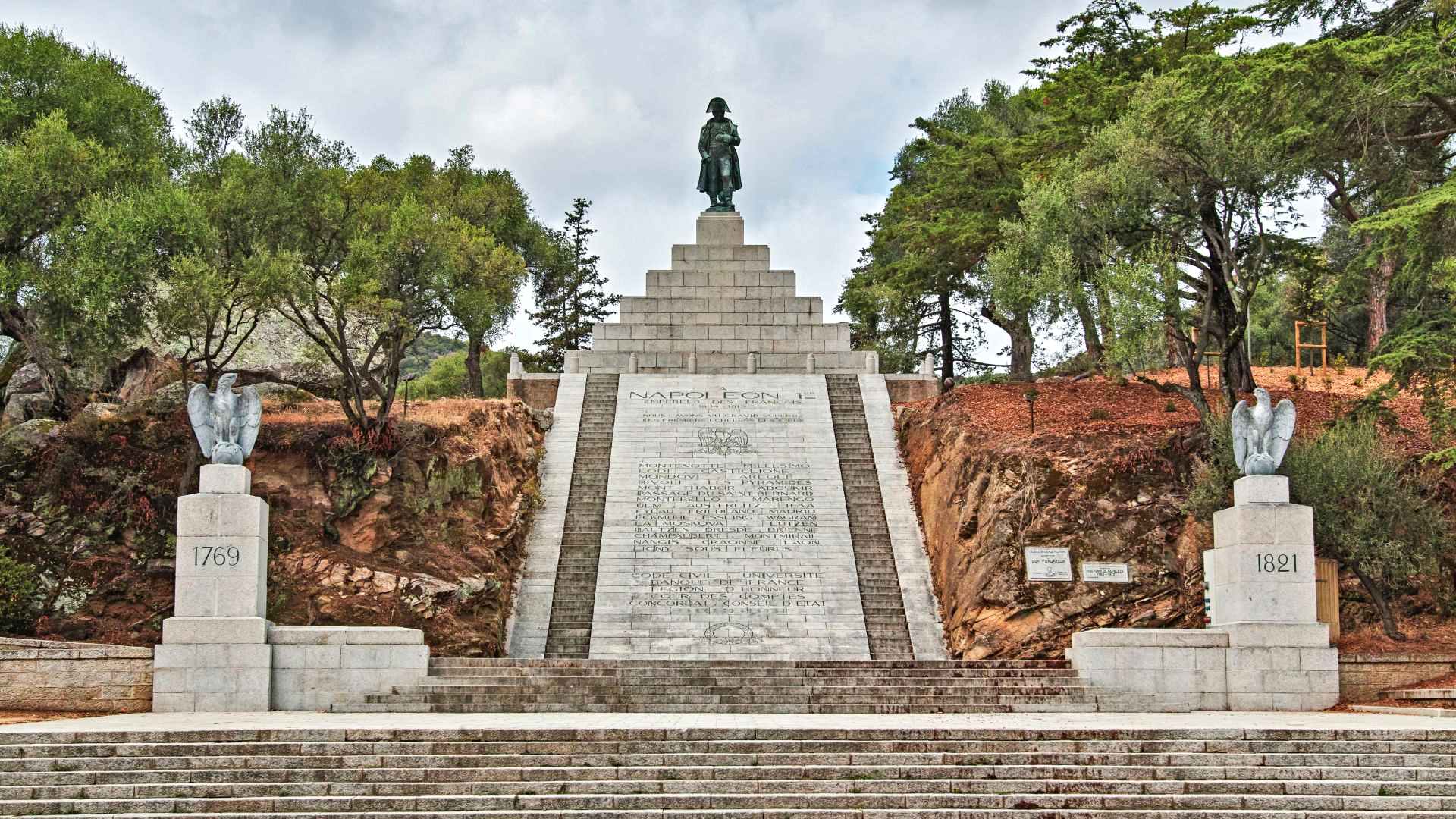
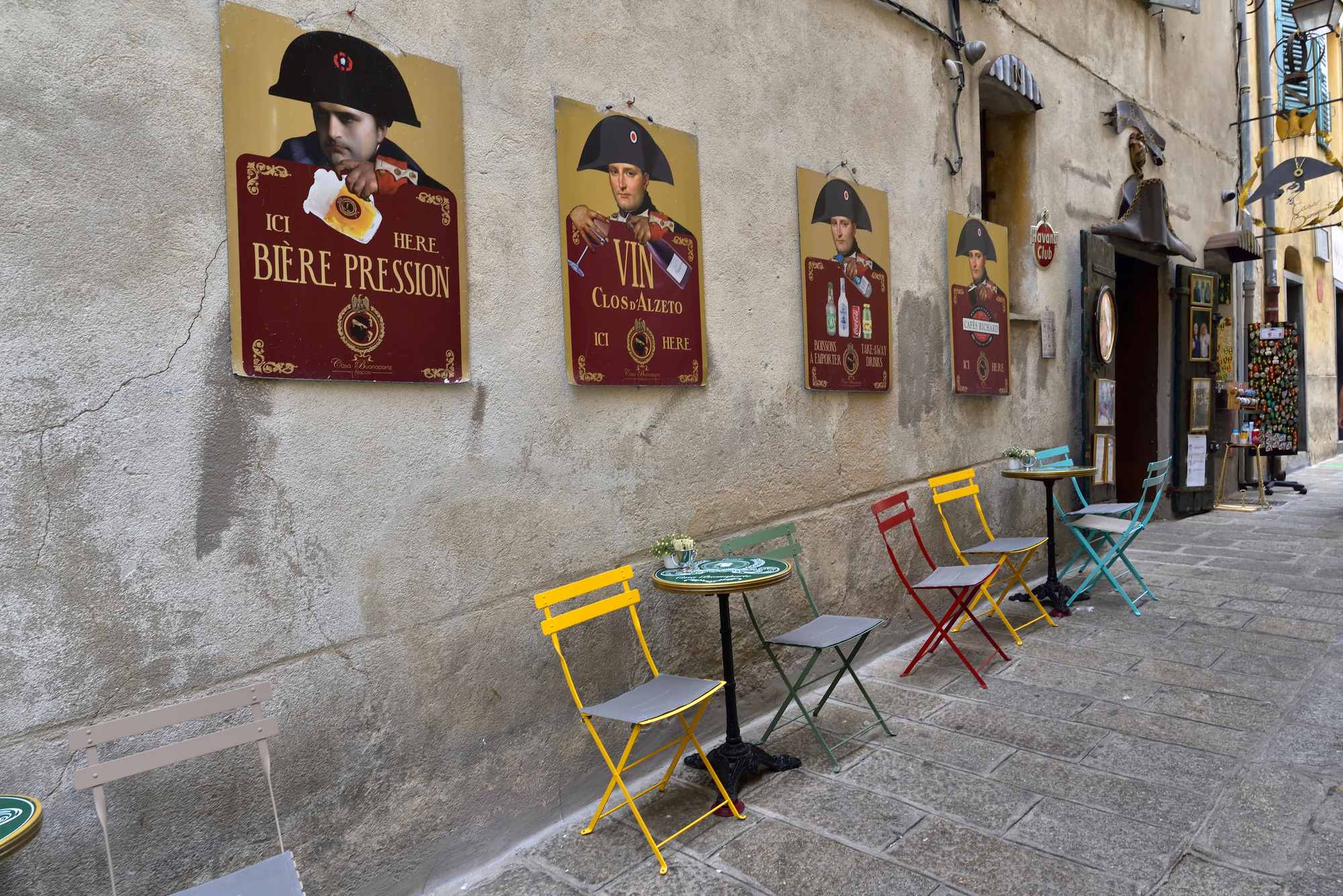
After breakfast, our tour leader, Virginie, leads us on a guided tour of Ajaccio. We visit the most important sites of Napoleon’s legacy, including Maison Bonaparte and the Salon Napoléonien in the Town Hall, Cathédrale Notre-Dame-de-l’Assomption, where Napoleon was baptized, and the Chapelle Impériale, the final resting place of several Bonaparte family members.
We also visit an extraordinary art gallery, Palais Fesch. It’s an opportunity to see one of France’s most important collections of Italian Old Masters outside the Louvre, including Titian and Botticelli.
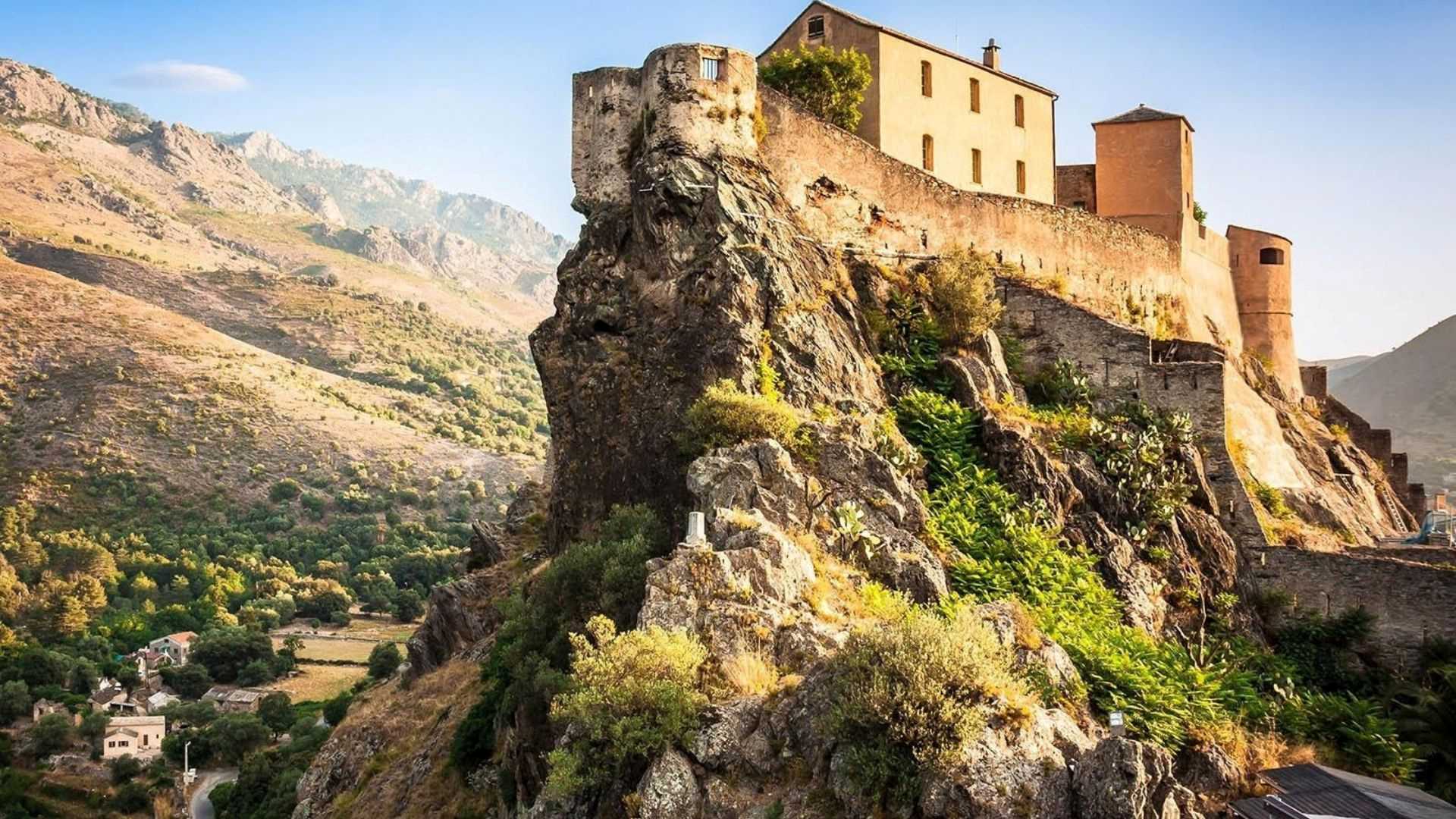
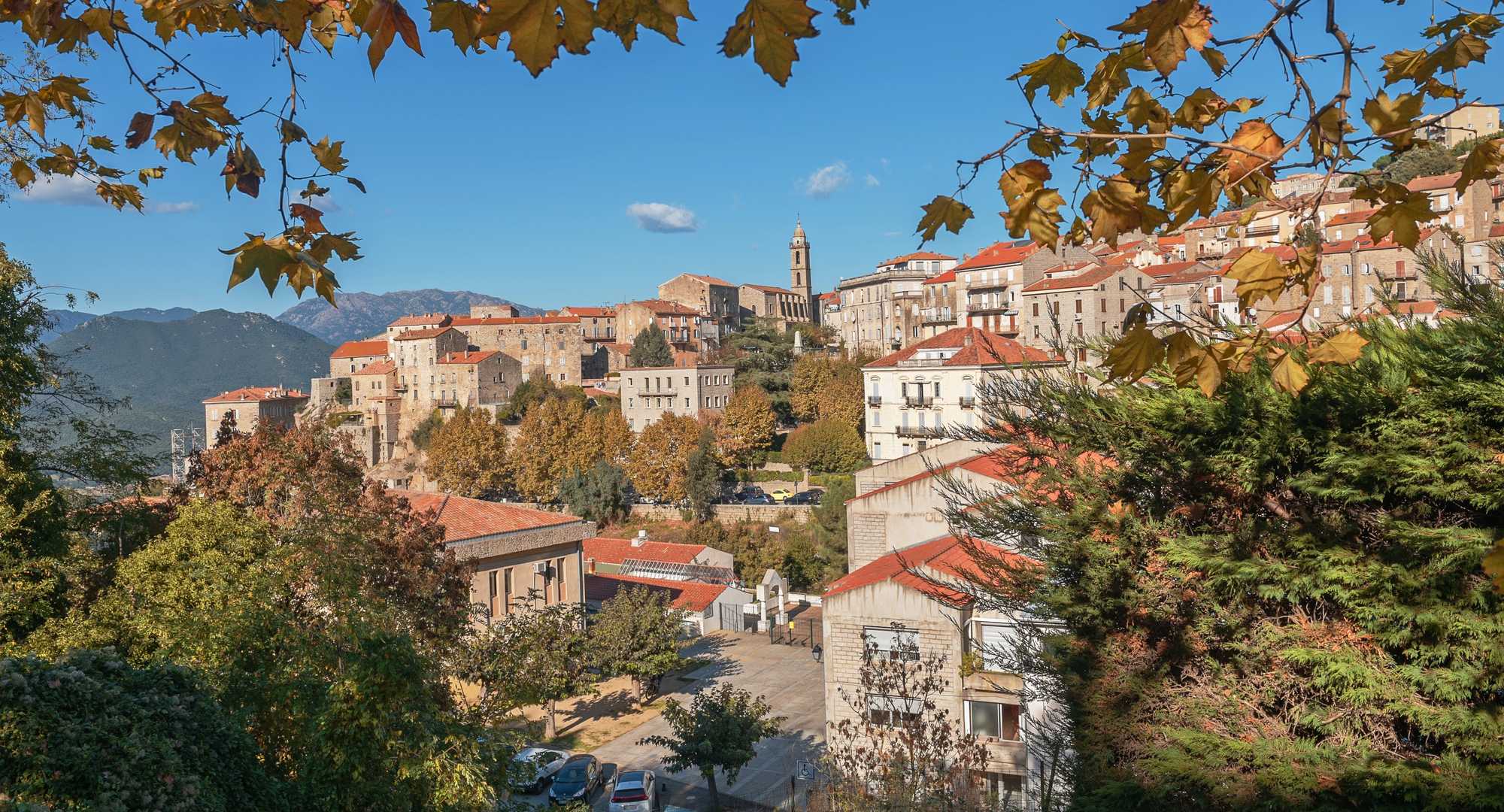
After lunch, we drive into the most Corsican of Corsica’s towns: Corte. In 1755, Pasquale Paoli made it the capital of the independent Corsican Republic. It is the heart of resistance, independence, and the concepts of freedom and identity held dear by Corsicans through centuries of historical memory.
Here we take the train to the Citadel to visit the Musée de la Corse in the former barracks of the citadel and to discover this charming mountain town.
We return to Ajaccio, where dinner tonight is at your leisure.
Meals: B, L
Overnight: Ajaccio
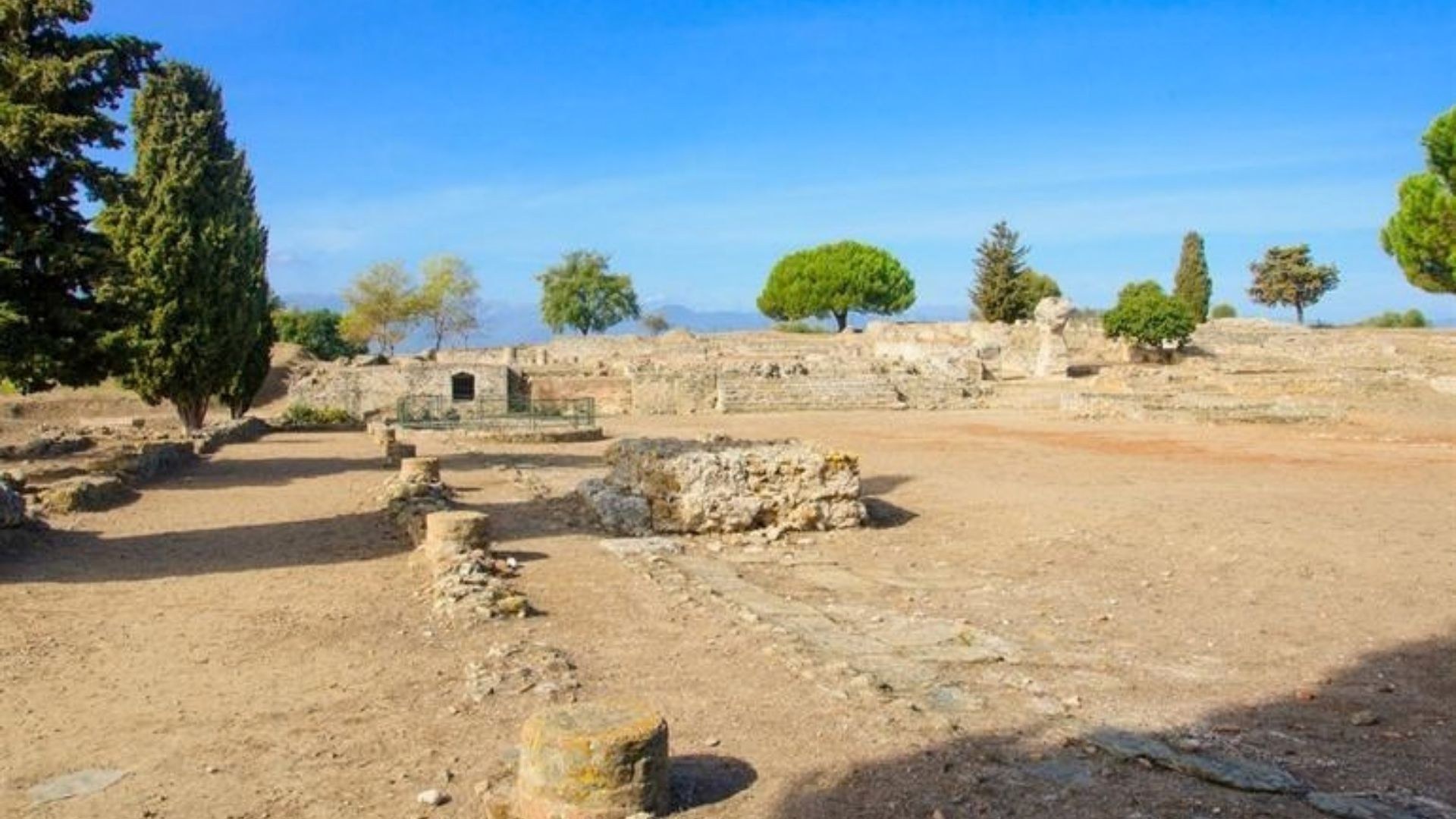
After breakfast, we travel to the archaeological site of Aléria, where a specialist on-site guide leads our private tour of a city founded in 565 BC by Phocaean Greeks and later occupied by the Etruscans, the Carthaginians, and finally the Romans, and then shows us the finds from the site at the Musée Jérôme Carcopino.
Close to Bastia, we visit the former Roman colony of Mariana, founded around 100 BC by Caius Marius, for a private tour of the site, its museum, and the Romanesque Canonica church with a specialist on-site guide.
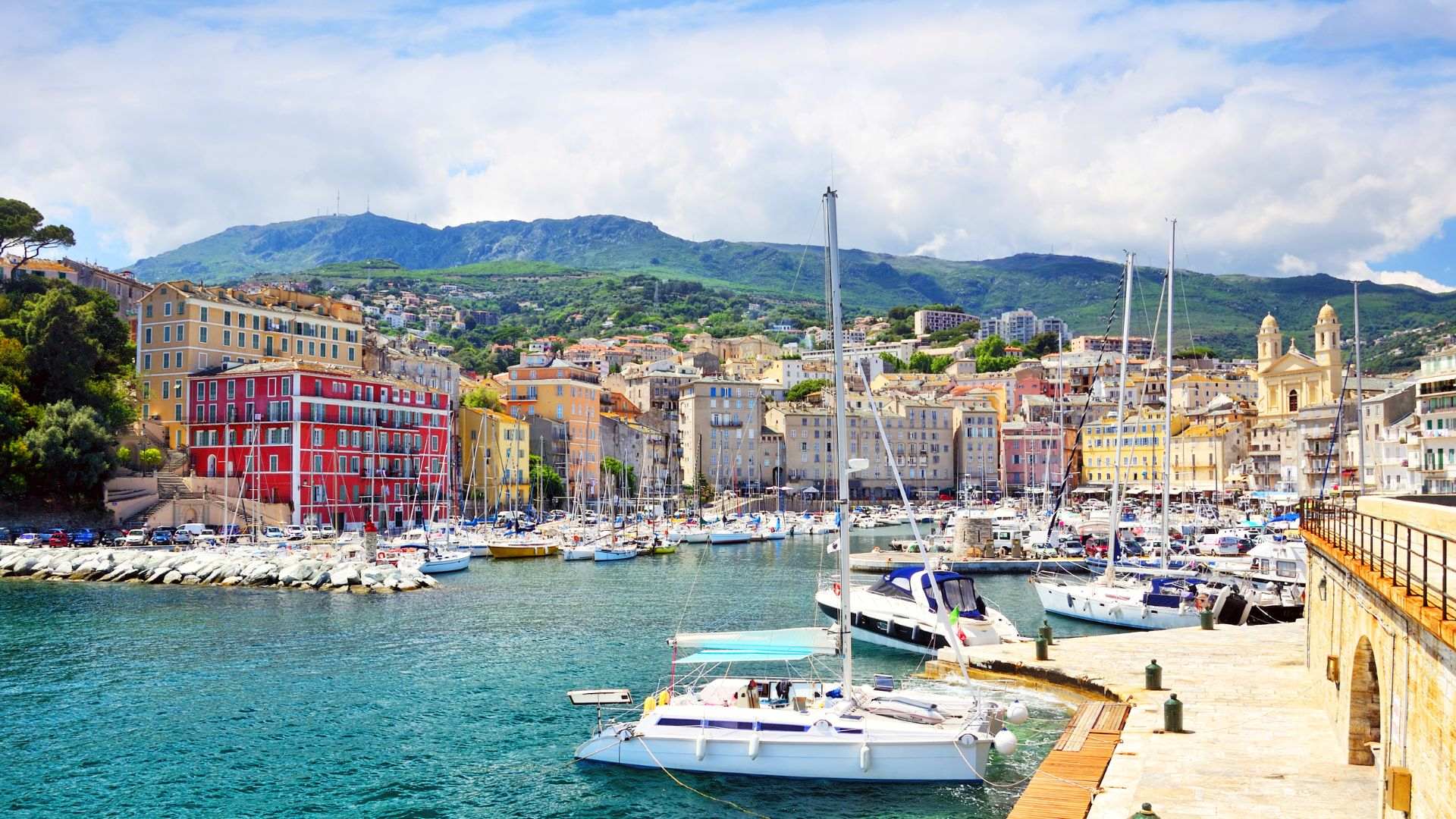
We travel just a short distance further north to the city of Bastia, the last base of our tour, and settle into our hotel before coming together for an evening meal with wine.
Meals: B, L, D
Overnight: Bastia
Today is the final full day of our tour, and we spend it in Bastia.
After breakfast, Virginie leads us on a guided walk of Bastia’s upper town (Terra Nova) and lower town (Terra Vecchia). Thankfully, the two are linked by an elevator!
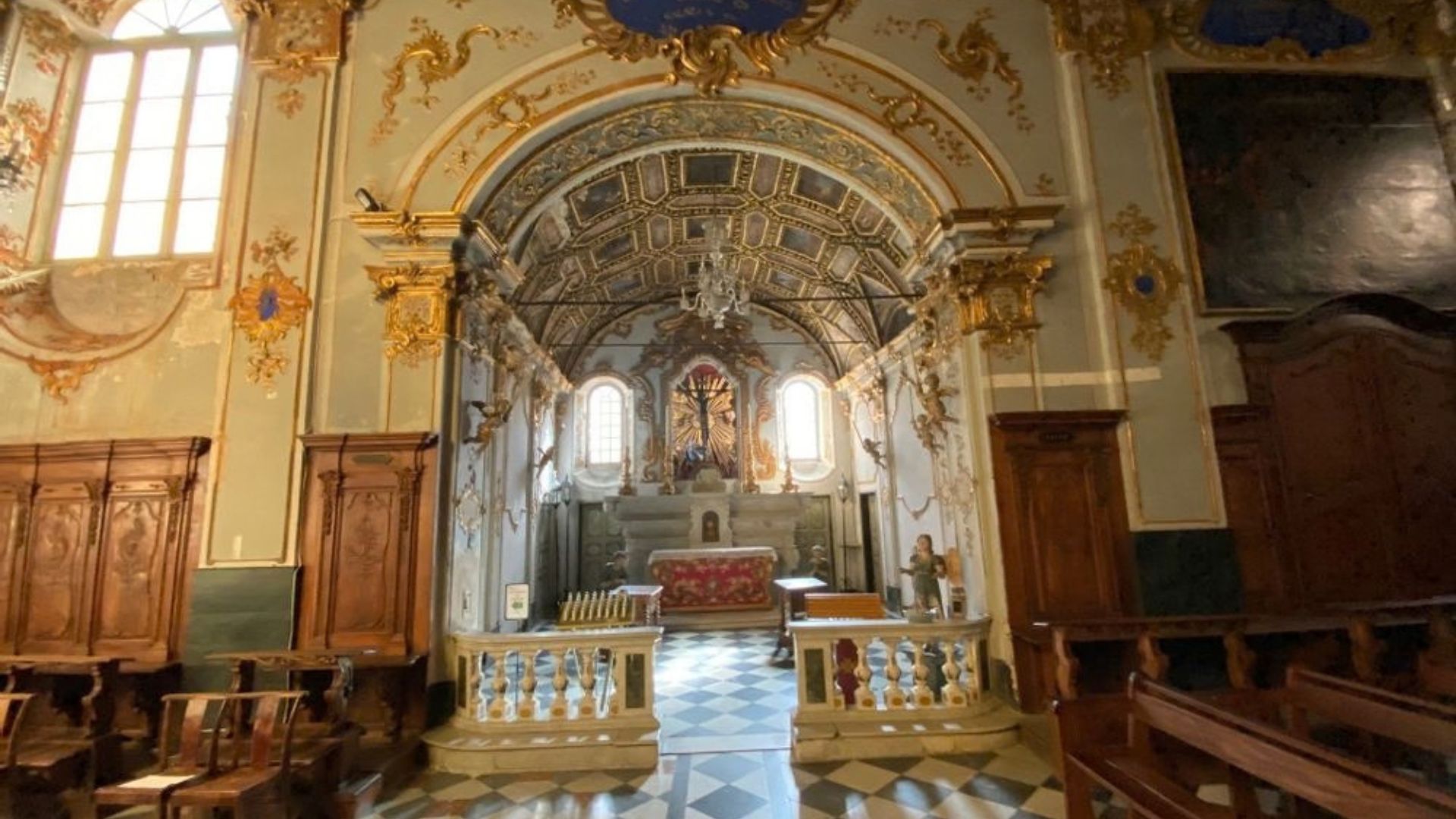
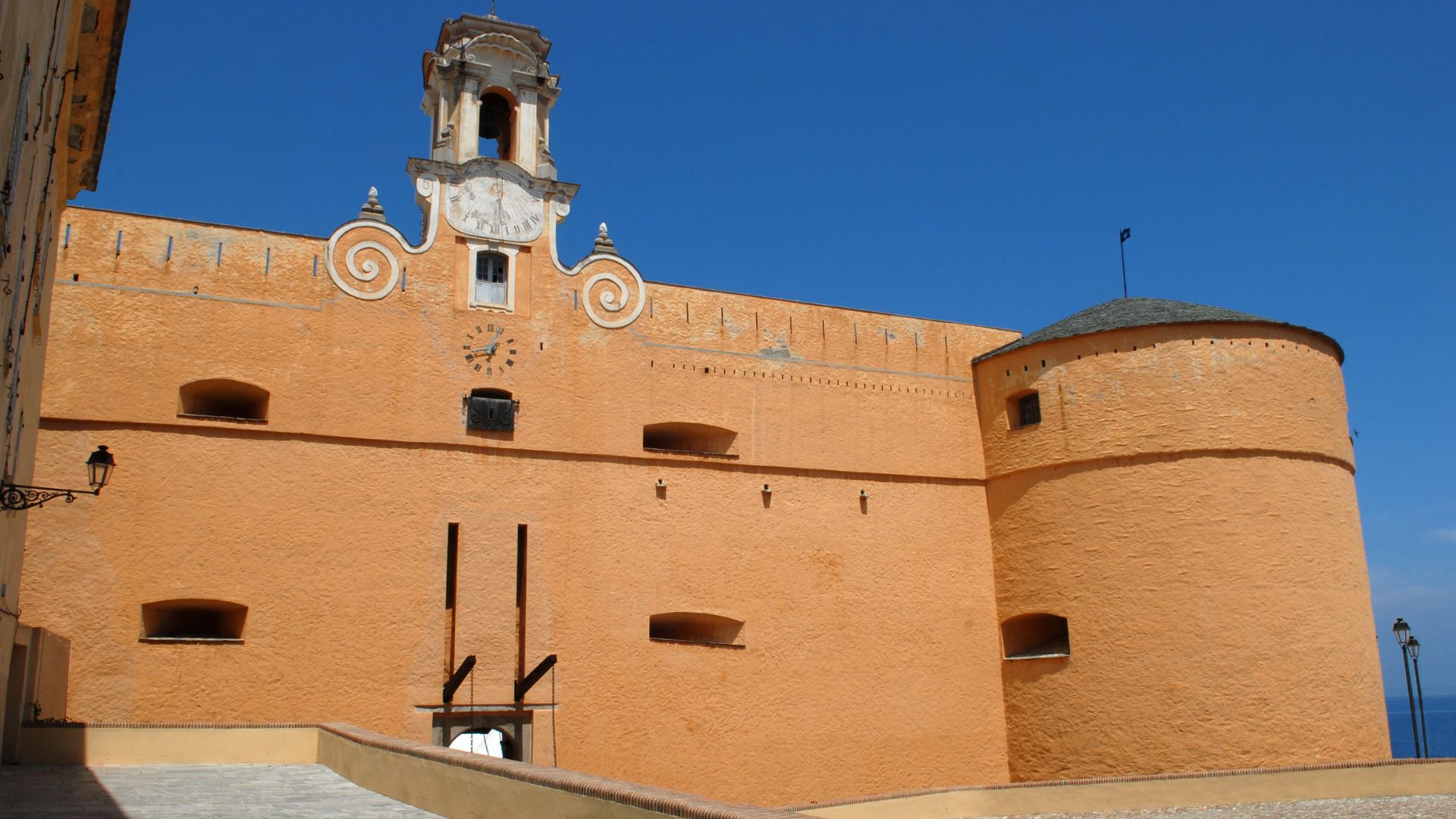
In Terra Nova, the 15th-century citadel built by Bastia’s Genoese rulers, we visit the Governors’ Palace (home to the Musée de Bastia), the Cathedral of Sainte-Marie, and the Oratory of Sainte-Croix.
We then explore Terra Vecchia, a maze of narrow, atmospheric streets, with the Church of Saint-Jean-Baptiste, the Oratory of the Immaculate Conception, and the food market at Place du Marché.
There’s some time for shopping and exploration after lunch, before we gather for a performance of traditional Corsican polyphonic singing and a farewell dinner.
Meals: B, L, D
Overnight: Bastia
After breakfast, we check out of our hotel and transfer as a group to Bastia-Poretta Airport.
It’s farewell to Sardinia and Corsica for now, but we hope to see you again on tour with us soon!
Meals: B
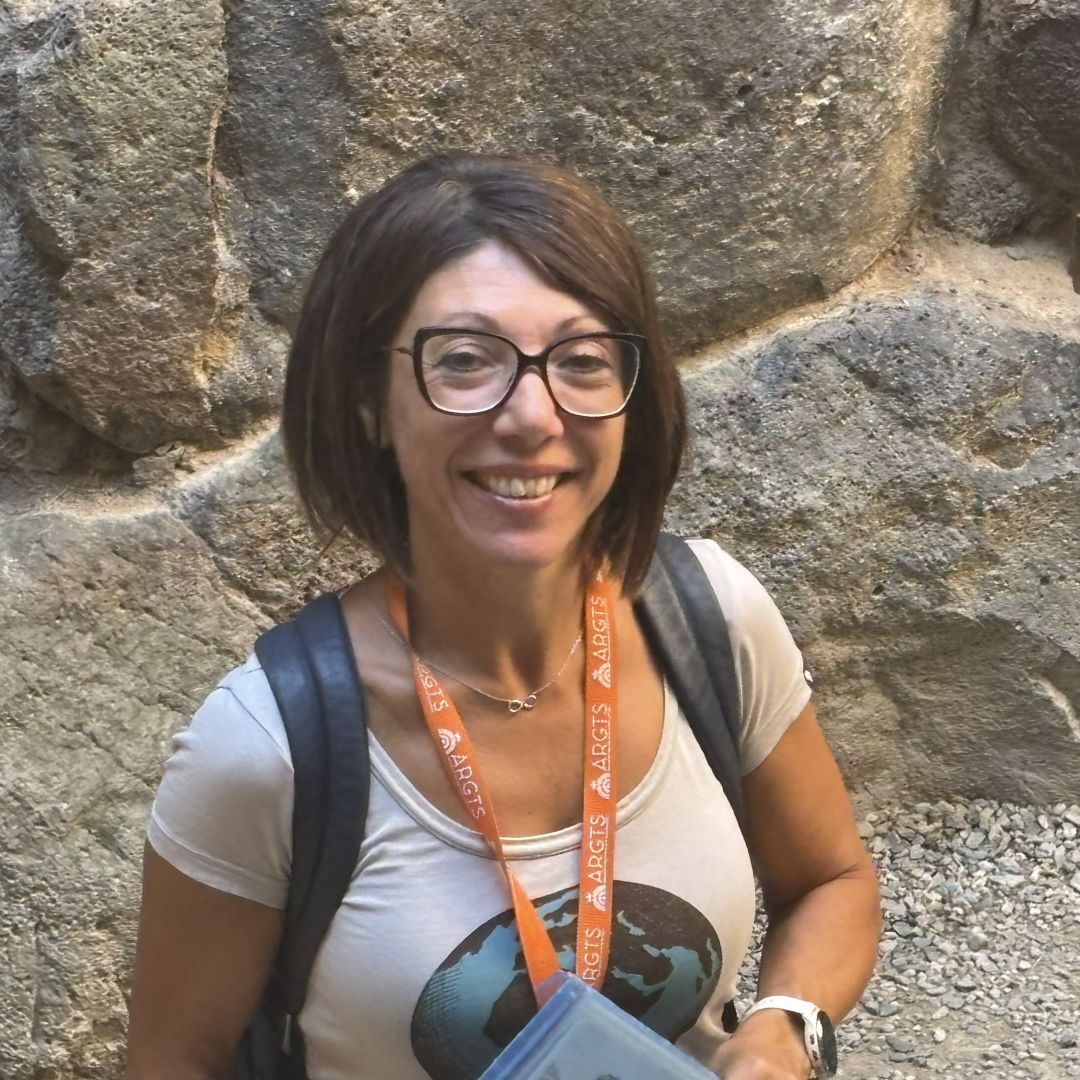
Dottoressa Sedda is a specialist in the prehistory of Sardinia, with an M.A. in Classics and Archaeology and a postgraduate specialization in Archaeology, both from the University of Cagliari.
Laura has excavated at prehistoric sites across the island, including the Neolithic village of Su Coddu in Selargius, near Cagliari, and three nuraghi: Nuraghe Su Mulinu, Villanovafranca; Nuraghe Sa Reggia, Burgos; and Nuraghe Asusa, Isili.
She still practices archaeology, carries out archaeological surveys for the government, and has been an accredited tour guide since 2010.
Dr Kewin Pêche-Quilichini is a Corsican archaeologist who specializes in the prehistory of Corsica and the western Mediterranean. Born in Ajaccio, he holds a PhD in Prehistoric Archaeology from Aix-Marseille University, completed jointly with La Sapienza University of Rome, with a doctoral thesis on Corsican pottery of the Bronze Age and Early Iron Age. He went on to complete postdoctoral research with the Archimède programme at the University of Montpellier. His work centers on the societies of Corsica, Sardinia and the wider western Mediterranean in that period.
Kewin’s knowledge comes from years of fieldwork. He has worked with INRAP, the Corsican archaeological service, universities and research institutions, and has directed excavations at sites including Cuciurpula, Cucuruzzu, Nuciaresa, Monti Barbatu and Puzzonu. He knows Corsica’s ancient settlements, fortifications, pottery and daily life in unusual depth. Since 2021, he has been Director of the Musée de l’Alta Rocca in Lévie, in the heart of southern Corsica’s archaeological landscape. The museum holds some of the most important finds from the Alta Rocca region, and his research and fieldwork shape how they are presented to visitors.

Our tours are physically active! Clambering around archaeological sites, castles, nuraghi, and fortresses is an essential part of the Take Me To Europe tour experience, and Europe has stairs everywhere! On our Sardinia and Corsica tour, you will need to be able to:
Free 16-page guide
Written by archaeologists. Submerged Roman villas, underground cities and abandoned Greek quarries –, with maps, access details and what to see at each.
One email a week. Unsubscribe anytime.