Crossing the Green Line in Cyprus has been possible since April 2003. However, Cyprus has been divided by the Green Line since 1974, creating two separate entities: the Greek Cypriot-controlled Republic of Cyprus and the self-declared Turkish Republic of Northern Cyprus.
However, if you want to visit both parts of Cyprus, there are some essential practicalities and legalities to keep in mind. But don’t worry; below you’ll find everything you need to know to cross the Green Line (and get back!)
Need to Know
You cannot cross the international border between the Republic of Cyprus and Turkish-controlled Northern Cyprus without being processed at both sides of the border, which runs through the capital of Cyprus, Nicosia.
Perhaps most importantly, you cannot cross from Northern Cyprus into Cyprus and leave the country through the Republic of Cyprus, as you will be deemed to have entered Cyprus illegally. You can, however, cross between Cyprus and Northern Cyprus in both directions, on foot and by car.
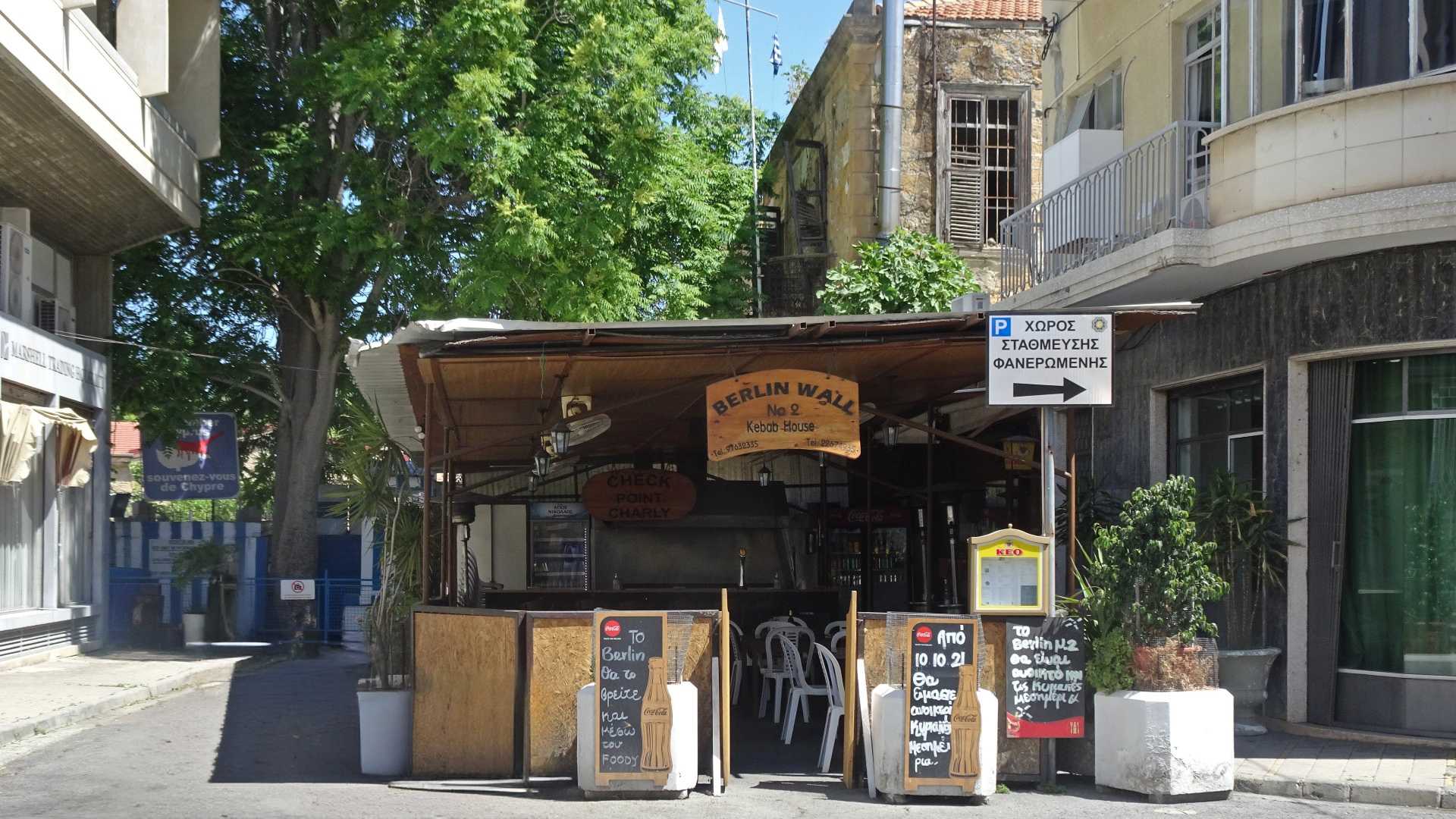
Before we delve into the know-how of crossing the Green Line and the border between the two parts of Cyprus, you need to understand the history of the Green Line, what it is, and how it got its name.
Cyprus gained its independence from the British in 1960 after a 5-year war. But even after peace was restored, inter-communal fighting between the Turkish and Greek Cypriots began due to disagreements over political and legal issues.
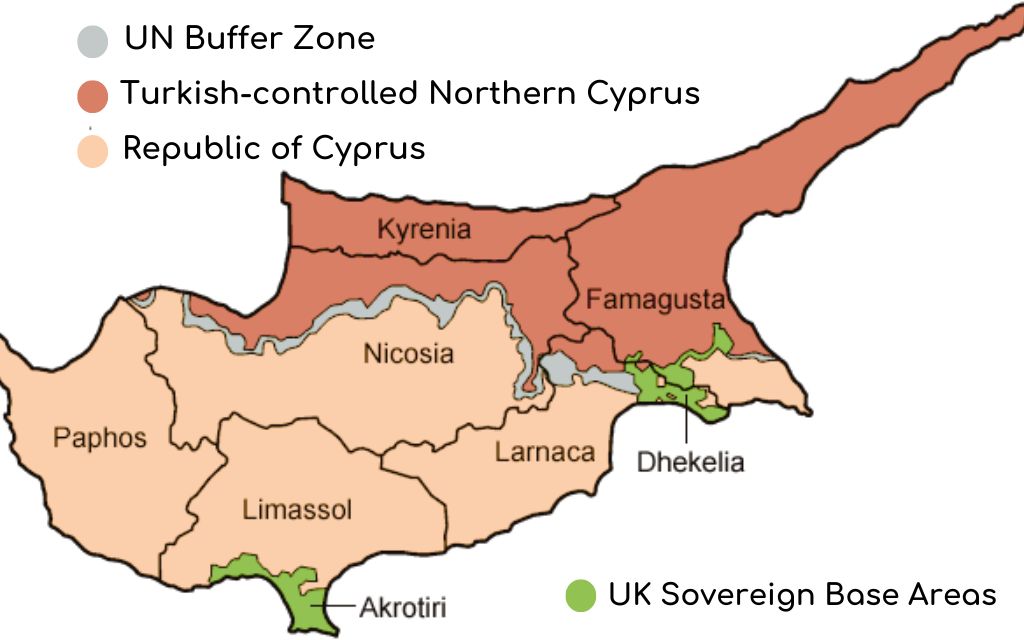
So, the British, who even today continue to maintain a presence on the island of Cyprus (the UK Sovereign Base Areas in the map above), created the Green Line as a barrier between the two communities.
Major General Peter Young drew a line on the map with a green pencil, separating the island into northern and southern regions and creating the Green Line.
Unfortunately, the conflict between the communities eventually led to the Turkish invasion on the 20th of July in 1974.
Since then, Cyprus has been divided by the Green Line, which expanded and is now separating the whole island into the Republic of Cyprus and the occupied northern part, the self-declared Republic of Northern Cyprus.
The Green Line is now a UN Buffer Zone, stretching over 180 km across the island. It crosses Nicosia, the capital of Cyprus, making it the only divided capital in the world, and many other parts of the island.
In Nicosia, the buffer zone is only a few meters wide, but in many other areas, it is a few kilometers wide, enclosing several villages within the Green Line.
Generally, the Buffer Zone remains untouched by time and human activity. For instance, in certain remnants of old villages, the shops and other buildings are taken over by nature.
That’s why the United Nations Peacekeeping Force in Cyprus strives to preserve both the native flora and fauna and the historical and cultural attractions within the Green Line.
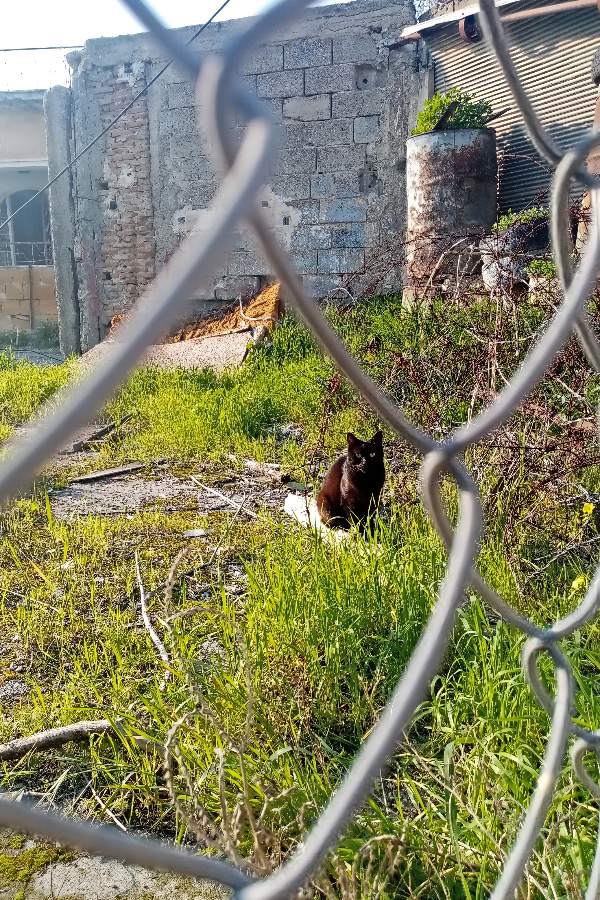
Although the Green Line is considered a “dead zone,” as it is prohibited for people to enter freely, there are Civil Use Areas where people can live and work.
One of these areas is Pyla, a village located on the east side of the Green Line, and in Larnaca district, where both Greek and Turkish Cypriots live side-by-side.
Pyla is governed by the Republic of Cyprus, but policed by the UN. It has become a popular resort town with a branch of the University of Central Lancashire there, and there is a lovely medieval tower (below) to visit.
So, visiting Pyla allows you to experience the Buffer Zone in an alternative way.

As the Green Line crosses Nicosia, it makes Nicosia the only divided capital city in the world. Specifically, it passes through Nicosia’s old town within the medieval Venetian walls and traces the path of Ermou Street, which was once the main shopping street of the city.
So, today, while walking along Nicosia’s narrow streets within the Old Town, you can see reminders of the war, abandoned homes, shops, and cars, and get a glimpse of Nicosia’s past through the barbed wire and walls separating the northern and southern parts of the city.

After decades of complete separation of the two parts of the island, in 2003, the Green Line, which became the de facto border of the unrecognized Republic of Turkish Northern Cyprus, loosened up, and both locals and visitors could now explore both parts of the island.
However, there are some regulations and practicalities you’ll need to understand before crossing the border.
First of all, it is essential to remember that the northern part of Cyprus is a country only recognized by Turkey, making it an illegal nation in the eyes of Cypriots, especially.
Thus, if you enter Cyprus through any airport or port in the occupied area of Northern Cyprus, you will have legal issues. That is, you need to cross back again into Northern Cyprus in order to leave the island. You cannot leave through a port or airport in the Republic of Cyprus.
It’s also important to be a little careful in where and how you take pictures. Taking pictures of military installations is forbidden on either side of the Green Line.
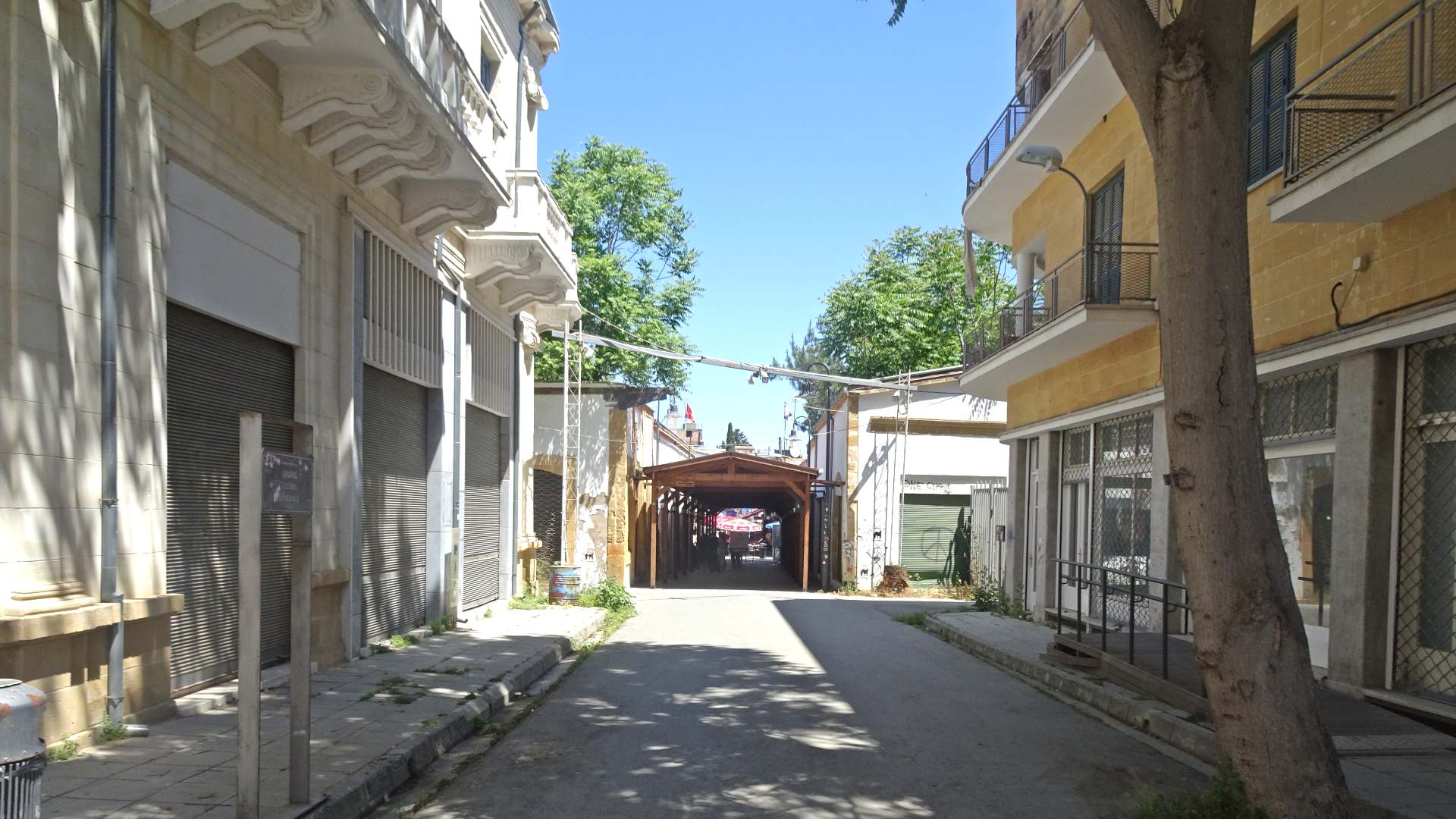
If you plan to cross the Green Line in either direction, you can easily cross from any checkpoint with a valid passport or an ID if you’re an EU citizen. If you’ve entered the country via the North, you will likely need a multi-entry Turkish visa in order to cross over to the South (the Republic of Cyprus), and back again.
See also below if you plan to travel by car to the North, and remember to bring your driver’s license.
Non-EU citizens can indeed cross the Green Line with a valid passport or ID. The Green Line is NOT an external border of the European Union. (You can read more about the official EU Green Line Regulation here.)
The exception to this appears to be crossing through the UK Sovereign Bases by car. There are 2 crossing points in the United Kingdom’s Sovereign Base Area of Dhekelia in the east of the island.
These crossing points have specific entry and exit rules under international law, determining who can use them and non-EU citizens can’t cross the green line at these checkpoints in either direction. Instead, use the Dherynia crossing point (also known as Famagusta or Gazimagusa). More information on the Australian government official website.
Don’t forget your driving license!
There are occasionally reports that travelers crossing by road into the North need to show that they have car insurance for the North. At the moment, this is €35. Some checkpoints only offer this service from 9-5 am.
If you’re renting a car, be sure to let the agency know that you’ll visit the north in advance.
I haven’t found any travel agencies that will allow me to take a car from Cyprus to Northern Cyprus, but it is easy to have a travel agency have a car ready for you on the Turkish side.
As of 2026, it is more difficult for large groups to cross the border unless on foot. If you are in a large car or vehicle and there are more than four passengers, officials at road crossings on the Turkish side may want you to have a Turkish-accredited tour guide and be under the auspices of a travel agency from Turkey or North Cyprus.
🔷 Don’t try to enter the Turkish side of the island (The Self-Declared Republic of North Cyprus) by flying or by boat unless you are a Turkish citizen or have a valid visa for Turkey. Make sure it is a multi-entry visa if you intend to cross into the South (the Republic of Cyprus).
🔷 If you enter Cyprus through the North, remember that you must leave the country also from the North. You cannot leave through a port or airport in the Republic of Cyprus.
🔷 Don’t approach a checkpoint without a valid passport or, if you are an EU citizen, a valid ID card.
🔷 Don’t drive from the South to the North without car insurance for North Cyprus and without being allowed by your rental agency to take a car across the border. If you are not an EU citizen, don’t try crossing through the UK Sovereign bases.
🔷 Avoid taking photographs near checkpoints, UN towers, and all military installations.
🔷 Be aware of common GPS failures when crossing the North through the mountains to Kato Paphos.
🔷 Avoid eating at street stalls and restaurants that don’t look hygienic – food and water standards are not at the level of EU standards in Northern Cyprus (Northern Nicosia is generally fine for food).
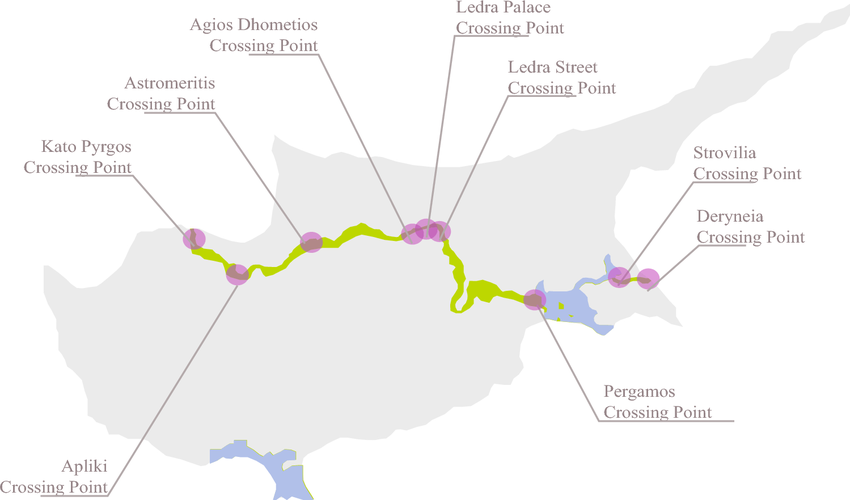
* Orac, Ediz & Dağlı, Uğur. (2023). Successful criteria for placemaking process in contested spaces: evaluation of non-governmental organisations at Ledra Street Crossing Point in Nicosia. URBAN DESIGN International. 29. 1-19. 10.1057/s41289-023-00230-3.
There are several checkpoints throughout the island, but the most popular among travelers are Ledra Street and Ledra Palace.
Ledra Street checkpoint is, in fact, one of the newest, but it has become the most central and popular on the entire island. The crossing is open daily from 6:00 am to midnight. In peak summer months (June–September), wait times can reach 20–30 minutes; in quieter periods, most people cross in under 10 minutes. Simply present your passport (or EU ID card if you are an EU citizen) at both the Republic of Cyprus checkpoint and the Northern Cyprus checkpoint.
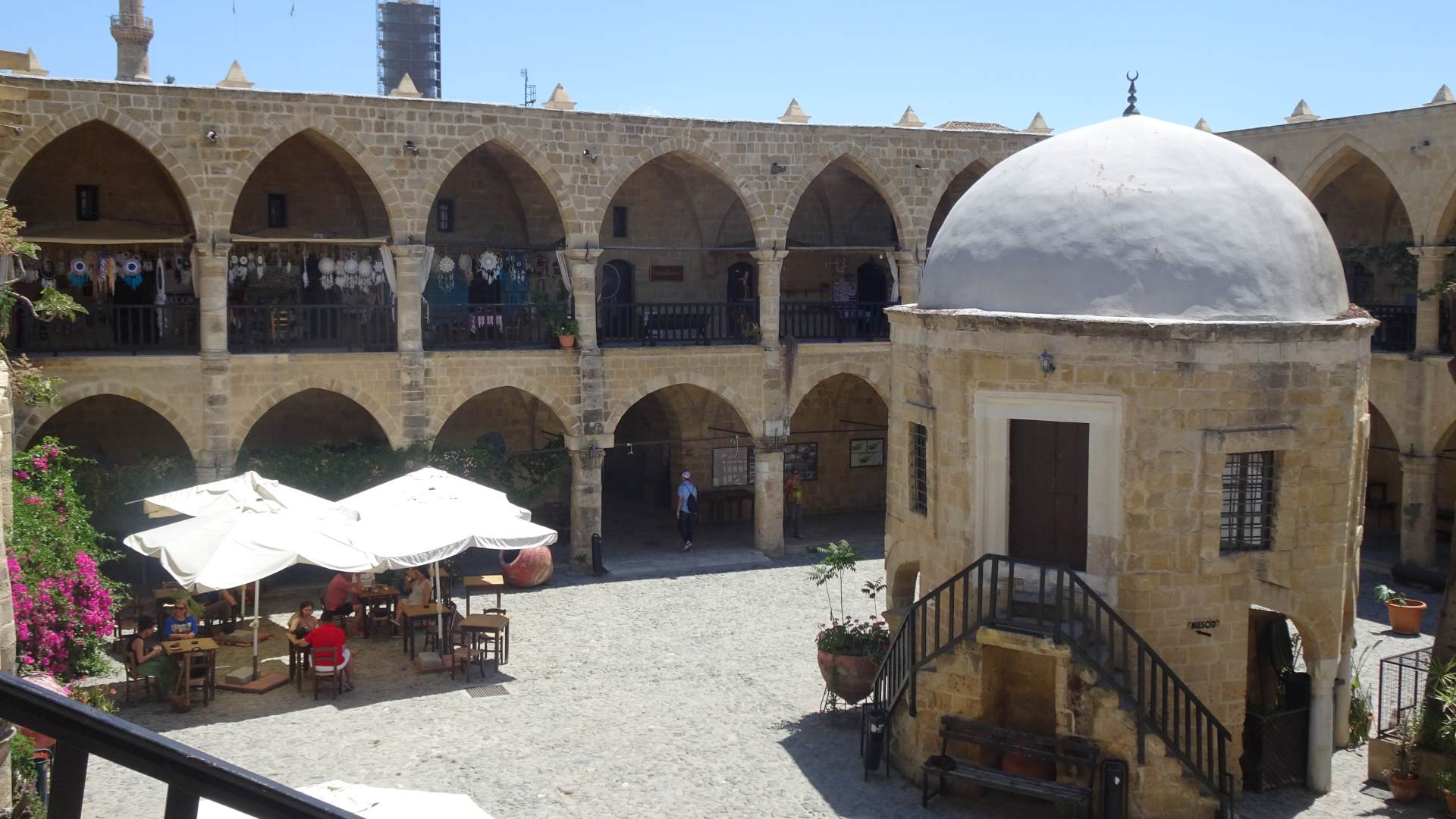
Located on the main shopping pedestrian street in old Nicosia, it has become an excellent point to explore the two parts of the capital city and discover beautiful monuments, such as the Agia Sofia church that is now known as Selimiye Mosque, and the Buyuk Han.
This checkpoint is for pedestrians only.
Ledra Palace is the oldest crossing point between the two parts of Cyprus, located just west of the Old Town’s Venetian walls near the historic Ledra Palace Hotel. It is pedestrian only for tourists; only diplomatic and official vehicles may pass.
It operates 24/7, though it may close late at night during the off-season. It is considerably quieter than Ledra because its a long (and often hot and dusty) walk compared to the more convenient Ledra Street crossing.
The route takes you past the abandoned Ledra Palace Hotel itself — a haunting reminder of 1974, still occupied by UN peacekeeping forces with bullet holes in its external walls.
Agios Dometios — known on the Northern Cyprus side as Metehan — is located in the western suburbs of Nicosia and is the main vehicle crossing point in the capital. Unlike Ledra Street and Ledra Palace, which are pedestrian-only, Agios Dometios handles both car and pedestrian crossings.
If you are driving into Northern Cyprus, you will need a separate insurance policy valid for Northern Cyprus — your Republic of Cyprus vehicle insurance does not cover you on the northern side. If you are renting a car, check with your rental company before crossing, as most Republic of Cyprus rental agencies prohibit taking their vehicles into Northern Cyprus entirely. You will also need to acquire mandatory insurance for the Turkish side at the border crossing point.
For current opening hours, crossing requirements, and the official list of all Green Line crossing points, refer directly to the Republic of Cyprus Police:
👉 www.police.gov.cy
Note: Temporary insurance can usually be purchased at this crossing point, providing coverage for the duration of your stay, but this is not guaranteed.
Beyond Nicosia, there are several other crossing points across the island:
🔷 Deryneia (near Famagusta) — open daily 7:00 am to 11:00 pm, for vehicles and pedestrians; the most convenient crossing if you are heading to Famagusta or the east coast beaches
🔷 Astromeritis (Bostanci) — in the western part of Cyprus near Morphou; open 24/7, for vehicles and pedestrians
🔷 Strovilia (near Famagusta/Dhekelia) — operates approximately 10:00 am to 7:00 pm only; not recommended if you need flexibility. NOT allowed if you are not an EU citizen.
🔷 Pyla (Pergamos) — located in the unique mixed village of Pyla in Larnaca district; limited hours, approximately 10:00 am to 7:00 pm. NOT allowed if you are not an EU citizen.
Yeşilırmak–Pyrgos and Lefke — in the far northwest; daytime hours only and rarely used by tourists
⚠️ Always verify crossing hours before you travel — hours can change seasonally and without notice. The Republic of Cyprus police maintain an updated list of official crossing points on their website.
Crossing the green line ot Northern Cyprus is fascinating, and you can spend a wonderful day in bookshops, cafes, traditional Inns like Buyuk Han, historic Cathedral/Mosques, museums, and buildings like The Eaved House.
Whirling dervishes, medieval architecture, and a general air of neglect (walk the old Turkish quarter beside the Wall) will make a great impression. The difference between the two sides of Nicosia is stark.
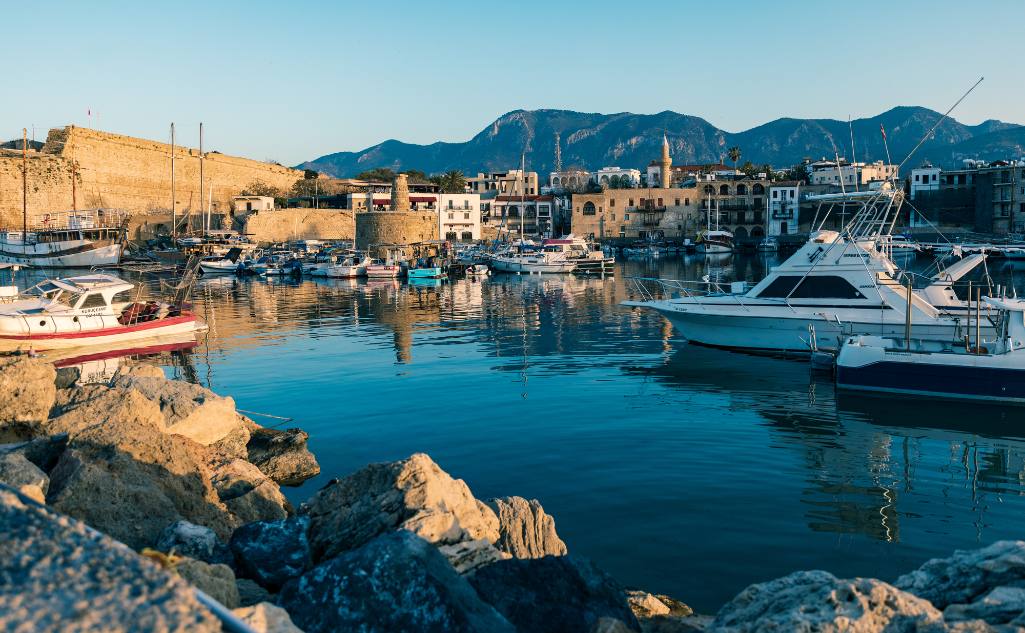
Coming from Nicosia, it is possible to visit the wonderful ruins of Saint Hilarion Castle atop the Five-Fingered Range, Bellapais Village and Bellapais Abbey, the ruins of Morphou, and picturesque Kyrenia Castle with its Shipwreck Museum. Kyrenia is an interesting town, especially its old town and harbor.
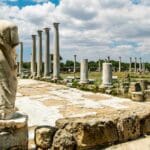
Entering the North from the Southeast of the island, you are very close to the ancient city of Famagusta and its many historic sites, the wonderful ruins of Salamis, and within Famagusta, the abandoned seaside resort of Varosha.
The far northeast of the Karpaz Peninsula has golden sand beaches, wild donkeys, and the Apostolos Andreas Monastery (St. Andrew’s).
Crossing the Green Line is one of the most thought-provoking experiences Cyprus has to offer — nowhere else in the world can you walk in minutes from a European Union capital into a territory frozen in political limbo since 1974. Whether you cross for the history, the food, the ancient ruins, or simply the curiosity of it, it is always worth the short walk through the checkpoint.
At Take Me to Europe Tours, we design custom-planned trips to Cyprus that take you beyond the tourist trail — into the ancient sites, hidden villages, and living history that make this island one of the Mediterranean’s most extraordinary destinations. We also run small-group history tours for travelers who want expert guidance at every step.
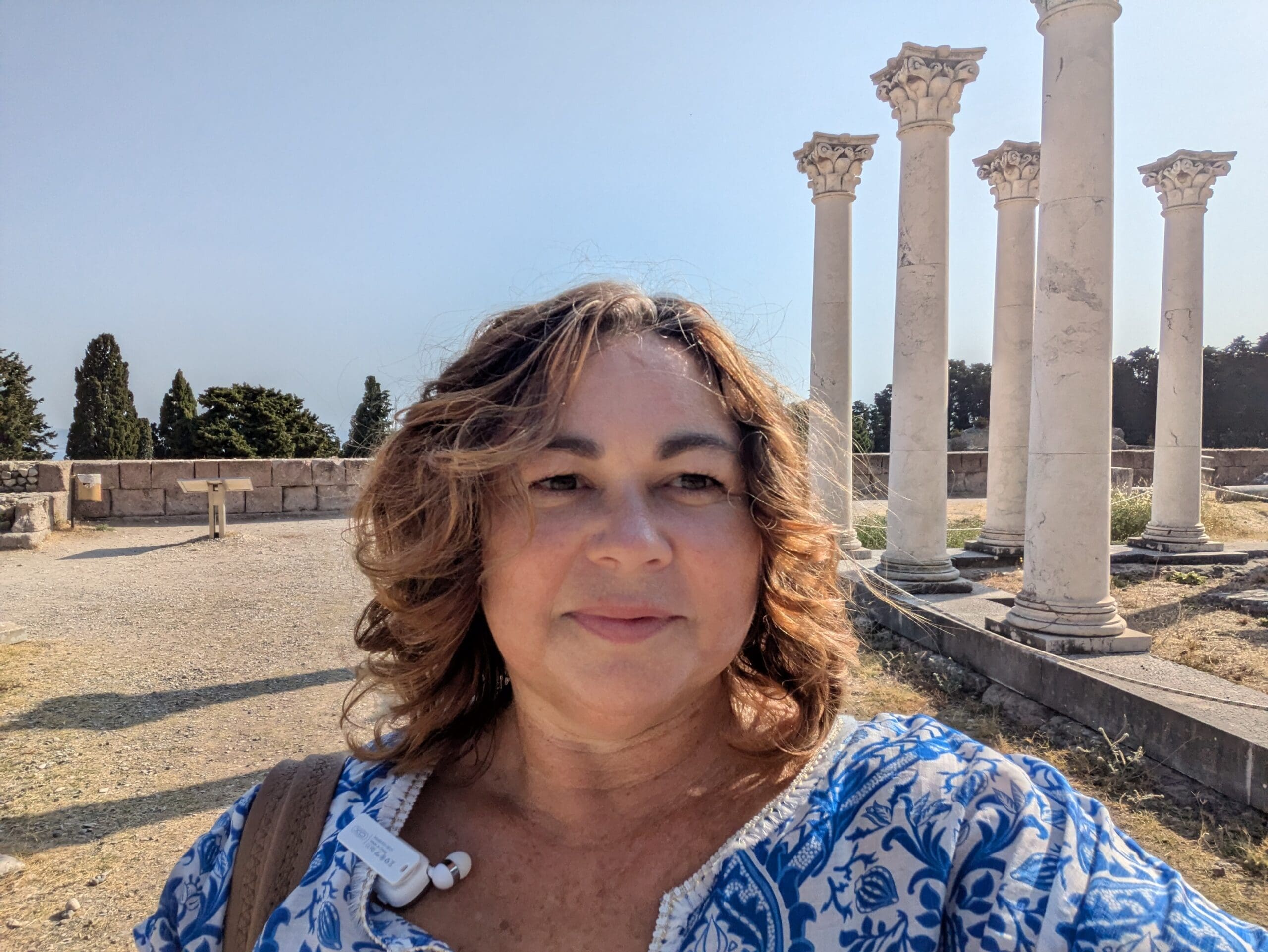
Dr. Monique Skidmore is an award-winning anthropologist and travel expert who has spent more than 25 years exploring and documenting cultures around the world. As the founder of Take Me To Europe Tours, she combines her deep academic expertise with a passion for cultural immersion and archaeology. Monique creates small-group journeys across Cyprus, Greece, Italy, Malta, and the wider Mediterranean.
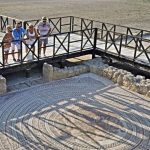
On her small-group Cyprus tour, she visits Ancient Kourion, Salamis, and the island’s other great archaeological sites, and this guide draws on those visits as well as her own independent travels in and around Cyprus.
For more on her work and travels, visit her About Monique page.