
Wondering if the ruins of Ancient Corinth and the Acrocorinth are worth visiting? Can you see Ancient Corinth as a day trip from Athens? Can you combine it with other ancient sites on a one- or two-day road trip around the Peloponnese? The answer to all of these is a definite yes.
This guide is for anyone planning a trip to mainland Greece — history lovers, road trippers, travellers following St Paul’s journeys, and anyone deciding whether Corinth deserves a spot on their itinerary. You’ll find the practical details (how to get there, opening hours, tickets), the must-see sites in the ruined city and atop the Acrocorinth, and the story of why the Corinthians were such a big deal in the Ancient World.
Ancient Corinth is a historic site in Greece, on the Isthmus of Corinth, dating back to the Neolithic period over 5,000 years ago.
During its ascendancy, Corinth was the wealthiest city-state in the ancient Greek world. It grew to become the greatest of all the Greek city-states.
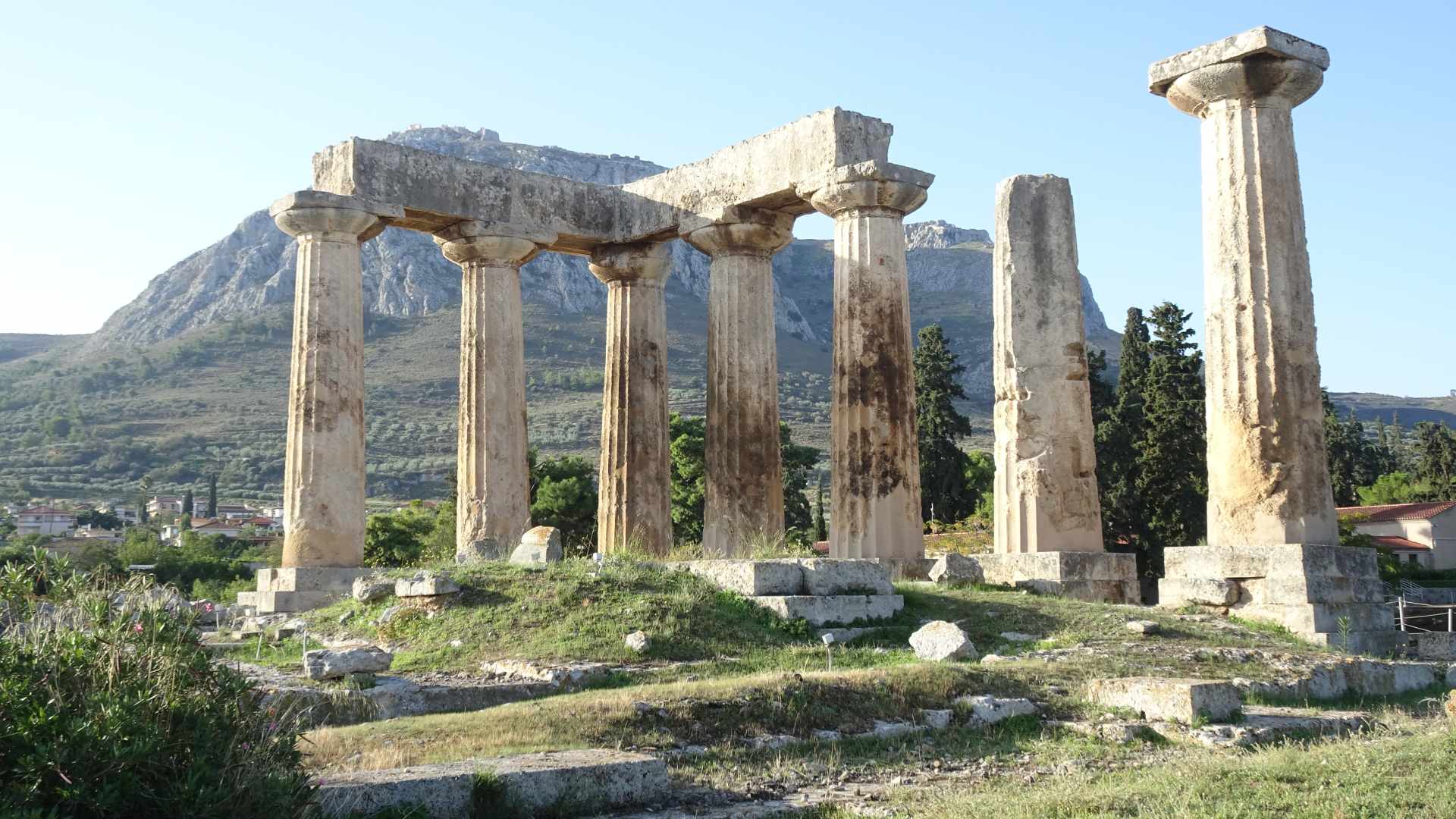
A major ancient site in Greece, the Temple of Apollo is the most famous building still standing within the large archaeological zone.
Surrounded by natural springs and fertile plains, it was a bustling, wealthy city with traders arriving from around the known world.
One feature that made trading in ancient times much easier in Corinth was the diolkos, or “haul across” a paved road that connected the Saronic Gulf to the Corinthian Gulf, allowing for quick and easy trade of goods.
Tourism to Greece began in the early part of the 19th century. From that time onwards, the ruins of Archaia Korinthos with its temples, fountains, theatre, agora, shops, and paved streets have attracted many visitors.
It is one of the most significant sites of the Ancient World and is a must-see for a visit to mainland Greece.
🏛️ Is Ancient Corinth worth visiting? Yes — it’s one of the most significant sites of the Ancient World, with the Temple of Apollo, the agora where St Paul preached, and a hilltop fortress above it all.
🏛️ How far is Ancient Corinth from Athens? About a 2-hour drive, or take the Suburban Railway from Athens to Corinth station. The ruins are 5 km southwest of modern Corinth.
🏛️ How much are tickets? €15 for adults, €8 concession (includes the Archaeological Museum). The Acrocorinth fortress is free to enter.
🏛️ How long do you need? Allow 2–3 hours for the archaeological site and museum, or half a day if you’re also climbing the Acrocorinth.
🏛️ Can I do it without a car? Yes — trains and buses run from Athens, local buses connect Corinth to the site every 15 minutes, and well-reviewed day tours leave from both Athens and Nafplio.
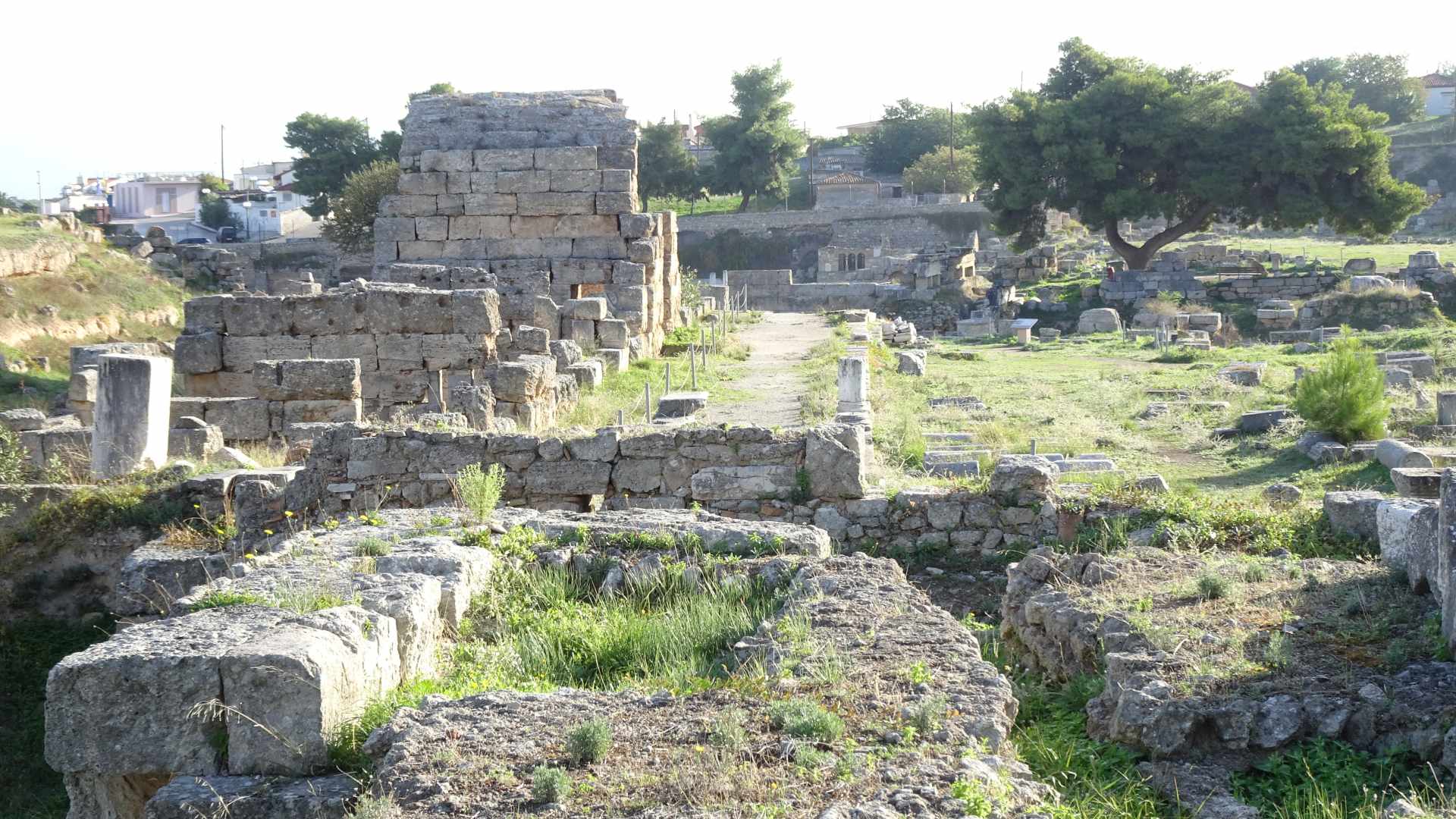
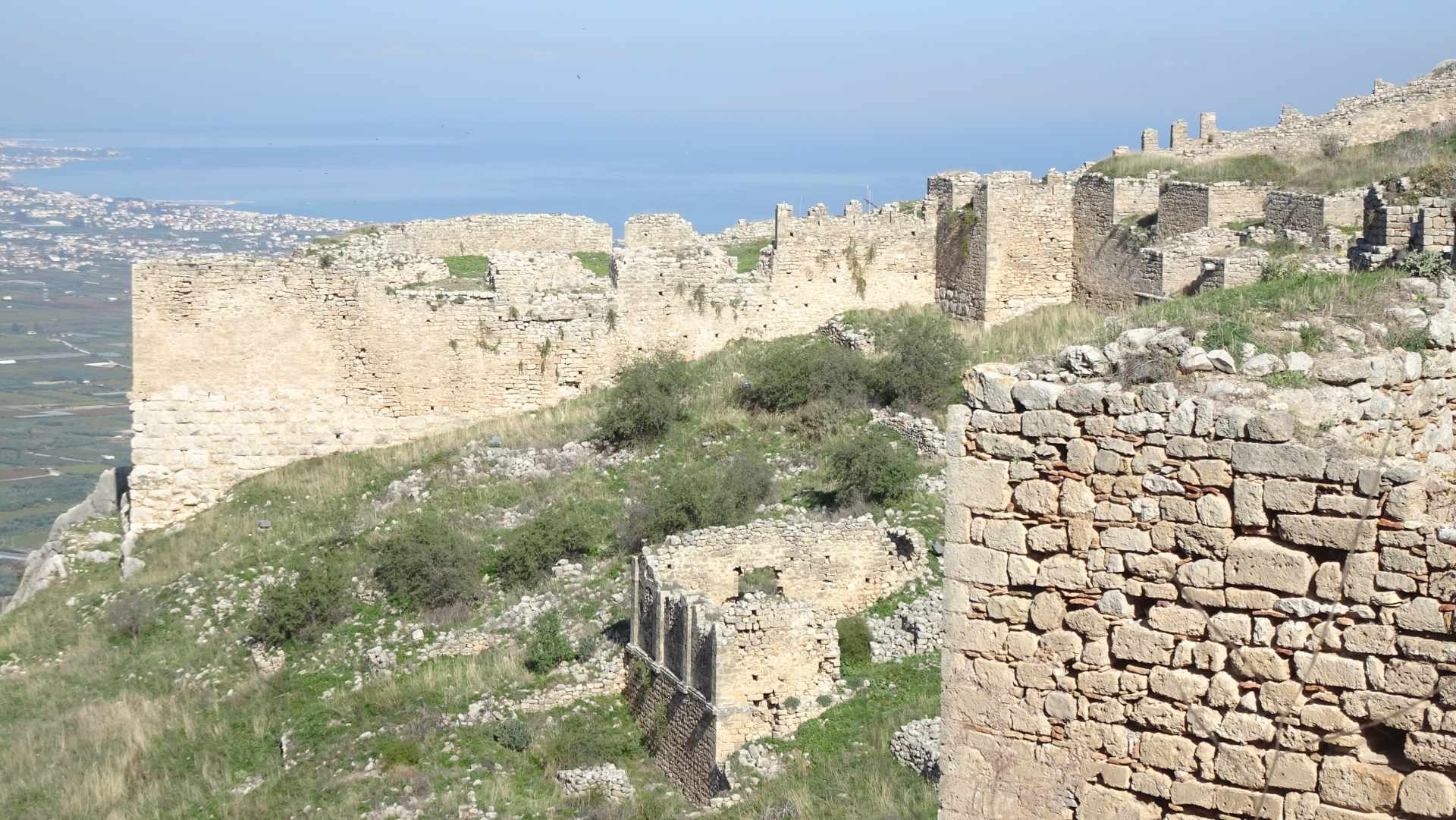
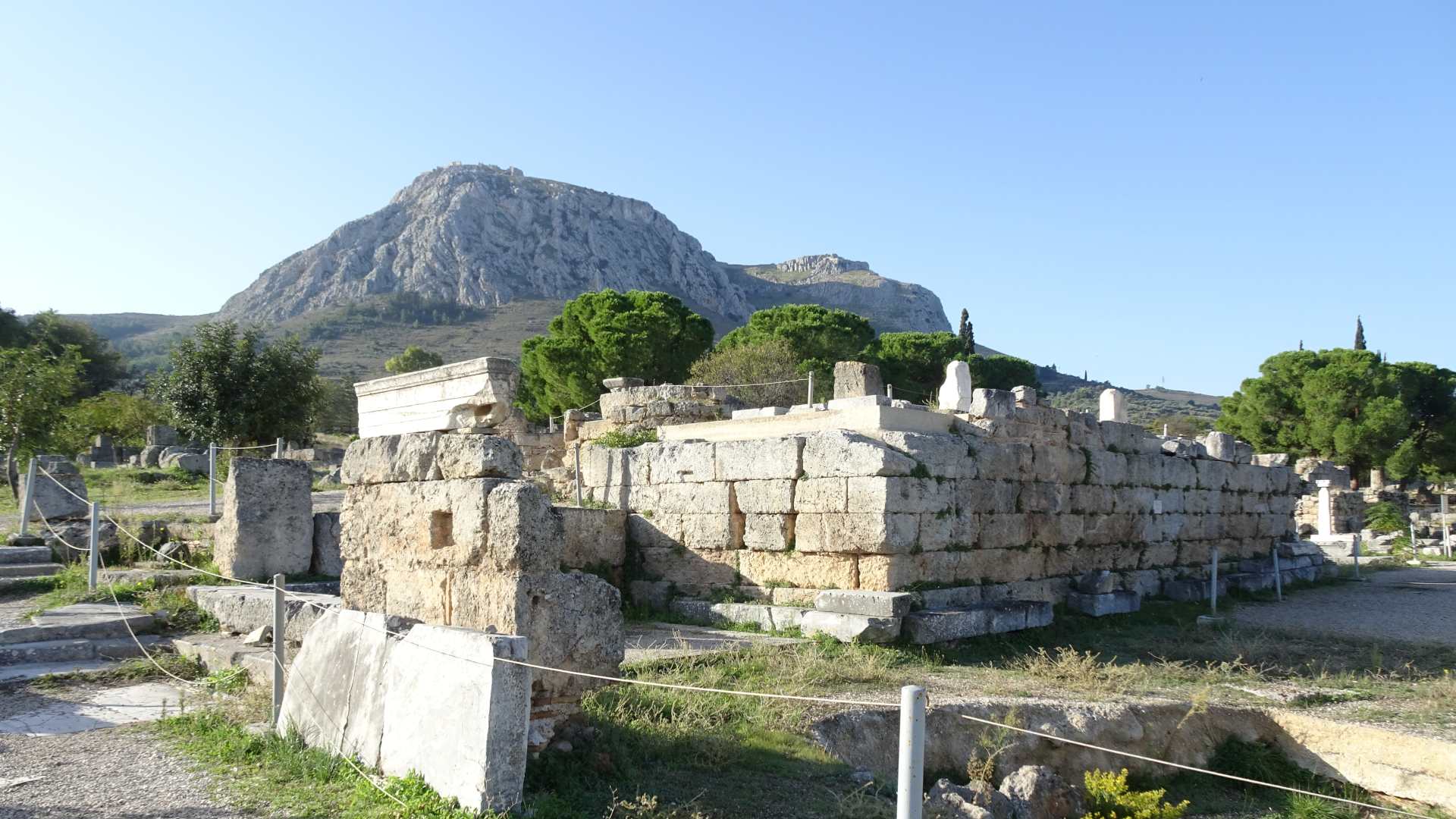
The remains of Ancient Corinth sit at the base of the Acrocorinthus, a massive rock formation rising 575 metres (1,886 feet) above sea level.
On its summit stood an almost impenetrable fortress guarding the land route into the Peloponnese — whoever held the Acrocorinth controlled who came in and out. That’s a big part of why Corinth got so rich.
The akropolis of Ancient Corinth – the “Acrocorinth” – is believed to be the highest and largest of the akropolis of Ancient Greece. The ruins of Acrocorinth include the Temple of Aphrodite.
It has been fortified by many over the centuries, but today most of what can be seen was built by the Venetians and the Franks.
A large part of Corinth’s wealth and power came from being able to control the narrow land bridge between Attica and the Peloponnese and two ports.
The Acrocorinth was a vital part of being able to defend Corinth’s lucky geographical position.
The modern city of Corinth is about a 2-hour drive from Athens, and the archaeological site is an easy trip by car, train, bus, or organised tour.
🚙 By car: From Athens, it’s about a 2-hour drive. Nafplio is closer still — around 40 minutes from Corinth. If you’re driving, you’ll take the exit for the Archaeological Site (the interchange of Ancient Corinth).
🚆 By train: The Athens Suburban Railway runs from Athens International Airport to Kiato–Corinth, stopping at Corinth station.
🚍 By bus: Intercity (KTEL) buses run regular services between Athens and Corinth.
🚍 From Corinth to the ruins: The archaeological zone is 5 km (3.1 miles) southwest of modern Corinth. Local buses run every 15 minutes, and the trip takes about 17 minutes.
No rental car? You can book a number of well-reviewed tours of Ancient Corinth and the Acrocorinth from both Athens and Nafplio (more on the best ones below).
Ancient Corinth and the Archaeological Museum open at 8 am every day in summer, closing as late as 8 pm, with shorter hours in winter. Greek site hours shift with the seasons, so it’s always worth checking the official Ministry of Culture website before you visit.
| Season | Hours |
|---|---|
| 1 Apr–30 Apr | 08:00–19:00 |
| 1 May–31 Aug | 08:00–20:00 |
| 1–15 Sep | 08:00–19:30 |
| 16–30 Sep | 08:00–19:00 |
| 1–15 Oct | 08:00–18:30 |
| 16–31 Oct | 08:00–18:00 |
| 1 Nov–31 Mar | 08:30–15:30 (closed Tue) |
Source: Greek Ministry of Culture
Last admission is 20 minutes before closing. The site is closed on 1 January, 25 March, Orthodox Easter Sunday, 1 May, and 25–26 December.
The Acrocorinth fortress on the hill above keeps similar seasonal hours — roughly 8 am–8 pm in summer and 8 am–3 pm in winter.
The Acrocorinth is free to enter — you only pay for the main archaeological site and museum below.
Entry to the site and museum is free on several dates each year, including 6 March, 18 April, 18 May, the last weekend of September, 28 October, and the first Sunday of each month from November to March.
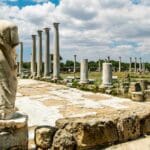
Temple of Apollo — the Doric temple dating to the 4th century BCE is the most imposing monument in the archaeological zone and the site’s most famous landmark. It’s one of my favourite temples in all of mainland Greece and wonderfully photogenic. I always arrive before the site opens, am first through the gates, and often have nearly 30 minutes to photograph the temple and wander the agora completely alone.
The Agora — just south of the temple, this was the marketplace at the heart of Corinthian life, and where St Paul was brought before the Roman governor. Our tour guests love seeing this part of the site!
Lechaion Street — north of the agora, walk the paved road where the Corinthians shopped. Byzantine royals later built their extravagant homes around it.
The South Stoa — the covered walkway (portico) that framed the agora for public use.
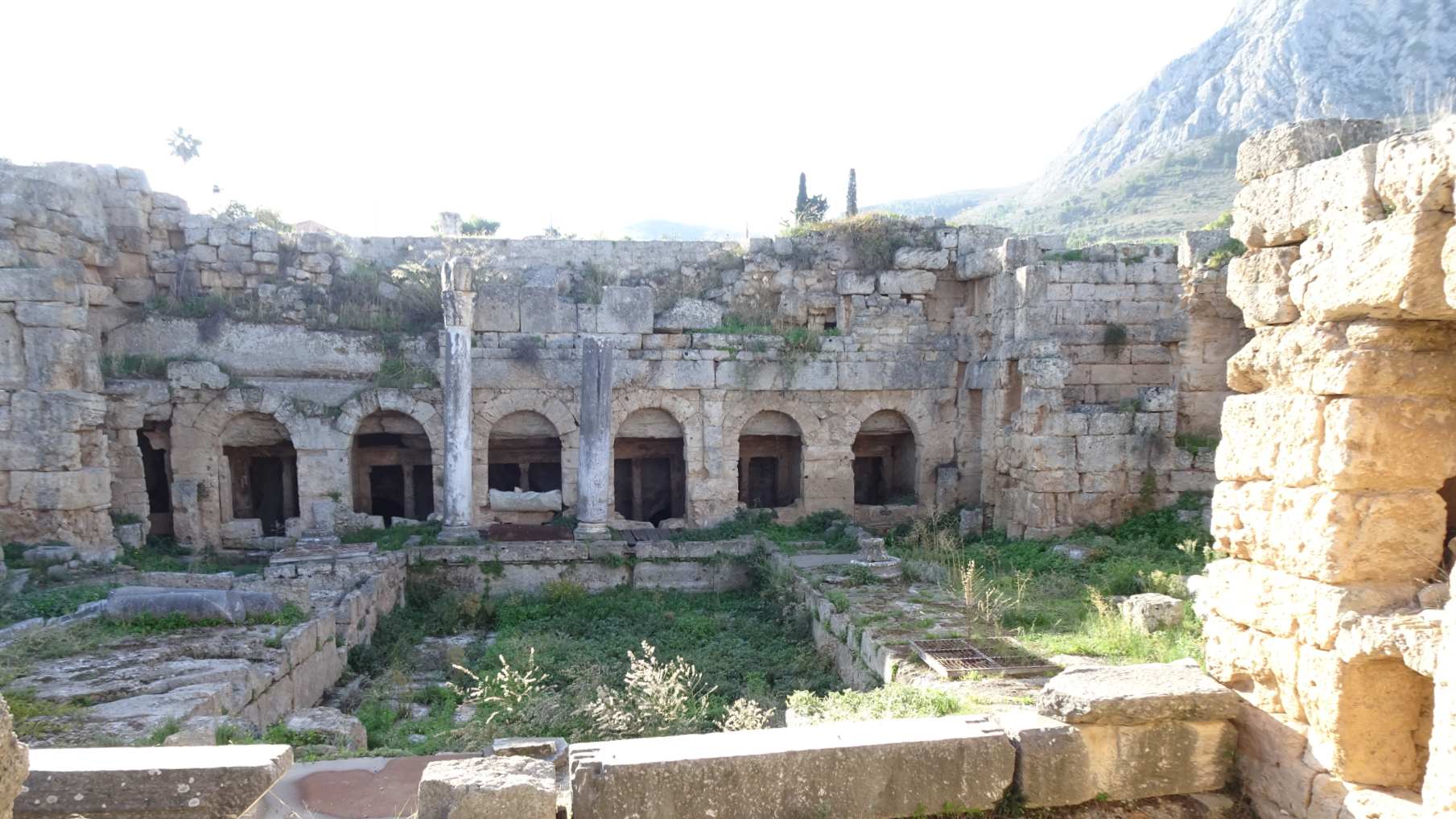
Fountain of Peirene — just off Lechaion Street, famous throughout Greece for its clean, clear water. Legend says Peirene wept so much for her son, killed by Artemis, that she transformed into a spring.
The Archaeological Museum of Ancient Corinth — a must-see, with finds from prehistoric to Roman times, including the famous Corinthian pottery.
The Acrocorinth — the buildings on the slopes and summit, if you have the stamina and time. The views over the Gulf of Corinth alone are worth the climb. A word of caution from experience: the rock is slippery when wet, so tread carefully, but the views from the top are worth the drive up the rocky outcrop.
If you’d rather not drive, these are the tours I recommend to my own guests. What they have in common: reputable local operators, “no fluff” itineraries, hundreds of five-star reviews each, and flexible cancellation policies.
The Most Popular Tour from Athens or Corinth (with hundreds of 5-star reviews): Private Biblical Tour of Isthmus Canal and Ancient Corinth
Ancient Corinth Guided Tour from Athens – This half-day tour of Corinth, the Corinth Canal, and Ancient Corinth leaves from Athens. If you just want to see Ancient Corinth as a short trip from Athens, this is the best-reviewed tour.
Corinth Canal, Ancient Corinth, Nafplio and Epidaurus Private Tour from Athens – If you have a whole day to spend day-tripping in the Peloponnese, then this tour is the best-reviewed day trip, and for good reason. The number of important ancient sites you will see in one day is incredible!
If you’re lucky enough to have a few days in Nafplion, then the Mycenae – Ancient Corinth & Canal – Epidavros from Nafplion will let you discover three of the most important ancient sites in Greece in one day.
🔸 Meeting point: Hotel pick-up or meet at Land Gate Monument
🔸 Visit Mycenae, Ancient Corinth, Epidavros, and Asklepion (admission tickets not included)
🔸 8 hours duration
Although thousands of people take day tours from Athens and Nafplio to Ancient Corinth each year, there are also thousands of people who stay near the archaeological zone for one or more days.
Ancient Korinthos is a very popular stop on road trips around the Peloponnese and around the Greek mainland. Ancient Corinth is only 36 kilometers from the ancient city of Mycenae, another of Greece’s most important ancient sites.
If you’re planning on stopping in Corinth, here are 3 fantastic options for you to consider.
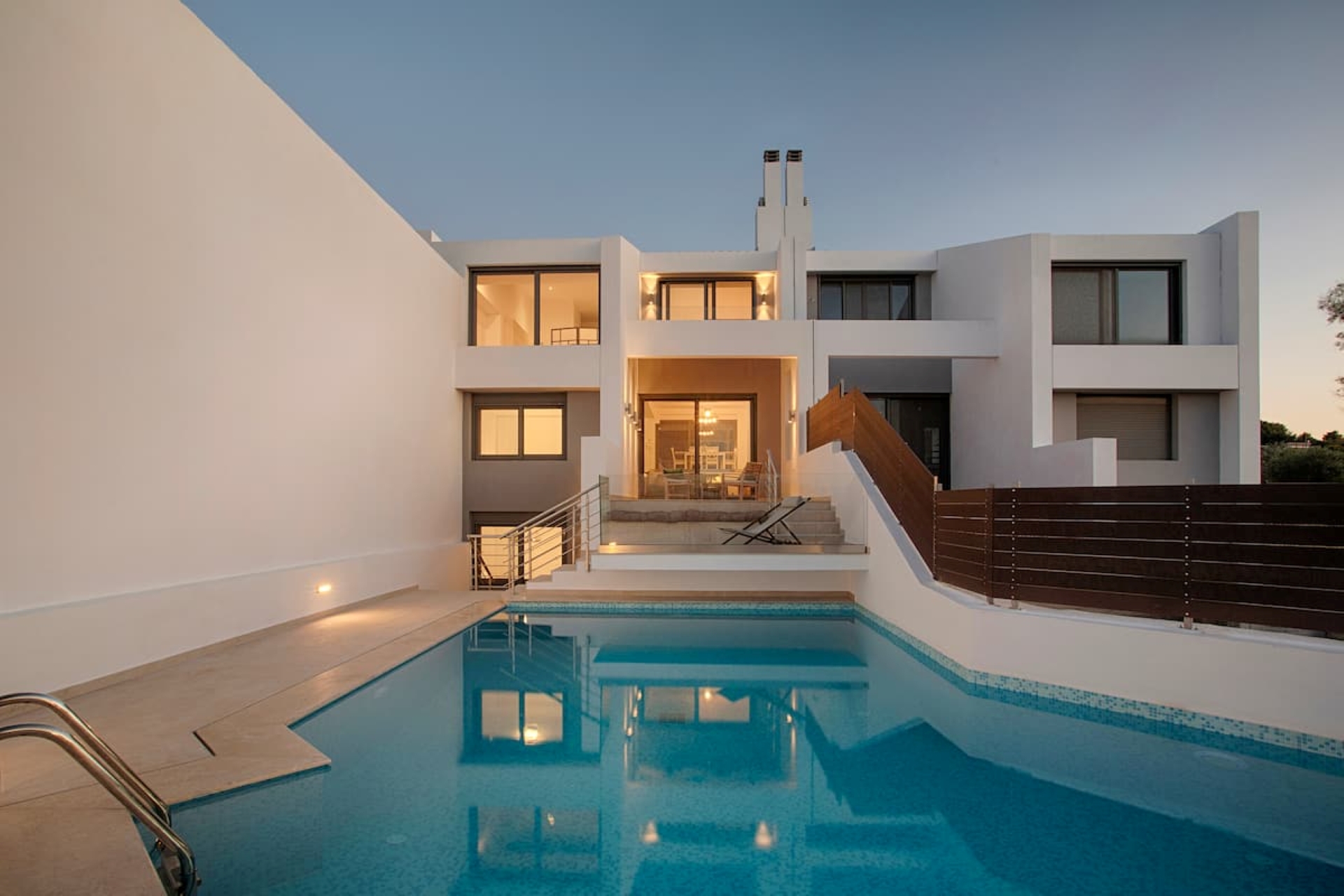
A brand new 4-star hotel at Ancient Corinth, only 400 meters from the entrance gate. With sea views, terraces, hot tubs, free parking and wi-fi, and a paid airport shuttle from Athens International Airport, these new and stylish suites are the best place to stay to see Ancient Corinth.
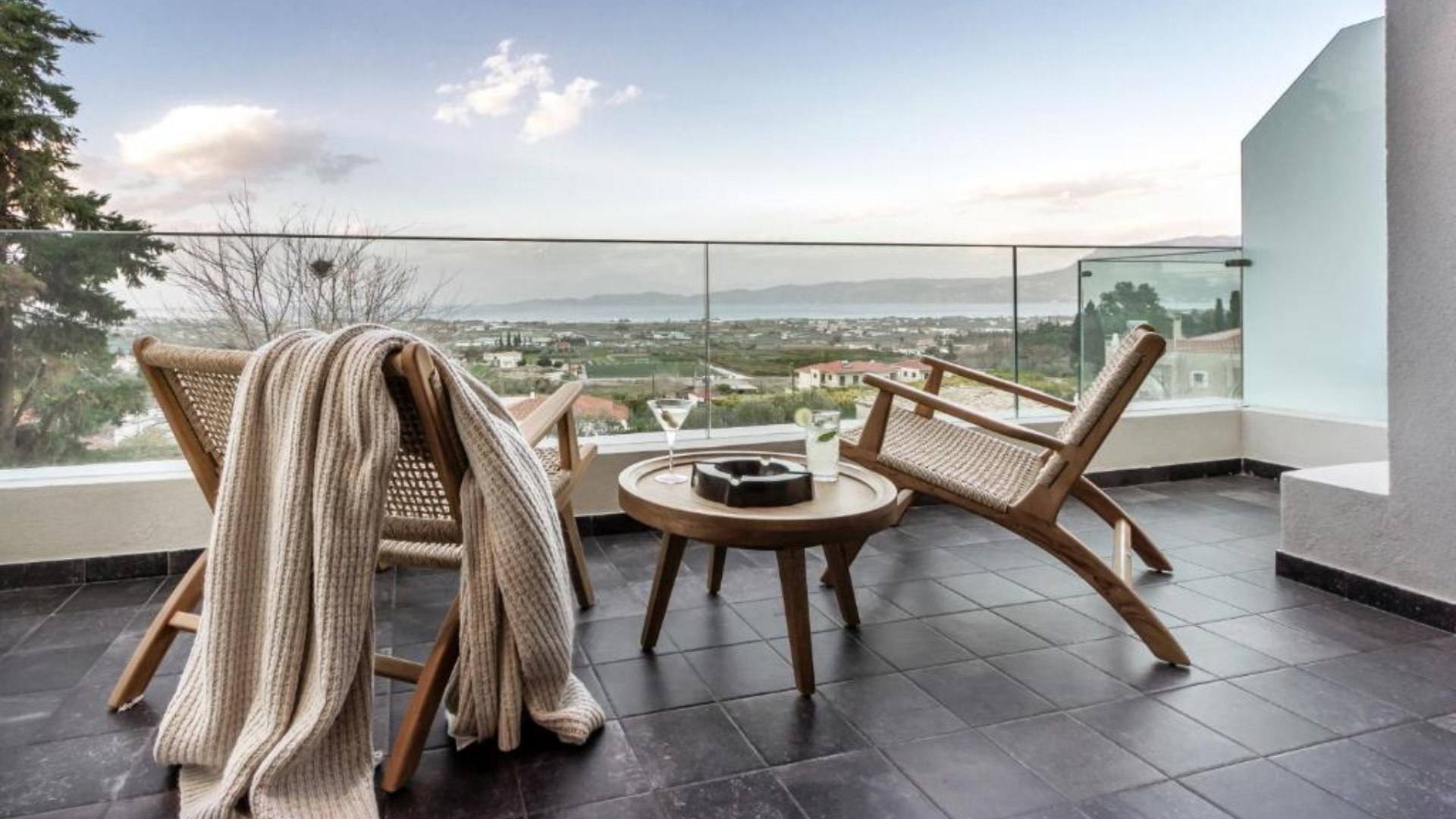
A signature property with 100% 5-star reviews 1000 meters from Ancient Corinth. Guests can’t say enough about the beautiful views, stylish interiors, incredible staff, and pool area.
There are two villas, one with 5 bedrooms and 3 bathrooms with showers, the other with 6 bedrooms, 3 bathrooms, and a private swimming pool, both with free wifi, parking, views of Ancient Corinth, sea views, and an expansive terrace and balcony.
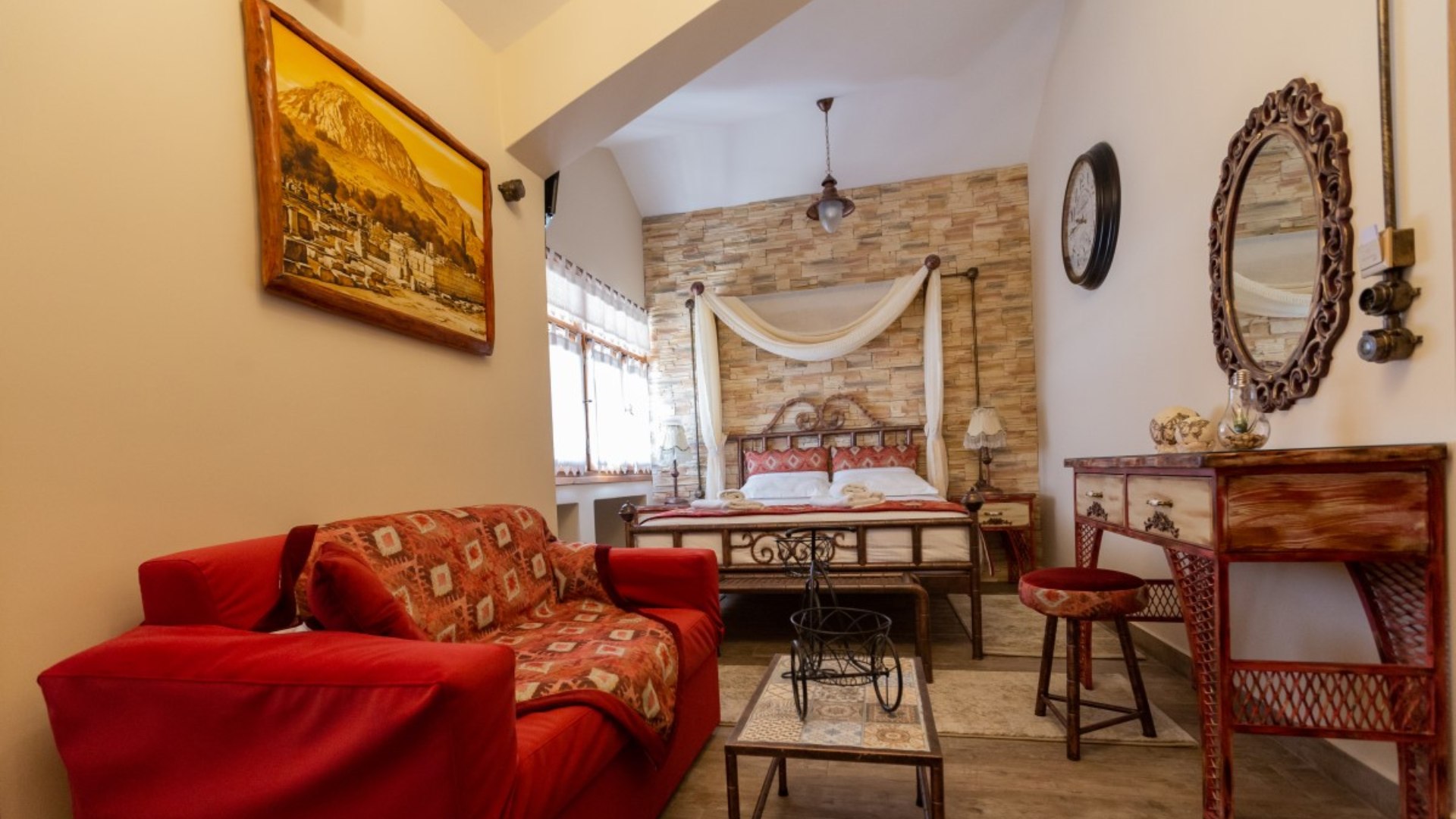
An incredibly highly-reviewed budget option, Maria’s Boutique Rooms are only 600 meters from Ancient Corinth, and the terrace has a lovely view of the ancient city and the Acrocorinth.
Some units have a balcony and also a sea view. So if you’re saving your pennies, this is a great budget option for a night or two.
Ancient Corinth entered the map of significant political places in Ancient Greece when the group of 200 Bacchiadae that collectively ruled Corinth was overthrown.
It was overthrown by a man who came to be known as Cypselus the Tyrant. He built the premier city-state in Greece, and Ancient Corinth became a great cultural and trade center.
Cypselus and his son Periander, who inherited the throne, helped to develop and stabilize Ancient Corinth’s trading systems with the creation of a system of coins.
Periander also changed the system of rule from tyranny to monarchy and developed a very successful public works program that provided prosperity and peace for the people of the ancient city.
Sadly, this was not to last, as Periander suffered great criticism due to his drastic ways of improving Corinth. The criticism was said to have driven him mad, and he killed one of his mistresses and exiled his own son.
The leadership of Ancient Corinth then passed into a stable oligarchy with a King and his advisors.
Leadership and control of Ancient Corinth went through many hands from the ancient Greeks, Macedonians, Alexander the Great, Goths, and Herulians.
The destruction of Ancient Corinth came during a battle between the Romans and the Achaean League. It resulted in the complete devastation of the city. All the men were killed, and the women and children were sold into slavery. It took over 100 years, and in 44 BCE Corinth was re-founded by Gaius Julius Caesar as a Roman Colony.
Ancient Corinth eventually became incorporated by Byzantium. This was accomplished by 1202, but Byzantium’s hold on Corinth was not to last, and it was the Crusaders who took over the city in 1210, at which time it became part of the Latin Empire.
Why does Corinth matter in Greek mythology? All that ancient history happened long after the age of the gods, and Corinth’s mythology is a who’s-who of the Greek imagination.
Corinth seems to have been a popular retirement spot in Ancient Greece. A bit of a Who’s Who of the Ancient World lived there, including Sisyphus, Jason, Theseus, and Ephyra.
At Ancient Corinth, we learn about the important Western concept of hubris. According to early Greek mythology, Ancient Corinth was founded by King Sisyphus.
The King had offended both Zeus and Hades with his cunning and trickery that allowed him to escape death twice, and by giving away Zeus’s secrets.
Zeus became so annoyed at his boasting and self-importance that he doomed him to roll a large boulder uphill in Hades (hell) for eternity.
King Sisyphus’s grandson eventually became the ruler of Ancient Corinth, and his symbol, Pegasus the winged horse, became known as the symbol of Corinth. It can be found on ancient Corinthian coins.
Ancient Corinth chose Poseidon, the lord of the sea, as its patron god, and much of the archaeological evidence within the agora includes temples to Poseidon, Apollo, Athena, Hera, and Juno.
There is also a massive sanctuary that was dedicated to the healing god Asklepios just north of the city.
Artifacts have also included a lintel that reads “Synagogue of the Hebrews” in the excavations.
Contrary to a great deal of archaeological literature that focuses on male deities such as Asklepios, Dionysos, Poseidon, Apollo, Zeus, and Pan, excavations show that the people equally worshipped female goddesses.
The American School of Classical Studies has excavated temples on the northern slope of the Acrocorinth that are dedicated to Athena, Nike, Tyche, and Aphrodite.
Ancient Corinth was one of the most important centers for the worship of Aphrodite, the “goddess of love”. Anthropologists have discovered sources that state that there were more than 1000 maidens serving in the Sanctuary of Aphrodite.
Why is St Paul associated with Corinth? Ancient Corinth is where the Apostle Paul lived and preached, and it’s the city behind First and Second Corinthians in the New Testament. If you’ve ever heard the Letters of Paul to the Corinthians read at a wedding, this is the place they were written to.
With the help of Jewish Christians, Priscilla and Aquila, St. Paul worked to bring Christianity to the Romans in Corinth. He spent several periods in Corinth, converting residents to Christianity.
After a while, he headed off to Epidaurus but sent “Epistles” or letters back to the Corinthians, and that’s why you may have heard of the Letters of Paul to the Corinthians.
It can be a bit hard to follow who was fighting who and city-states swapped sides occasionally, but here’s a very quick potted history of who they were fighting on any day!
Corinth was involved in the Persian Wars when it joined Athens in the Battle of Salamis.
Later, however, war was declared by Ancient Corinth upon their ally, Athens, when the Athenians crossed Corinth’s territory without permission. It took several years to agree on a peace treaty with Athens.
The Corinthian military served under Agamemnon during the Trojan War.
It fought with Sparta in the Peloponnesian War and later joined Athens to defeat the Spartans in the Corinthian Wars, in which Sparta was victorious.
Over the centuries, Corinth has been involved in even more wars and conflicts and, as such, has been ruled by various countries until the Greek War of Independence.
In the mid-1800s, Corinth was going to be the capital of the free Hellenic state, but in 1858 Corinth was destroyed by a major earthquake, and modern-day Corinth was rebuilt five kilometers to the northeast.
Ancient Corinth’s architecture is also one of the most popular throughout the world. The Corinthian style is the most ornate in the classical world.
Corinthian columns are recognized by 24 flutes on the shaft and two rows of acanthus leaves and four scrolls. These columns are considered the most elegant of the three kinds of Greek columns.
Before the Olympic Games at Ancient Olympia were the Isthmian Games!
These Games took place in Ancient Corinth. Competitions included music and poetry for both men and women, and for men only, there was boxing, chariot racing, and, of course, Greek wrestling.
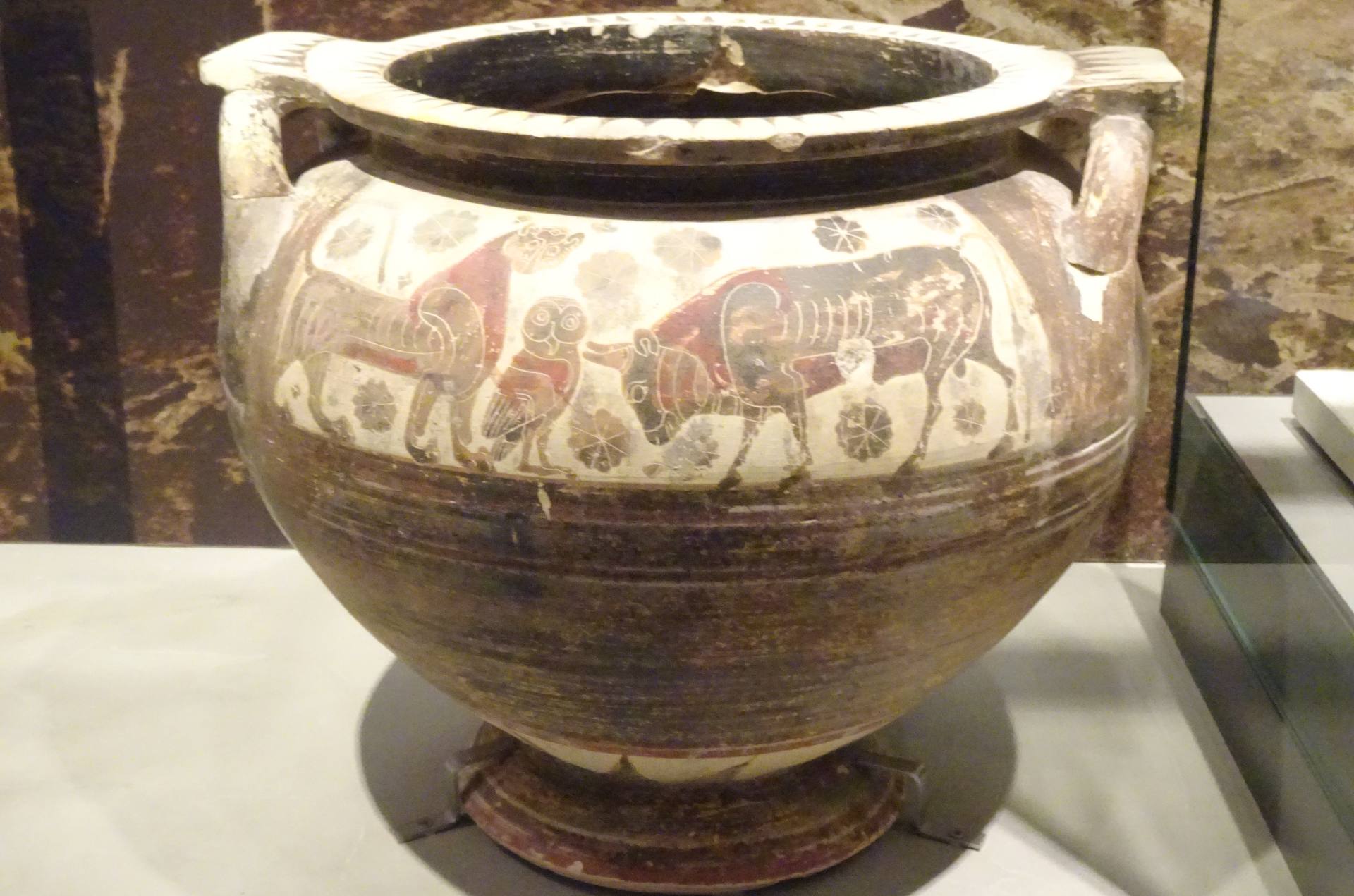
From the 8th century BCE, Corinth was known for its distinctive pottery, which used light yellow clay and painted decorations in black.
These pots were made for both daily use and to hold the oils and perfumes that Corinth became famous for producing.
The pottery was traded all around the western Mediterranean and in places where the Hellenic Empire was found.
Every citizen of Corinth would attend the marketplace or Agora to trade and buy goods.
The Corinthians themselves were masters of pottery, vases, and the sculpting of busts and statues, as you can see below in the on-site museum.
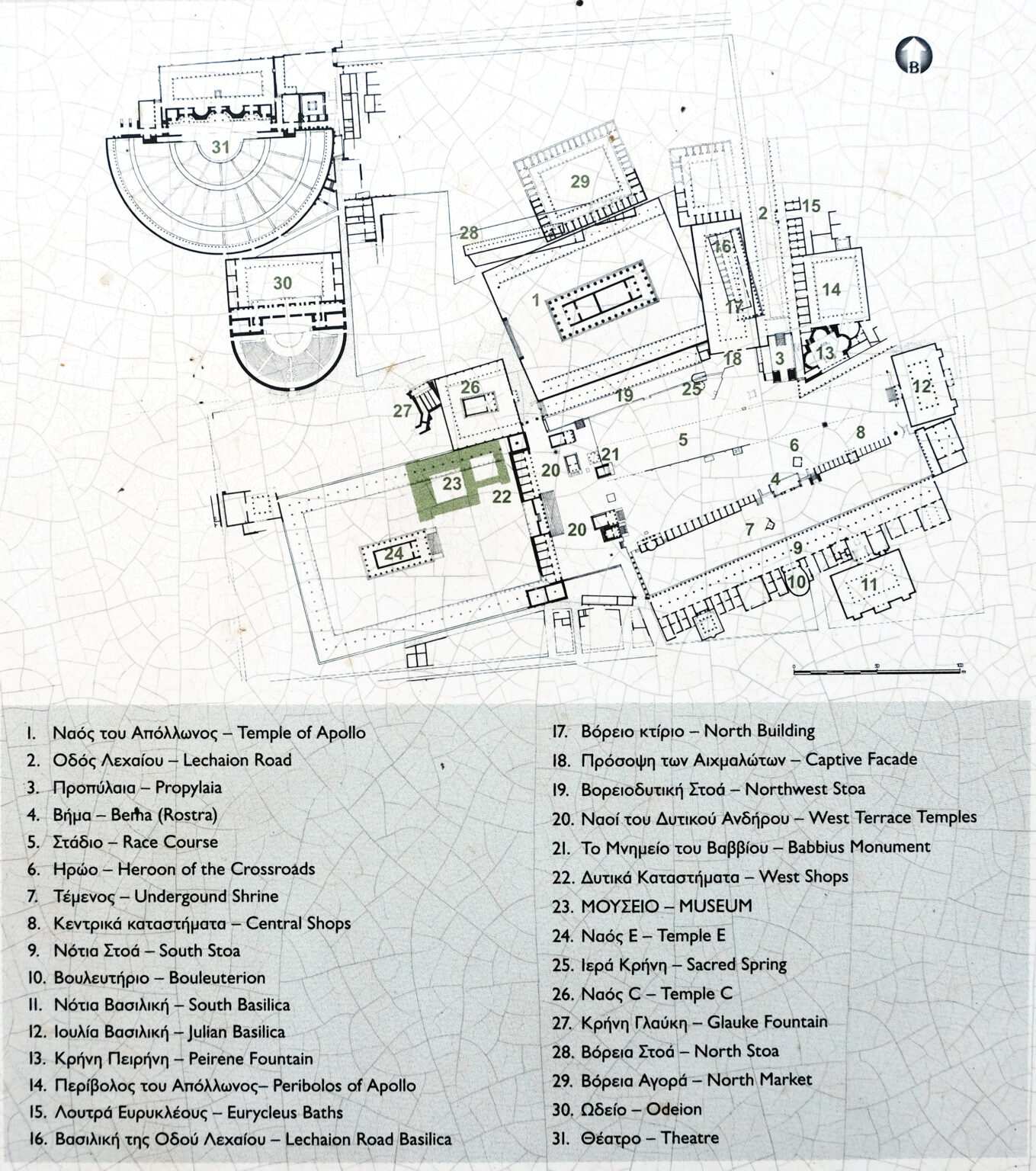
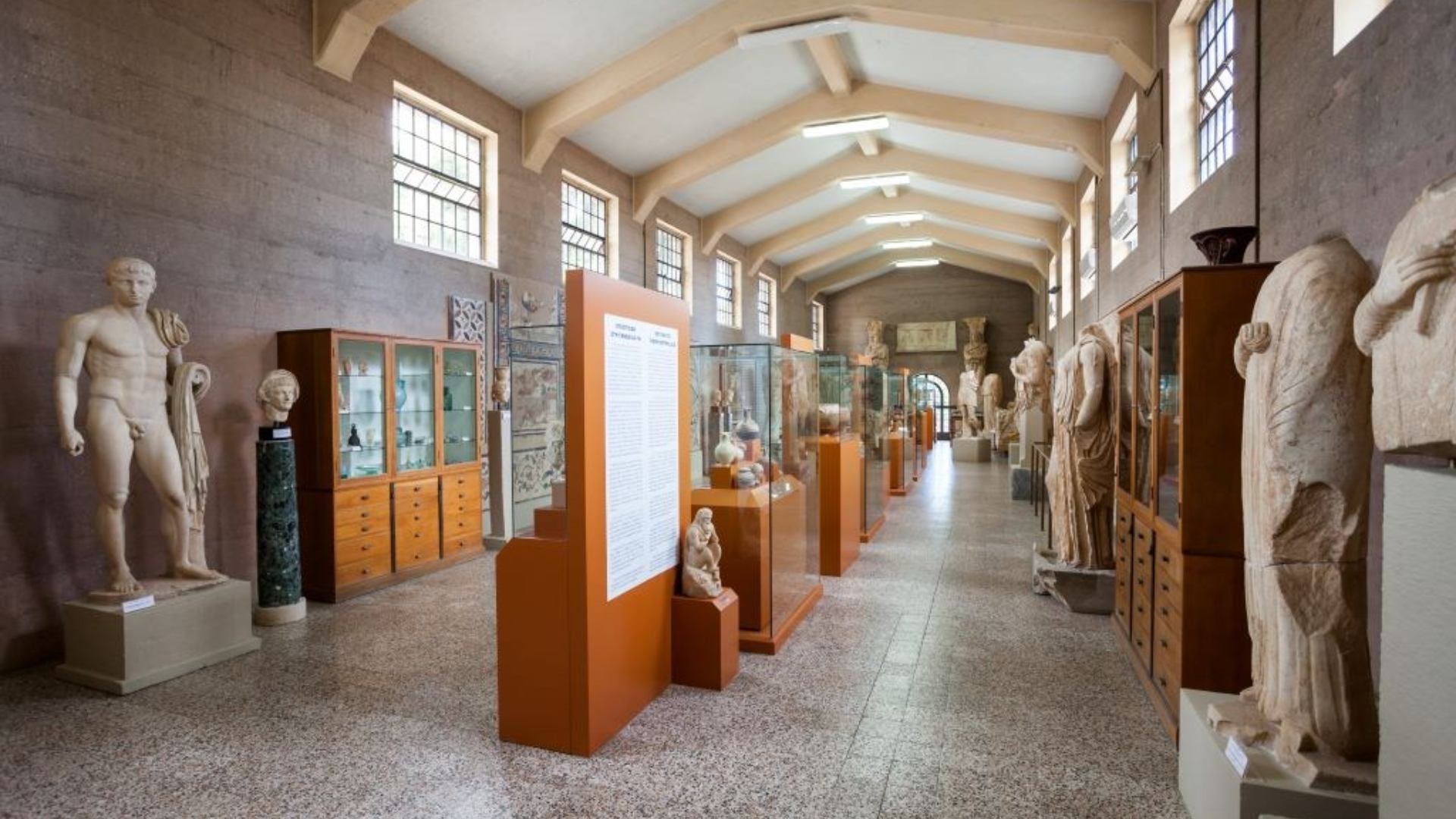
What can you see in the Archaeological Museum of Ancient Corinth? The museum holds the finest finds from the site: Corinthian pottery, Roman sculpture, mosaic floors, and votive offerings. Exhibits run chronologically from prehistory to the Byzantine era. The museum sits inside the archaeological zone, and entry is included in your ticket.
Is the museum worth visiting? Yes. Allow about 45 minutes, and don’t skip it even after a long walk around the ruins. It holds material that would be a headline exhibit in most national collections, and it is air-conditioned, which is very welcome between June and August.
The museum was built in 1932 by the American School of Classical Studies at Athens. The School has excavated Corinth since 1896.
I love this little museum, and the staff are visibly proud of it. As a medical anthropologist, I am always drawn to the terracotta anatomical votives, which are clay replicas of body parts and deformities left as offerings, as well as the many little cake replicas made for the goddess Demeter. One practical note from experience: the staff are firm that the recovered stolen objects must not be photographed, so put your camera away in that gallery.
The Twin Kouroi of Tenea: a pair of Archaic marble youths, recovered from antiquities traffickers.
The Asklepieion votives: terracotta offerings shaped as human body parts, left at the healing sanctuary of Asklepios in thanks for cures.
The mosaic floors: exquisite Roman mosaics from local villas, including a pebble mosaic (c. 400 BCE) showing griffins devouring a horse, one of the earliest preserved Greek mosaics.
The “Return to the Homeland” gallery: 274 antiquities stolen in the famous 1990 museum heist and recovered years later from a Miami warehouse, now back on display.
So now you know how to get to Ancient Corinth and its Acrocorinth, where to stay, what the tickets cost, and why this city mattered so much in the ancient world. Ancient Corinth is one of the highlights of our Ages of the Peloponnese tour — a small-group journey led by a professional archaeologist, taking you to Corinth, Mycenae, and the great sites of the region, with the stories the signboards leave out.
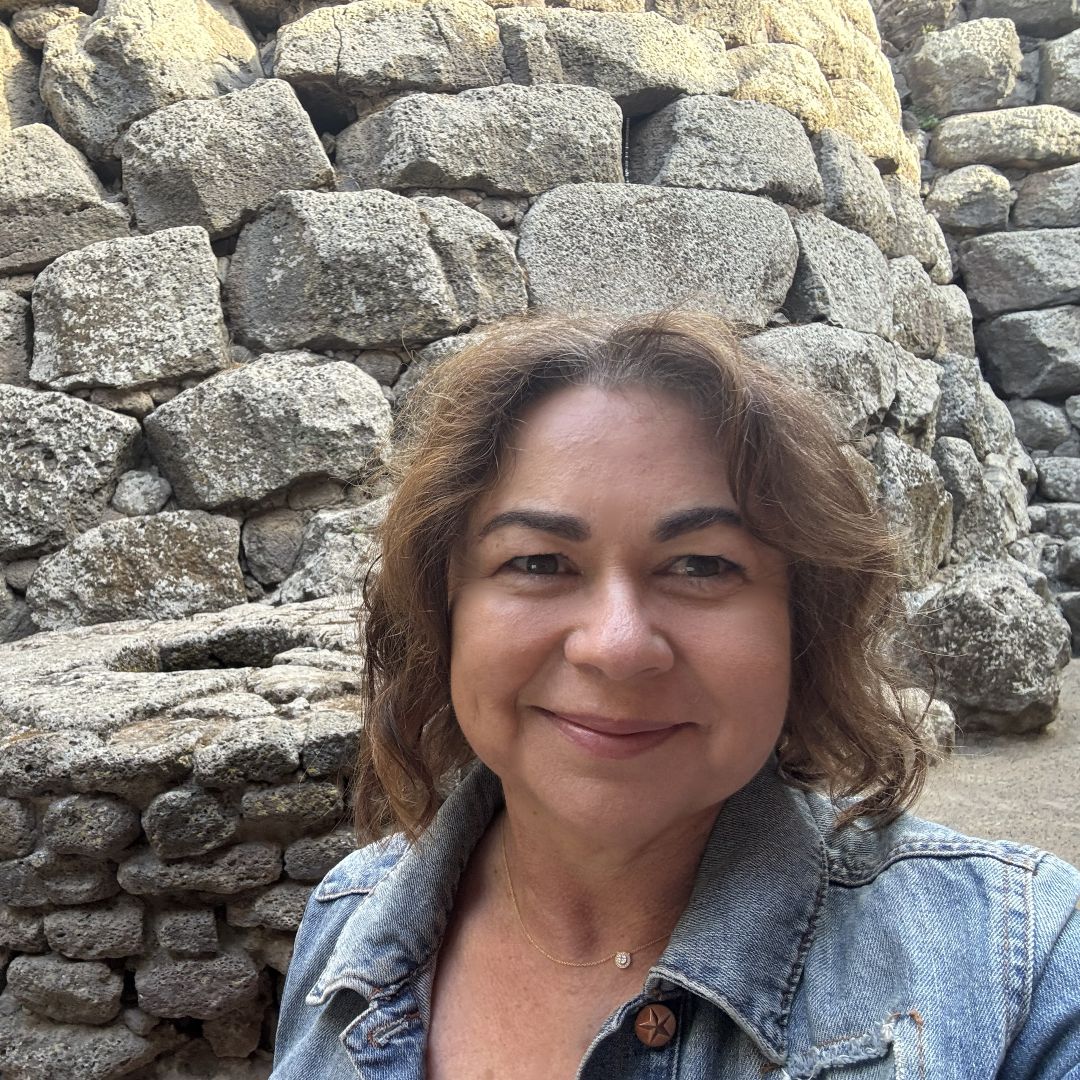
Dr Monique Skidmore is an award-winning anthropologist and travel expert who has spent more than 25 years exploring and documenting cultures around the world. As the founder of Take Me To Europe Tours, she combines her deep academic expertise with a passion for cultural immersion and archaeology. Monique leads annual small-group journeys across Greece, Italy, Malta, and the wider Mediterranean.
On her small‑group Peloponnese tour, she visits Ancient Corinth, and she has many private groups and B2B customers whose visits to Ancient Corinth and the Acrocorinth she arranges each year; this guide draws on those visits as well as her own independent travels in and around the Peloponnese.
For more on her work and travels, visit her About Monique page.

Free 16-page guide
Written by archaeologists. Submerged Roman villas, underground cities and abandoned Greek quarries –, with maps, access details and what to see at each.
One email a week. Unsubscribe anytime.
Free 16-page guide
Written by archaeologists. Submerged Roman villas, underground cities and abandoned Greek quarries –, with maps, access details and what to see at each.
One email a week. Unsubscribe anytime.