
Looking for exceptional beaches without ferry schedules? The Peloponnese peninsula offers spectacular swimming spots within easy reach of Athens or Kalamata. As the founder of Take Me To Europe Tours, I have created small‑group archaeological tours based in Nafplio and Kalamata. My background in anthropology shapes how I see these coastal landscapes—each beach tells a living story of how Greeks have thrived beside the sea.
The Peloponnese delivers what the Greek islands promise—with easier access. No ferry timetables, no island premiums. Sandy stretches in Messinia, dramatic pebble coves in Mani, and sheltered family bays near Nafplio make it ideal for every type of traveler.
Four distinct coastal zones define its character:
🏖️ Argolida (Nafplio): Calm Gulf‑side waters and historic towns
🏖️ Mani Peninsula: Stone villages and transparent pebble beaches
🏖️ Messinia (Kalamata): Long sandy resorts backed by olive groves
🏖️ Laconia Coast: Off‑shore Elafonisos and romantic Monemvasia
Explore the official Visit Peloponnese portal for regional travel resources

Planning your beach trip around the seasons ensures the perfect mix of sun, sea, and sightseeing. Below are the temperature ranges and seasonal insights from official climate sources for each regional hub.
Region | Ideal Months | Average High (°C) | Water Temp (°C) | Notes | |
| Nafplio (Argolida) | May – October | 25 – 32 | 19 – 26 | Long sunny days (11–12 hours); breezes in July/August keep heat comfortable | |
| Mani Peninsula | June – September | 28 – 34 | 23 – 25 | Dry, crystal‑clear sea; wind picks up after 15:00—best swimming mornings | |
| Kalamata (Messinia) | May – October | 26 – 33 | 22 – 26 | Early summer and autumn are warm with calm seas and low rainfall | |
| Pylos & Western Messinia | April – October | 24 – 31 | 21 – 25 | Mild winds year‑round; ideal for Voidokilia and bird‑watching | |
The Peloponnese enjoys 300 days of sunshine each year and pleasant water temperatures from late May through October – among the longest swimming seasons in Greece.
🐚 Nafplio (Argolida) –
Perfect for eastern beaches and archaeological sites like Mycenae and Epidaurus.
🐚 Mani Peninsula –
For travelers seeking authentic villages and dramatic coastlines.
🐚 Kalamata (Messinia) –
The south‑west corridor with the most sandy beaches and resorts.
🐚 Laconia Coast –
Combines mainland seaside beauty with day trips to Elafonisos and Monemvasia.


📍 Location: 10-minute walk from Nafplio old town
🏖️ Beach type: Pebbles
✅ Best for: Quick swim when staying in Nafplio
♿ Accessibility: Steep path with stairs, not wheelchair accessible
This compact beach sits below Palamidi fortress and looks extremely inviting when the hot sun is on your back, having walked the hundreds of steps to the fortress above Naplio Old Town. The coastal walking path from town is fun, passing through carved rock passages. Limited space fills quickly in summer. Water shoes help with the pebbly entry. Blublanc operates as the main beach bar.
ℹ️ Practical info: Free access, sunbeds available for rent
🅿️ Parking: No direct parking; use town parking and walk
🛣️ Connects to: Karathona Beach (coastal walk south)

📍 Location: 4km south of Nafplio
🏖️ Beach type: Sand
✅ Best for: Families wanting space and facilities
♿ Accessibility: Level access from parking, suitable for wheelchairs
Nafplio’s main sandy beach stretches along a sheltered bay. Shallow water extends well offshore. Multiple tavernas and beach bars line the shore. A coastal trail connects to Nafplio for those preferring to walk or cycle.
ℹ️ Practical info: Free parking along the beach road
🅿️ Parking: Ample free parking along beach road
🛣️ Connects to: Arvanitia Beach (coastal walk north), Tolo Beach (south)

📍 Location: 12km southeast of Nafplio
🏖️ Beach type: Sand
✅ Best for: Full beach resort experience with a laid-back vibe
♿ Accessibility: Level access, wheelchair friendly
Tolo has developed into a complete resort town. The long sandy beach offers extensive facilities and water sports. Three small islands visible offshore make for good boat excursions—small boats available for rent. Tolo reminds me of small beach suburbs on the Greek islands; it is low-key, and many people write to me and tell me it is their favorite annual beach holiday destination.
ℹ️ Practical info: In spring, little jellyfish are floating in the clear water.
🅿️ Parking: Parking available, varies by season, lots of parking out of peak season
🛣️ Connects to: Ancient Asini nearby

📍 Location: Inside Monemvasia castle walls
🏖️ Beach type: Rock swimming platform
✅ Best for: Unique swimming experience
♿ Accessibility: Not accessible for those with mobility issues
Not technically a beach, but a swimming area carved into volcanic rock below the medieval town. Enter the water by ladder or jumping. Swimming here while looking up at the Byzantine buildings creates an unforgettable experience. If you’re staying in Monemvasia castle, a dip here after the day trippers have left is magical.
ℹ️ Practical info: No facilities—bring water shoes
🅿️ Parking: Park in mainland Gefyra, walk across the causeway. If you arrive early in the day, you can park on the slope up to the entrance gates.
🛣️ Connects to: Nearest beach is Pori Beach on the mainland

📍 Location: Elafonisos island (ferry from Pounta)
🏖️ Beach type: Fine white sand
✅ Best for: Greek island beach without island complications
♿ Accessibility: Sandy, but requires a walk from the parking
Two beaches—Big Simos and Small Simos—are separated by protected dunes. White sand with pink tones from crushed shells. Turquoise water rivals any Greek island. This is a beautiful Greek beach experience and the best in the Peloponnese. If you have the opportunity to visit, make sure you take it! Its popularity means it can be crazy busy on summer weekends – arrive early. The ferry from the mainland takes 20 minutes.
ℹ️ Practical info: Ferries run regularly in summer; less frequent off-season
🅿️ Parking: Free parking area at the beach
🛣️ Connects to: Pounta Beach on the mainland near the ferry

📍 Location: Starts 2km south of Gythio Beach
🏖️ Beach type: Sand and pebbles
✅ Best for: Long beach walks, windsurfing
♿ Accessibility: Multiple access points, some suitable for wheelchairs
This beach continues for several kilometers, never feeling crowded. The northern section near town has tavernas and facilities; further south, the beach becomes more remote. The afternoon winds attract windsurfers, and so it’s best to come in the morning for swimming and sunbathing.
ℹ️ Practical info: Sea turtles nest here—respect any marked areas
🅿️ Parking: Free parking areas along beach road
🛣️ Connects to: Gythio harbor (north), Valtaki Beach (north of Gythio)

📍 Location: 5 km north of Gythio Beach
🏖️ Beach type: Sand
✅ Best for: Shipwreck photography
♿ Accessibility: Easy beach access, but the soft sand is challenging for wheelchairs
The cargo ship Dimitrios has sat on this beach since 1981. Safe to view and photograph from beach level, but the structure is too unstable for climbing. Pleasant swimming beyond the shipwreck area.
ℹ️ Practical info: Nearby tavernas like Glyfada Beach restaurant offer food, drinks, showers, and beach chairs
🅿️ Parking: Parking area near the shipwreck
🛣️ Connects to: Mavrovouni Beach (south through Gythio), route continues south into Mani

📍 Location: Small cove below the main coastal road
🏖️ Beach type: White pebbles
✅ Best for: Traditional Greek beach experience
♿ Accessibility: Steep path down, not suitable for those with mobility issues
Stone houses surround this intimate cove where traditional Mani architecture meets the sea. The beach forms a natural amphitheater, with traditional stone buildings on three sides and crystalline water on the fourth. Large white pebbles line the shore, their smooth surface makes water shoes essential for comfortable entry. The water clarity here is exceptional, allowing you to see the seabed even at depth.
One taverna occupies a stone building shaded by mature tamarisk trees. The menu depends on what local fishermen bring in, typically grilled fish, Greek salad, and cold drinks. Tables sit directly on the pebbles, just meters from the water. The small fishing boats pulled up on the beach aren’t decorative; they’re working vessels used daily.
The cove faces east, catching morning sun while afternoons bring shade from the surrounding hills. The 1982 film “Tempest” filmed scenes here, drawn by the unspoiled setting that remains largely unchanged today.
🅿️ Parking: Small parking area at road level, walk down required
🛣️ Connects to: Skoutari Beach (north), continuing south toward Cape Tainaron

📍 Location: Marked turnoff from the main Mani road
🏖️ Beach type: Sand and pebbles
✅ Best for: Balance of facilities and authenticity
♿ Accessibility: Reached directly by car with level access from the small beachfront parking area; though unorganised, the gently shelving sand and calm water make it manageable for families and visitors with limited mobility
Skoutari strikes a balance between comfort and authenticity. The main beach curves gently, mixing sand near the water with pebbles higher up the shore. The whitewashed Kalamakia taverna provides the only commercial presence; you won’t find rows of umbrellas or water sports here. The building’s traditional architecture, with thick walls and small windows, stays cool even in summer heat.
The main beach accommodates most visitors, but walking north or south reveals smaller coves separated by rocky outcrops. These secondary spots offer flat rock platforms ideal for sunbathing and easy water entry.
Looking up from the beach, you’ll see the village’s traditional tower houses on the hillside. This always reminds me that this coastline was once defended against pirates. The beach remains popular with Greek families who appreciate its low-key atmosphere.
🅿️ Parking: Free parking available
🛣️ Connects to: Alypa Beach (south), beaches to the north

📍 Location: End of mainland Greece
🏖️ Beach type: Pebble coves
✅ Best for: Dramatic scenery
♿ Accessibility: Rocky paths, challenging access
Standing at Cape Tainaron, you’ve reached the southernmost point of mainland Greece. The landscape here feels elemental; it’s all wind-carved rocks, sparse vegetation, and endless sea. The main swimming area sits near where the road ends, a pebbly cove sheltered by low cliffs. The water here is deep and often has currents, making it suitable for confident swimmers only.
A walking trail leads to the lighthouse, passing several smaller swimming coves carved into the rocky coastline. Each offers a different perspective on this dramatic meeting of land and sea.
Near the parking area, protective covers preserve Roman-era mosaics from a temple that once stood here. Ancient Greeks believed this windswept point was the entrance to the underworld, and standing here in a strong meltemi wind, it’s easy to understand why. The barren, rocky landscape and the moaning wind create an atmosphere unlike anywhere else in Greece.
Bring everything you need, as there are no facilities here, which helps preserve the wild character of the place.
ℹ️ Practical info: No shade; strong currents possible
🅿️ Parking: Free area at the road’s end
🛣️ Connects to: Porto Kayio (north on the west coast), return route on the east coast


📍 Location: Between Porto Kagio and Gerolimenas
🏖️ Beach type: Sand
✅ Best for: Rare sandy option on Mani’s west coast
♿ Accessibility: Easy access from parking
Marmari offers something rare in Mani—actual sand. This west-facing beach catches different light than the eastern shores, with afternoons bringing a golden glow to the protected bay. The sand here is coarse but comfortable, a welcome change from Mani’s typical pebbles. The water remains shallow for an unusual distance offshore, making this one of Mani’s most family-friendly beaches.
A grove of tamarisk trees backs the beach, providing natural shade that’s precious in this arid landscape. The trees’ feathery branches create dappled shadows on the sand, and their colorful summer blooms add unexpected color. A seasonal beach bar sets up simple tables and umbrellas, operating when visitor numbers justify it.
The small settlement behind the beach maintains its working character. Fishing boats launch from here, and you might see fishermen mending nets in the afternoon. The western exposure means swimming here in late afternoon offers the particular pleasure of watching the sun drop toward the horizon while floating in warm, calm water.
🅿️ Parking: Free area behind the beach
🛣️ Connects to: Mezapos Beach (north), Porto Kayio (south)

📍 Location: Signed from the main road through olive groves
🏖️ Beach type: Pebbles
✅ Best for: Off-the-beaten-path discovery
♿ Accessibility: Moderate walk down, swimming to the second beach only
Reaching Mezapos requires faith, as the narrow road through ancient olive groves makes you question your navigation. But this former pirate haven rewards the persistent. The tiny settlement sits in a natural amphitheater of cliffs that once sheltered boats from storms and prying eyes.
Two beaches serve different needs. The first, below the handful of houses, is reachable by a rocky path. It’s a small pebble cove with deep, clear water (beautiful but unexceptional by Mani standards). The second beach is the treasure. You’ll need to swim around the rocky headland from the concrete pier. The effort reveals a hidden cove completely invisible from land, with a small sea cave at its back. Only confident swimmers should attempt this.
The settlement’s single taverna operates from what appears to be someone’s front terrace with a few tables on concrete overlooking the water. The menu is whatever came in that morning: grilled fish, simple salads, cold beer. The setting, with waves lapping below your table, makes simple food memorable. The old stone houses show traditional Mani construction adapted for coastal life—smaller and lower than the inland towers, but still fortified. This is a wonderful Greek adventure!
🅿️ Parking: Small area above the settlement
🛣️ Connects to: Gerolimenas (south), Limeni (north)

📍 Location: Below Areopoli town
🏖️ Beach type: Rocky entry, sandy bottom
✅ Best for: Swimming beside traditional architecture
♿ Accessibility: Various entry points, some easier than others
Limeni is a Mani village where the architecture and the sea merge into one beautiful experience. The stone buildings, converted from merchant houses to restaurants and boutique hotels, stand with their foundations in the water. At high tide, waves lap against the walls where goods were once loaded for transport to Areopoli above.
The water here displays an almost artificial turquoise, the color intensified by the white rocks below. Multiple entry points offer different experiences. Iron ladders descend from restaurant terraces, rocky platforms between buildings provide sunbathing spots, and a small pebbly area near the parking allows easier access. Once in, the sandy bottom makes swimming comfortable despite the rocky entry.
Sea turtles patrol these waters. Early morning swimmers often encounter them surfacing for air. The Mavromichalis towers, rising above the smaller buildings, always remind me that this was once the port of Mani’s most powerful family. Their stone bulk dominates the northern end of the settlement.
As the sun moves west, it lights the stone buildings in warm tones. Dinner at one of the waterfront tavernas, with your table practically in the sea, captures the essence of coastal Mani.
ℹ️ Practical info: Limited parking in the village
🅿️ Parking: Small lot; overflow parking up the hill
🛣️ Connects to: Itilo Beach (north), Gerolimenas (south)

📍 Location: Steep path down from the main road near Kardamyli
🏖️ Beach type: Large pebbles
✅ Best for: Dramatic scenery
♿ Accessibility: Steep path, very challenging for those with mobility issues
Foneas announces itself with drama: a massive rock monolith rising from the sea just meters from shore, split from the mainland by geological forces. The steep path down demands attention, switching back through scrub vegetation before revealing the beach in its rocky embrace. This isn’t a gentle introduction to the sea; the large, smooth pebbles shelve steeply into deep, startlingly clear water.
The monolith creates unique swimming conditions. The water clarity here is exceptional. On calm days, you can see the underwater continuation of the cliffs plunging into blue depths. Schools of fish patrol the channel, visible from shore in the transparent water.
The beach’s large pebbles, worn smooth by centuries of waves, require sturdy footwear for comfortable walking. Find a spot, spread your towel on the warm stones, and the natural curve of the pebbles creates surprisingly comfortable lounging. A small canteen in a converted shipping container sells water, soft drinks, and ice cream during busy periods.
The dramatic geology that created Foneas makes it a photographer’s beach. This is Mani at its most theatrical—where the mountains meet the sea in spectacular fashion.
🅿️ Parking: Small pullout on main road
🛣️ Connects to: Kardamyli beaches (north), Stoupa beaches (north)

📍 Location: Northern edge of Stoupa
🏖️ Beach type: Sand
✅ Best for: Classic Greek beach day
♿ Accessibility: Level access, wheelchair friendly
Kalogria is the jewel of Stoupa’s twin beaches and one of the best Peloponnese beaches for relaxed swimming. The bay’s sand feels powdery underfoot, and the water shifts from turquoise to emerald, depending on the sunlight. Freshwater springs bubble up from beneath the seabed, so swimmers occasionally feel cool currents mingling with warm seawater, a refreshing surprise on hot summer days.
The shallow, clear bay makes it safe for families and beginner swimmers, while confident swimmers often paddle beyond the rocks toward the deeper sections where visibility remains astonishing.
Behind the beach, green hills rise in gentle contrast to the golden sand. Kalogria also has a small cultural claim to fame: writer Nikos Kazantzakis wrote part of “Zorba the Greek” here, inspired by stories told by George Zorbas, who worked in the local mines. You can even see a small bust of Kazantzakis and murals of the characters above the beach path.
Facilities abound: from pedalos and paddleboard rentals to beachside tavernas serving souvlaki and fresh fish. Still, the beach can become densely packed in July and August, when organized areas with sunbeds cover much of the sand. To find tranquillity, locals suggest arriving before 10 a.m. or swimming at sunset when the bay glows gold and crowds thin.
ℹ️ Practical info: Afternoon parking around the tavernas can be competitive; nearby private lots offer paid spaces when the beach road fills early.
🅿️ Parking: Limited free and paid areas along beach road
🛣️ Connects to: Stoupa Beach (south), Foneas and Kardamyli beaches (north)

📍 Location: Near Pylos (follow signs from Gialova)
🏖️ Beach type: Fine sand
✅ Best for: Natural beauty photography and gentle swimming
♿ Accessibility: Level access, wheelchair friendly
Frequently ranked among the most beautiful beaches in Greece, Voidokilia is instantly recognizable from aerial photos showing its omega-shaped curve between the turquoise sea and the Gialova Lagoon.
Its powder-fine sand, shallow entry, and still water create ideal conditions for swimming, though most travelers arrive as much to experience the landscape’s symmetry and silence as to swim. The beach forms part of the Natura 2000 protected reserve, supporting migratory birds such as herons and flamingos in the lagoon behind the dunes.
Above the beach, the medieval Palaiokastro fortress and the Cave of King Nestor offer panoramic viewpoints over the bay and lagoon. Hikers tracing the circular trail can combine swimming and light archaeology within an hour’s loop. Despite its global fame, Voidokilia remains uncommercialized and undeveloped; there are no umbrellas, music, or structures that break the natural silence.
If you come here, you need to bring your own shade and water, and try to leave no trace behind when you leave. Early morning or late afternoon light best captures the beach’s sculptural form and invites photography without the midday glare.
ℹ️ Practical info: The unpaved road from Petrochori can become rough after rain, but parking is free. Gialova Lagoon is a protected bird habitat.
🅿️ Parking: Free unpaved lot near beach access
🛣️ Connects to: Divari Beach and Gialova (north), Palaiokastro trail (above bay)
🛣️ Nafplio Area Circuit:
Arvanitia → Karathona → Tolo
🛣️ Eastern Mani Route:
Gythio → Skoutari → Alypa → Cape Tainaron
🛣️ Western Mani Route:
Kardamyli → Foneas → Stoupa → Limeni → Mezapos → Gerolimenas
🛣️ Cross‑Mani Link: Areopoli links the east and west coasts
A rental car is essential for reaching multiple beaches. Public buses run to Arvanitia, Karathona, and Tolo, but the timetables offer limited flexibility.

Water shoes (for pebbly coves), reef‑safe sunscreen, cash, and snorkeling gear for rocky areas.
🏛️ From Nafplio: Visit Mycenae or Epidaurus.
🏛️ From Mani: Explore Byzantine churches and stone tower villages.
🏛️ From Kalamata: Add a day trip to ancient Messene or join our Ages of the Peloponnese Tour.

Explore more of the Peloponnese with our guided tours, or browse our complete Visit Greece section for island and mainland itineraries. For those dreaming of variety, see our roundup of 16 Small Greek Islands that pair perfectly with the mainland.
The best beaches in the Peloponnese offer everything the Greek islands promise — crystal water, authentic tavernas, and remarkable scenery — without the ferry timetable hassles. Whether you base yourself in historic Nafplio or coastal Kalamata, these 16 beaches reveal the real soul of southern Greece.
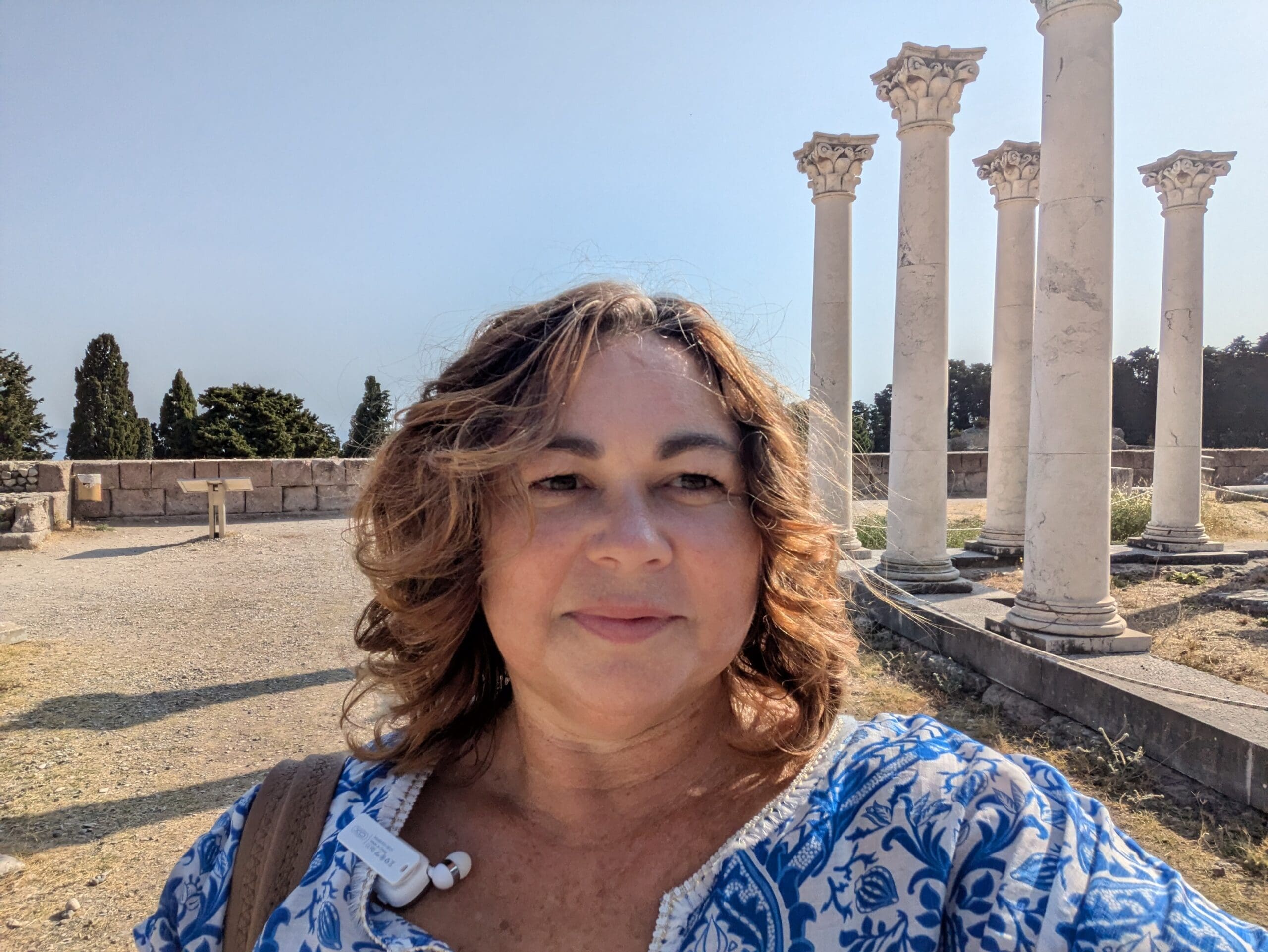
Monique Skidmore, PhD, is an award‑winning anthropologist, writer, and founder of Take Me To Europe Tours. With over 25 years of international travel leadership and cultural expertise, she crafts small-group journeys through Greece and the Mediterranean, including the popular Ages of the Peloponnese Tour.
Her articles appear in global media and academic publications for their blend of scholarly knowledge and practical travel insight. Learn more on her About Monique page, or visit Take Me To Europe Tours.

Free 16-page guide
Written by archaeologists. Submerged Roman villas, underground cities and abandoned Greek quarries –, with maps, access details and what to see at each.
One email a week. Unsubscribe anytime.