
Contemporary Agrigento was founded by the ancient Greek colonists around 580 BC under the name of Akragas. Its commanding location, developed trade, and budding population quickly brought Agrigento among the richest and most influential centers of the ancient Magna Graecia.
During those times of prosperity, monumental temples to Greek deities like Zeus, Hera, Concordia and Heracles were erected. Built by Greek architects and skilled craftsmen from the local limestone, the temples were maintained by the passing civilizations that ran through Sicily over the centuries – the Romans, the Byzantines, the Arabs and the Normans.
Some of the temples survived because they were turned into Christian churches during the Middle Ages, avoiding demolition and reuse of their stones for other constructions.
Nowadays, the Valley of the Temples is protected as a UNESCO World Heritage Site and visited by hundreds of thousands of visitors each year for its impressive colonnades, golden hue of the stone at sunset, sea views, and omnipresent atmosphere of the ancient world.
It is widely regarded as one of the best-preserved examples of ancient Greek monumental architecture outside Greece.
Besides the Valley of the Temples, Agrigento is a cute hilly town in its own right and very much worth a visit for its old urban core with narrow cobbled streets, baroque churches and Sicilian coast vistas.
It makes an ideal base for exploring the Valley of the Temples, Sicily, especially if you want to experience the site at different times of day.
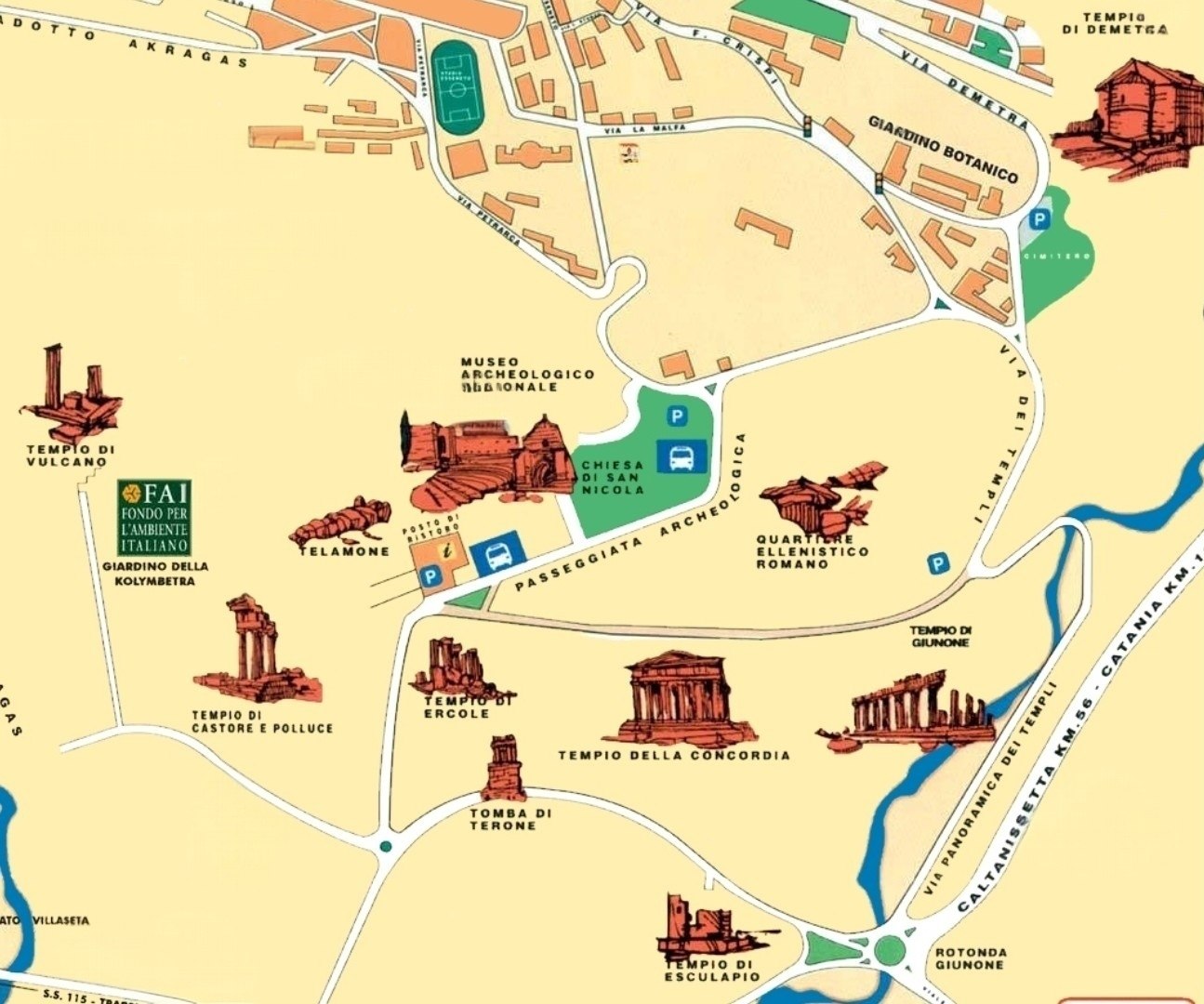
Agrigento is a town right in the middle of the southern coast of Sicily, the gateway to the Valley of the Temples. About 80 miles from Palermo and 100 miles from Catania, Agrigento can be reached by bus, train or rent‑a‑car.
However, plan at least a two‑day excursion if you want to explore both the Valle dei Templi and the town at a relaxed pace.
Buses that drive around Sicily are comfortable, air‑conditioned vehicles and a preferred mode of public transport.
Bus is the most convenient way of visiting Agrigento from Palermo, with regional bus companies such as Cuffaro and Camilleri operating regular services between the two cities from the main bus station.
The journey takes around 2 hours and 30 minutes and one‑way tickets are usually in the 10–15 € range, depending on the departure.
Catania is connected to Agrigento by bus lines operated by SAIS Autolinee and other regional companies, with direct daily buses from Catania and Catania Airport that typically take around 2.5–3 hours, without the need to change buses along the way.
Tickets are usually between 15 € and 20 €, and timetables should be checked in advance, especially outside peak season.
Trains in Sicily are another option for taking a scenic route from one of its main cities to Agrigento.
Multiple trains leave Palermo Centrale station directly to Agrigento on a journey that takes around 2 hours and 30 minutes to reach the town’s main train station. It is a scenic and relaxing way to travel through Sicily’s interior for a price of roughly 10–18 € one way.
Trains do not connect Catania and Agrigento directly and the 3.5–5 hour journey involves switching trains in stations such as Caltanissetta, Xirbi or Canicattì. One‑way tickets start at about 15 €.
Driving around Sicily’s well‑maintained roads is an experience in itself. Scenic olive groves, hilly baroque towns and rural manor houses are just a few things you will spot along the route, so my pick is always a car to get me anywhere around Sicily. Plus, I can stop in any cute little square I want to, so it is a clear choice for me.
It’s about a 2‑hour drive for the 80 miles that separate Palermo and Agrigento. The standard route cuts south through the island’s interior on the SS189; if you don’t mind adding extra driving time, you can instead head east on the A19 towards the hilltop town of Enna, visit its medieval castle and panoramic vistas, and then loop back towards Agrigento.
Catania is around 100 miles away from Agrigento, so it takes roughly 2.5–3 hours to reach it by car. The road goes through central Sicily and traverses rural areas with beautiful scenery. Do not miss the baroque town of Piazza Armerina along the way if you have time to stop.
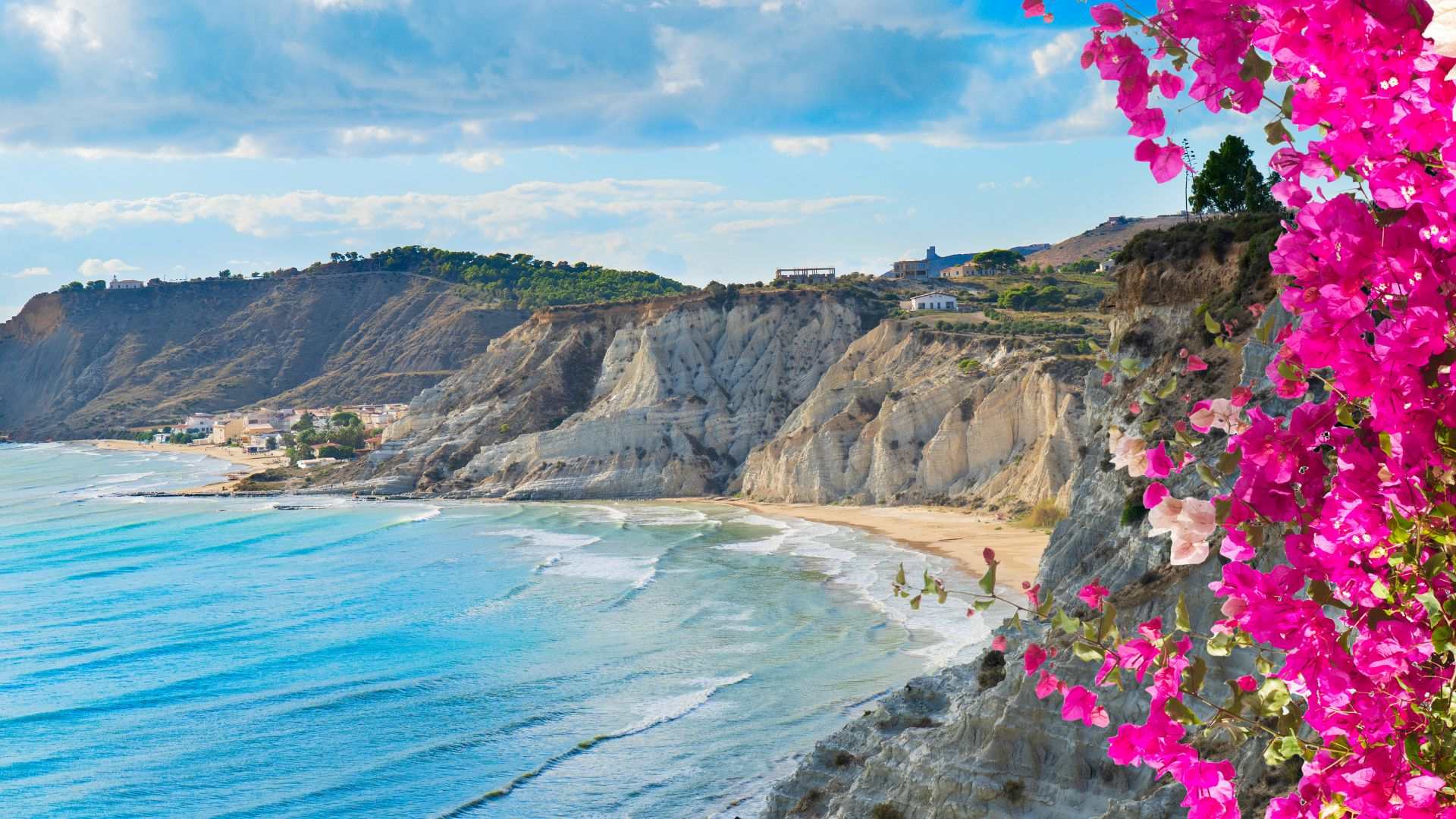
My absolute favorite natural site in Sicily. A white marl sedimentary rock cliff winding down to the sea creates an otherworldly scene, worthy of the Greek island of Milos’ Sarakiniko beach, especially during sunset.
UNESCO‑protected Roman villa near Piazza Armerina, known for its extraordinary mosaic artwork depicting mythological scenes, along with hunting and everyday activities. And yes, this is the villa where the famous Roman “bikini” mosaics are located.
The Torre Salsa nature reserve stretches along a quiet piece of south‑coast Sicily, with long, mostly undeveloped beaches, low dunes and simple walking trails through scrub and farmland down to the sea.
Agrigento has local public transportation connecting the Valley of the Temples site with the town centre. Buses of Line 1 depart from the station Piazzale Rosselli and the stop for the Valley is called Templi‑Porta V. One‑way tickets cost around 1.7 € and taxis are also available.
Cycling is another option, but count on hilly terrain and high temperatures during summer.
Agrigento is very much worth spending the night in, especially for the option of a nocturnal visit to the beautifully illuminated temples of the Valley, when the atmosphere is calmer than during the day.
If you want to explore the Valley of the Temples more than once and combine it with Agrigento’s old town, the Archaeological Museum and the nearby coast, it is worth spending at least one or two nights in the area rather than rushing in and out on a day trip.
You have three main choices: the historic centre, hotels close to the archaeological park and museum, and agritourism stays in the surrounding countryside.
Staying in Agrigento’s historic centre puts you among narrow streets, baroque churches and local cafes, with Via Atenea as your main evening stroll.
From here you can reach the Valley of the Temples and the “Pietro Griffo” Regional Archaeological Museum by bus, taxi or car in about 10–20 minutes, and you are well placed for restaurants and transport connections if you are travelling around Sicily.
For travellers who want to wake up with temple views and be close to the museum, there are hotels and guesthouses along the Passeggiata Archeologica and in the San Nicola district, just outside the city centre, near both the Valley of the Temples and the Agrigento Regional Archaeological Museum.
The museum, housed in a building designed by architect Franco Minissi, brings together state and civic archaeological collections that form a coherent whole and are particularly important for understanding the history of ancient Agrigento and its territory.
Staying in this area makes it easy to walk or drive between the museum and the park in a single day, or to split them over two days without long transfers.
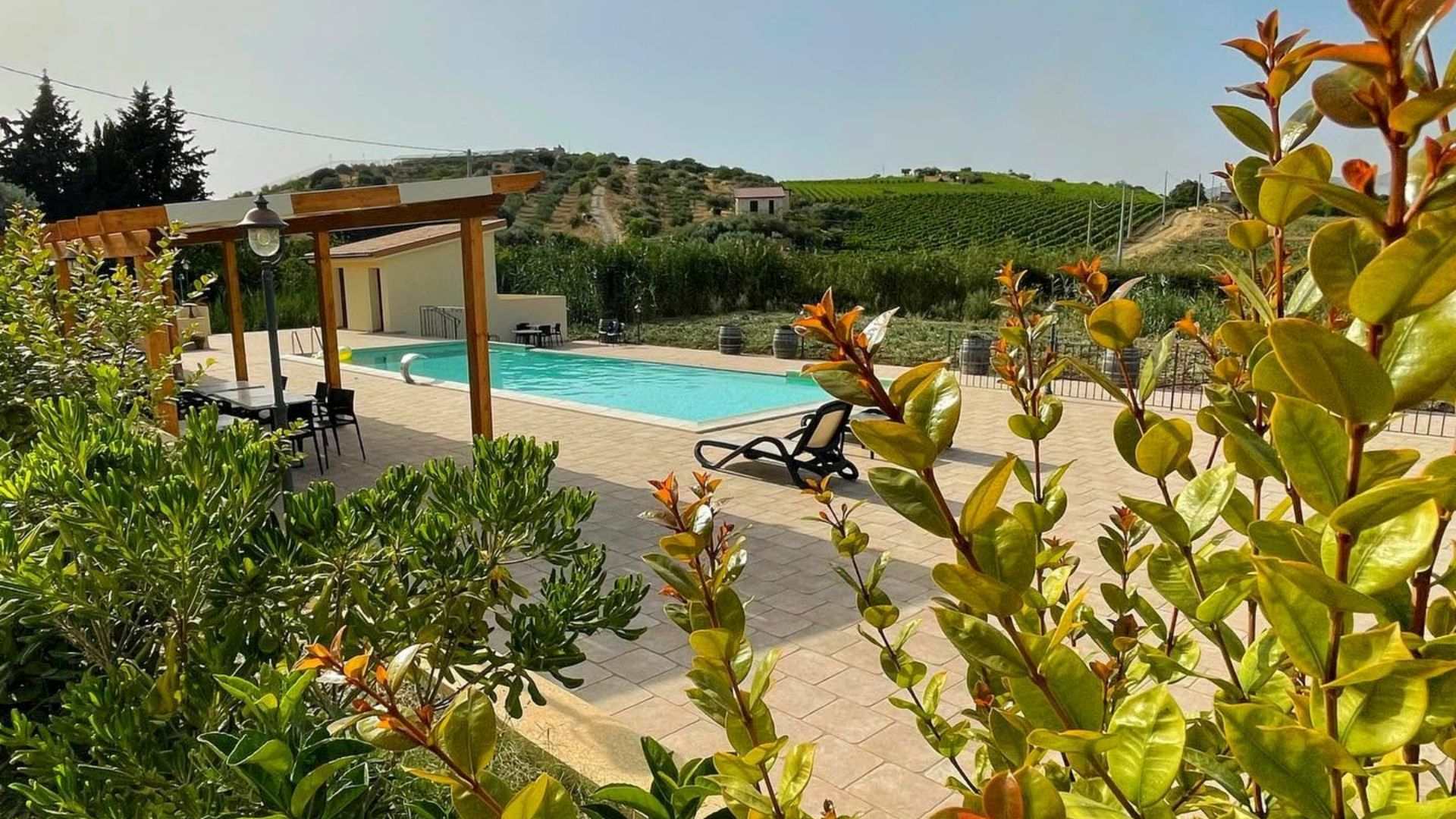
Agritourism stays in the countryside around Agrigento offer a different mood: rural houses and small farms surrounded by olive groves and fields, often with pools and simple local food.
Many of these are within a short drive of both the Valley of the Temples, the museum in the San Nicola district and the coast at San Leone, so you can spend the day among ancient columns and artefacts and the evening in the garden or by the sea, which is especially appealing for longer, slow‑travel stays.
On our Sicily tour, we base ourselves in the Agrigento countryside in a functioning winery that doubles as a welcoming agriturismo, which gives guests the chance to combine temple visits with evenings among vineyards and local wine.
The Valley of the Temples is open every day, with hours that usually start around 8:30 in the morning and run into the early evening, and in summer often extend later into the night to allow for illuminated visits.
Exact opening times do change with the season and special events, so it is best to confirm the current schedule on the official park website or the CoopCulture booking page before you go.
There are two main entrances to the Valley of the Temples – one near the Temple of Juno (Hera) and one closer to the Temple of Concordia – and both have ticket offices where you can buy or validate your entry ticket.
If you already hold an online ticket, you simply show the QR code or printout at the gate and walk straight into the archaeological area.
Tickets for the Valley of the Temples are sold both on site and online, and you can choose between a simple entry ticket to the archaeological park or a combined ticket that includes the Archaeological Museum in Agrigento.
Prices for adults are typically in the teens of euros, with reduced rates for children, students and certain categories, but they are subject to change, so checking the latest information online is essential.
In the warmer months there are evening and night openings when the temples are beautifully lit, and tickets for these time slots are sometimes sold separately or as part of extended visiting hours, depending on the current offer.
In peak season and at weekends, booking at least a day or two in advance is wise if you are set on a particular time, especially for sunset and night visits, as these are the most popular.
The best time to visit the Valley of the Temples in Sicily is spring and early autumn, especially the months of April, May, September and October.
In spring, the countryside around Agrigento is green, wildflowers and almond trees add colour to the slopes, and daytime temperatures are usually mild, around 16–21 °C (61–70 °F), with cool evenings.
Autumn brings warm but more gentle days, with typical highs around 24–28 °C (75–82 °F) and cooler nights, and long golden afternoons that are ideal for slow walks along the Sacred Way without the harsh overhead sun of midsummer.
Summer, from June to August, can be intense. In July and August, average daytime highs in Agrigento sit around 30–32 °C (86–90 °F), and heatwaves can push them higher, while nights often stay above 22–23 °C (72–73 °F).
On the ridge of the Valley there is little shade, so walking the full route in the middle of the day is tiring even for fit visitors. If you can only come in summer, plan your visit for early morning before about 10:00, or later in the day after 17:30, when the heat is less overwhelming and the light is kinder on the temples.
Low season from November to March is quieter and cooler, with more changeable weather. Typical daytime highs range from about 14–18 °C (57–64 °F), with nights dropping into single digits in °C, and rainfall is more frequent, especially in November and the winter months.
On clear winter days, the air can feel crisp, the stone of the temples looks almost honey‑coloured against a deep blue sky, and the paths are much less crowded, which can be rewarding if you like your archaeological sites peaceful.
Whatever the season, time of day changes the mood of the Valley. Sunrise brings calm paths and pale light over the columns; daytime is all about the drama of the landscapes and views; sunset paints the stone in deep ochre; and at night the temples are outlined by soft illumination against the dark, with summer evening openings letting you explore them in cooler air, often with temperatures closer to 22–24 °C (72–75 °F) rather than the midday extremes.
The Valley of the Temples covers a long ridge rather than a compact square, so most of the visit involves walking along the Via Sacra on packed earth and stone paths, with some gentle slopes and occasional uneven ground.
Good walking shoes are important, and visitors who are less steady on their feet may find trekking poles or a walking stick helpful, especially in the hotter months when the sun adds an extra layer of fatigue.
If you follow the classic east‑to‑west route from the Temple of Juno entrance down towards Porta V, the Sacred Way gently descends along the ridge.
Mapped walking routes show roughly 60 metres of elevation change over about 4.8–5 km, so there are no steep climbs, but it is still a fairly long, slightly downhill walk that can feel tiring when combined with heat and photo stops.
For travellers with reduced mobility, it is possible to focus on shorter sections of the site instead of walking the full route, and there are organised tours that use adapted vehicles to minimise the amount of walking between key viewpoints.
The park also offers a limited number of electric wheelchairs free of charge for visitors with certified motor disabilities, which can be reserved in advance and collected near the Temple of Juno ticket office.
Facilities such as toilets, small cafés or kiosks and rest areas are spread around the main entrance zones and near some of the temples, but much of the Sacred Way itself is open and exposed, with little shade.
Carrying plenty of water, wearing a hat and planning occasional breaks in the more sheltered spots – or combining your visit with a stop in the Kolymbethra Garden – makes the day more comfortable, particularly for families and anyone sensitive to heat.
Most visitors should plan at least 3–4 hours for the Valley of the Temples itself, but how long you spend depends on how deeply you want to explore.
For a quick visit, 2–3 hours is enough to walk the main stretch of the Via Sacra at a steady pace and see the headline temples – Juno, Concordia, Heracles, Olympian Zeus and the corner of Castor and Pollux – with time for photos and a few viewpoints.
If you want a more in‑depth experience, allow at least half a day. This gives you time to follow the full east‑to‑west route at a relaxed pace, detour into the Giardino della Kolymbethra, and later visit the Agrigento Regional Archaeological Museum without rushing.
With a half‑day, you can also pause more often for views, play with different angles for photography, and simply sit for a while among the ruins, instead of feeling you have to keep moving.
Travellers who are particularly interested in archaeology, history or photography may want to stretch their time to a full day or split the visit into two parts: one during daylight and one in the evening or at night, when the temples are illuminated and the atmosphere is very different.
On our Sicily tour, we usually allow a full day for the Valley and the museum, with the option of an evening or night visit, which tends to give guests enough time to enjoy the site without feeling rushed.
The ancient site is very spacious and one should schedule at least 3–4 hours for an informative visit.
During summer, daytime temperatures are very high, so early‑morning or evening‑time visits are advised. Night‑time visits are popular as the illumination of the temples creates a different and alluring atmosphere.
Comfortable shoes, sunscreen, hats and plenty of water are a must for daytime visits. Tickets are best bought in advance to avoid queues; combined tickets are available for both the Valley site and the Archaeological Museum.
For detailed visits, audio guides are available as well as organised tours with local guides.
The most pleasant way to explore the Valley of the Temples is to walk it from east to west, starting at the higher Temple of Juno entrance and finishing near Porta V, so you go gently downhill with the temples in front of you rather than climbing back up. This route follows the Via Sacra, the Sacred Way, and lets you see all the main sites in a clear sequence.
Begin at the east entrance by the Temple of Juno (Hera), perched above the coastline, where you can take in wide views across the valley and out towards the sea.
From here, follow the path along the Via Sacra to reach the Temple of Concordia, the star of the site and one of the best‑preserved Greek Doric temples in the world.
Continuing west along the Sacred Way, you pass Villa Aurea and come to the Temple of Heracles, the oldest temple in the park, with its distinctive group of standing columns.
A little further on is the vast area of the Temple of Olympian Zeus, one of the largest Doric temples of antiquity, where you can see the fallen telamon and understand the scale of the building.
From here, the path leads you towards the Sanctuary of the chthonic deities and the elegant corner of the Temple of Castor and Pollux, whose reconstructed columns have become a symbol of Agrigento.
If you have time and want a break in the shade, you can also detour into the Giardino della Kolymbethra, the historic garden tucked between the western temples, before exiting near Porta V and the car park at the lower end of the valley.
Walking this route at a relaxed pace takes around 2–3 hours for the temples themselves, depending on how often you stop for photos and views, and you can add extra time if you include the Kolymbethra Garden and the Archaeological Museum.
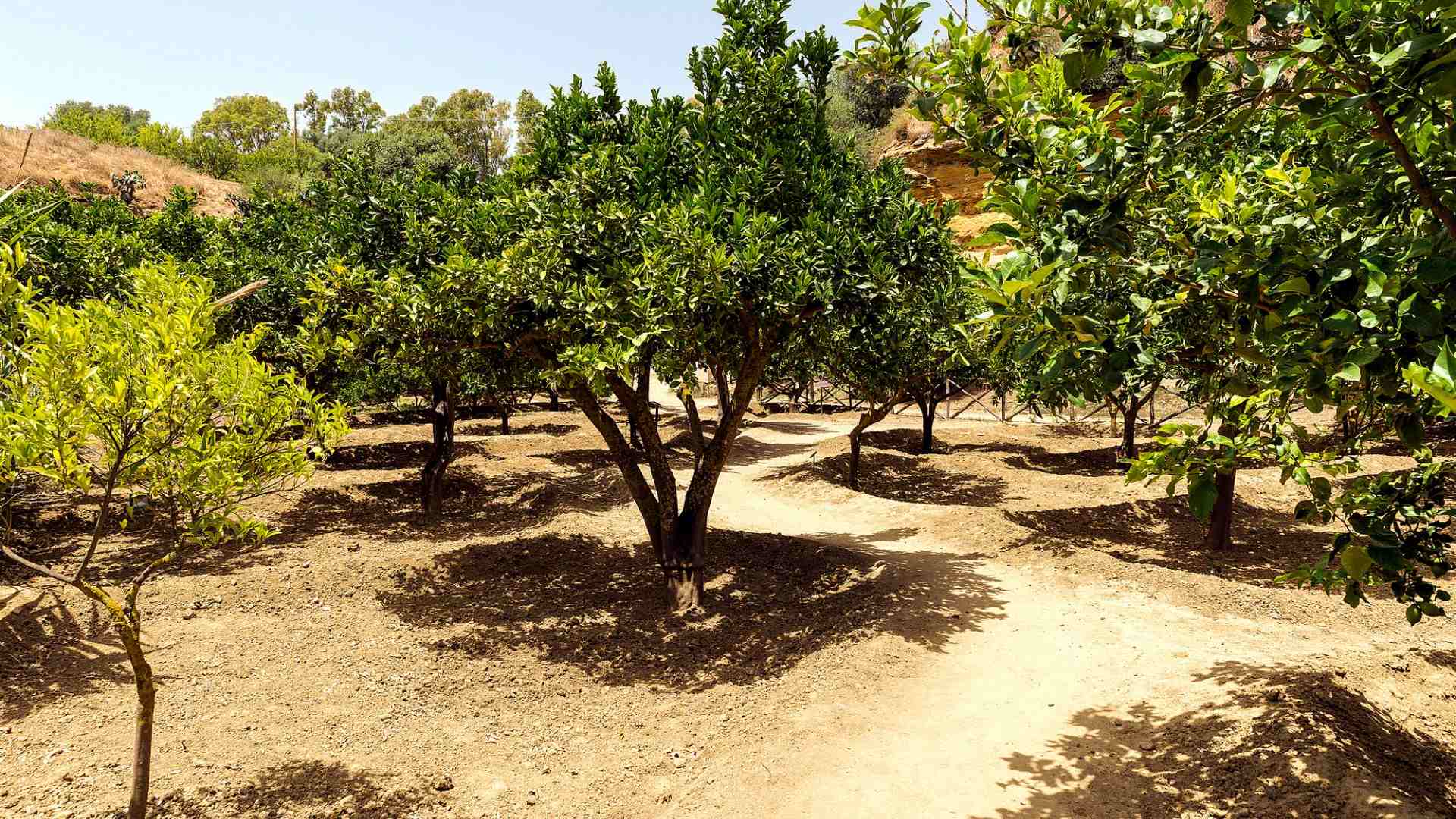
Hidden between the western temples, the Giardino della Kolymbethra is a historic garden that offers a complete change of mood from the dry temple ridge.
Here, citrus trees, olive groves and other Mediterranean plants grow in a sheltered hollow, and shaded paths run along old irrigation channels and terraces, making it a pleasant place to pause when the Sacred Way feels hot and exposed.
The garden is managed by FAI, the Italian Environment Fund, and entry is by ticket, separate from the standard Valley of the Temples ticket, with options to combine visits depending on current offers.
It works well as a mid‑route break: you can step down into the green, spend an hour among the trees, and then climb back to the ridge to continue towards the Sanctuary of the chthonic deities and the Temple of Castor and Pollux.
This string of ancient Greek temples in Sicily stretches along a low hill above Agrigento, and you can explore them one by one on foot.
If you follow the east‑to‑west walking route along the Via Sacra, you’ll meet the temples in roughly this order, each with its own character and story.
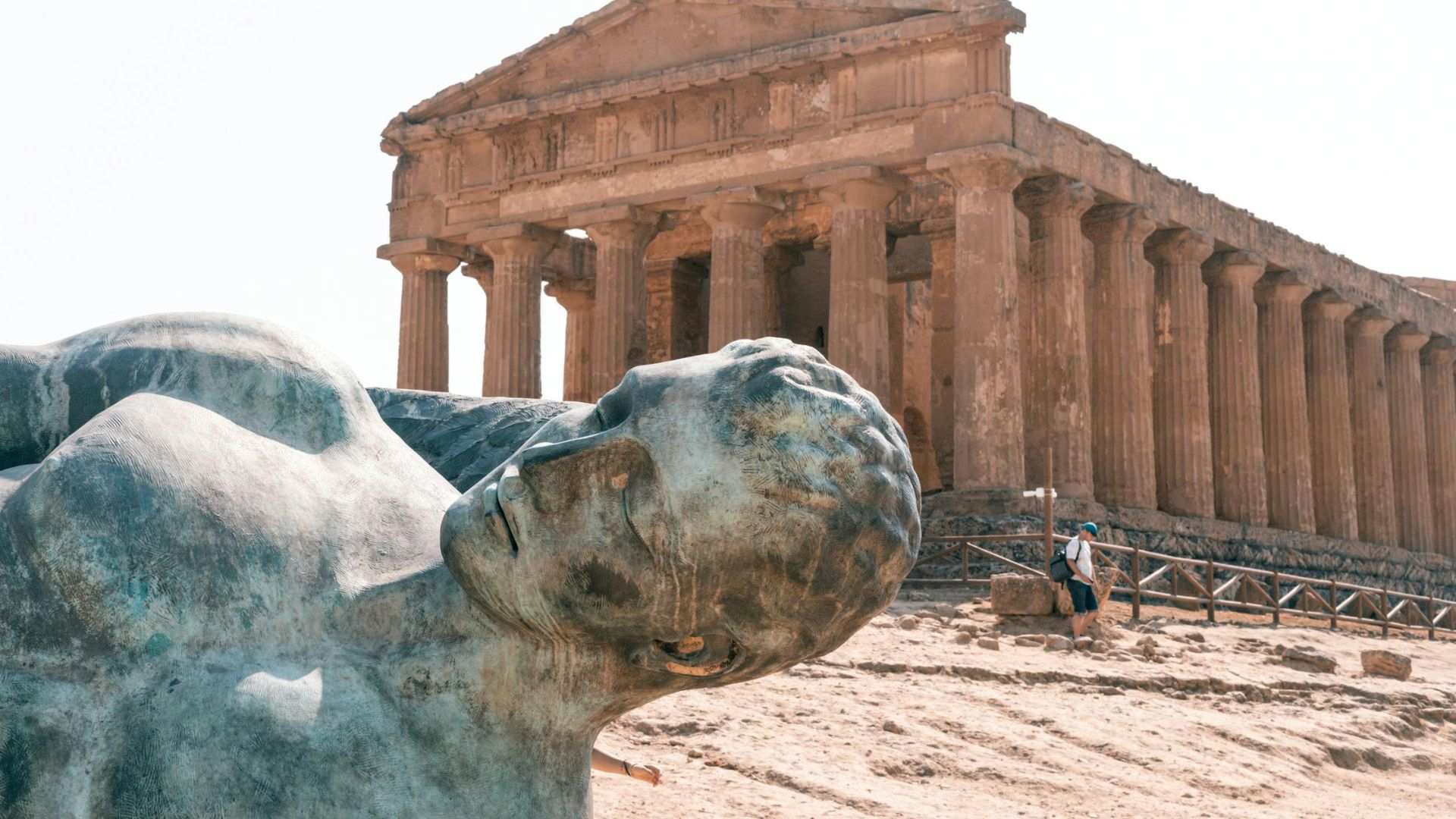
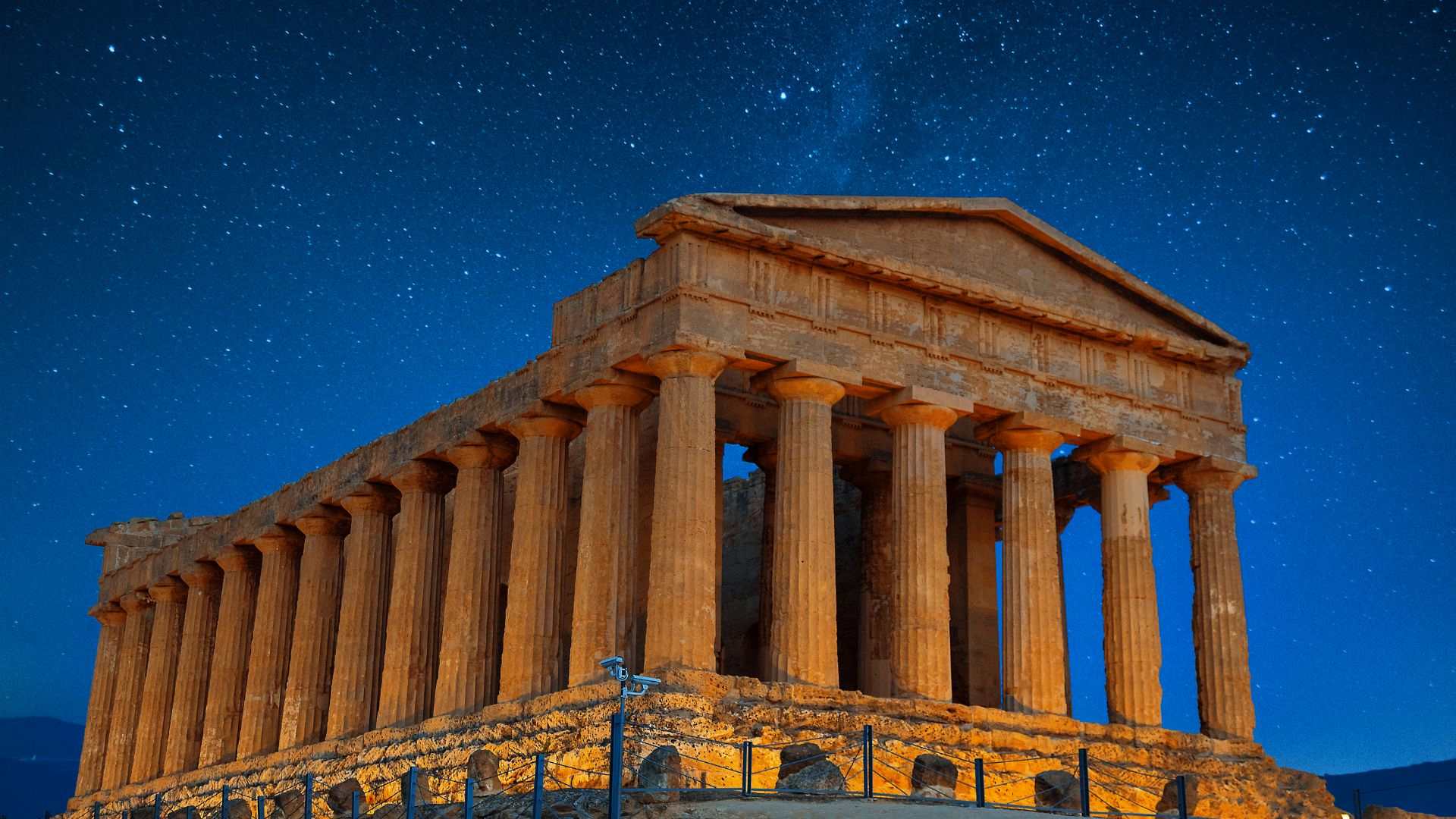
The best‑known structure within the site is the Temple of Concordia. Built in the fifth century BC, it is also one of the best preserved ancient temples worldwide. Its fortunate fate is mainly due to the fact that it was turned into a Christian Basilica in the sixth century AD.
Its 34 columns of almost perfect proportion are a textbook example of classical Greek architecture and make for an impressive sight during the evening hours, when the professional illumination system is turned on.
The temple follows a classical Doric plan with a peristyle of 6 by 13 columns on a stepped base, and its well‑balanced dimensions are often cited as a model of harmonious Greek temple design; its modern name comes from a Latin inscription found nearby that referred to the “harmony” of the inhabitants of Agrigento.
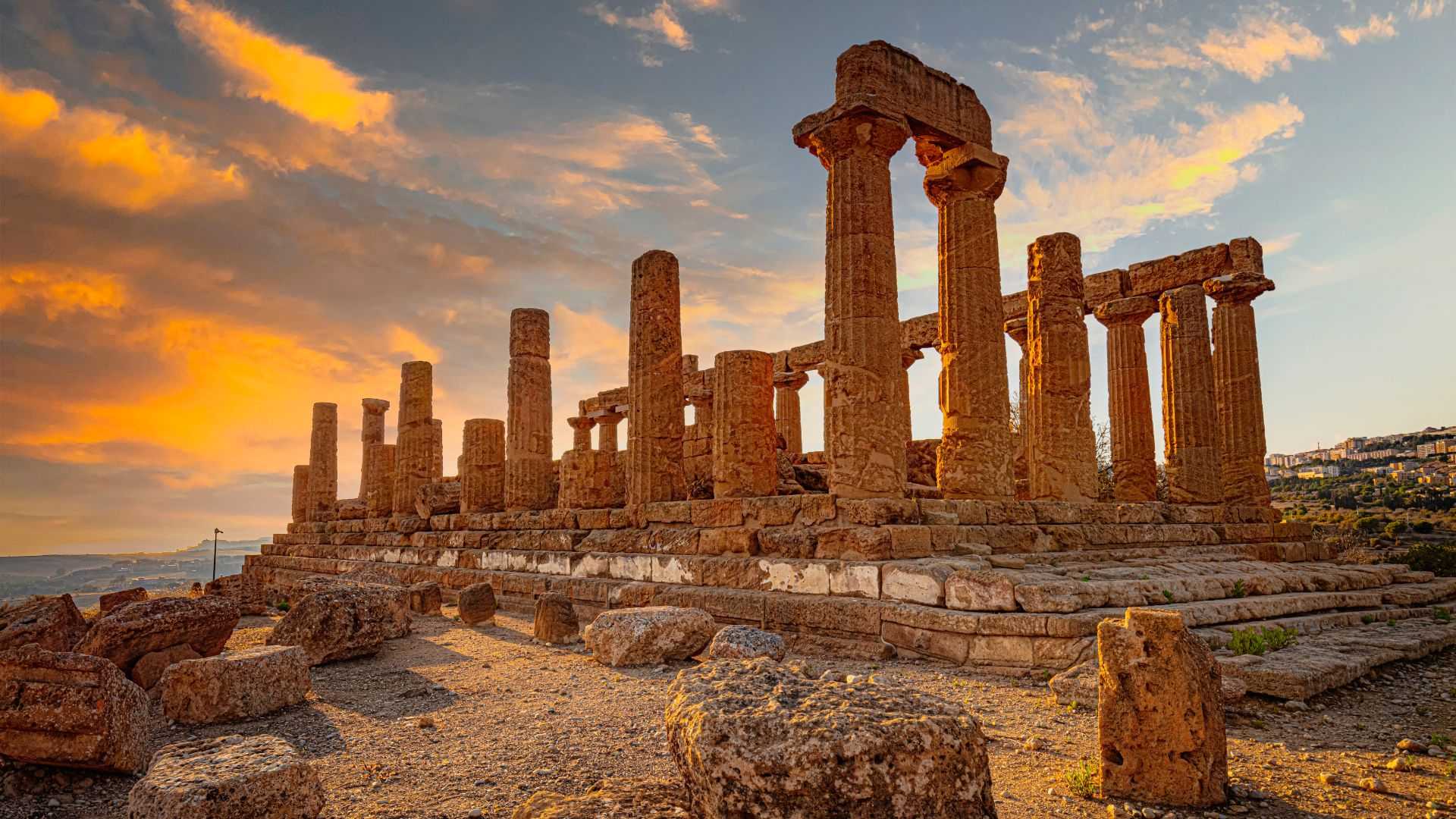
Not far away from Concordia, on the hill overlooking the sea, is Temple D, dedicated to the Greek goddess Hera, protector of women, family and marriage. The temple was somewhat damaged during Carthaginian attacks, but many columns are still present.
The panoramic views of the Sicilian coast opening up from around the temple are worth admiring. Traces of burning on some of the stones recall the ancient destruction, and the temple’s position at the eastern end of the ridge makes it one of the best vantage points for sunrise over the Valley.
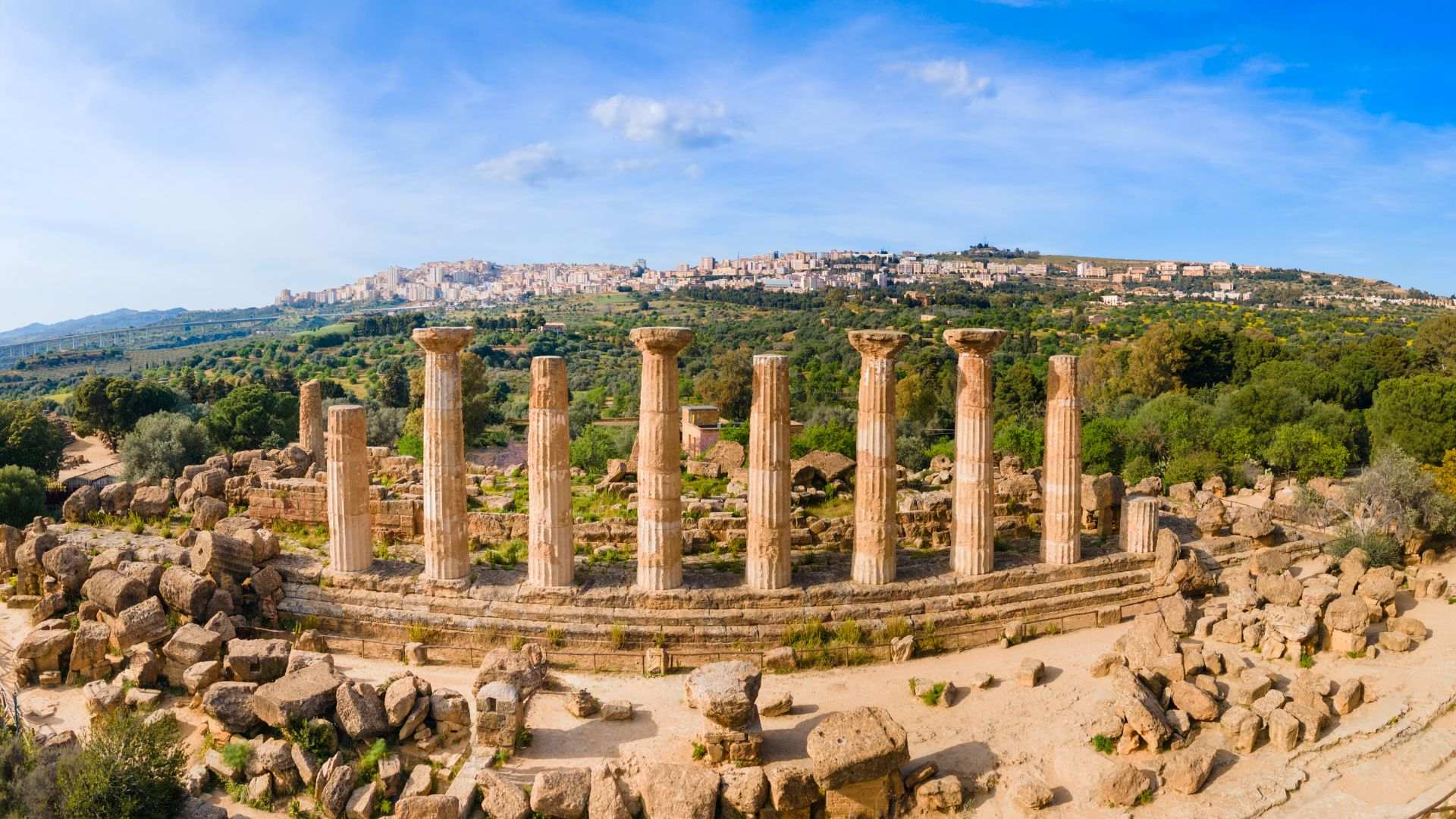
The oldest of the Valley temples, dedicated to Heracles, the mythical hero of the ancient Greeks, is believed to have been one of the most significant gathering spots for the ancient inhabitants of Akragas.
Today, it is reduced to just a few standing columns, but its ruined state adds to the authentic atmosphere of the Valley.
Ancient sources mention that a celebrated bronze statue of Heracles once stood here, and even in its fragmentary form, the temple still gives a sense of how early Doric architecture looked on this ridge.
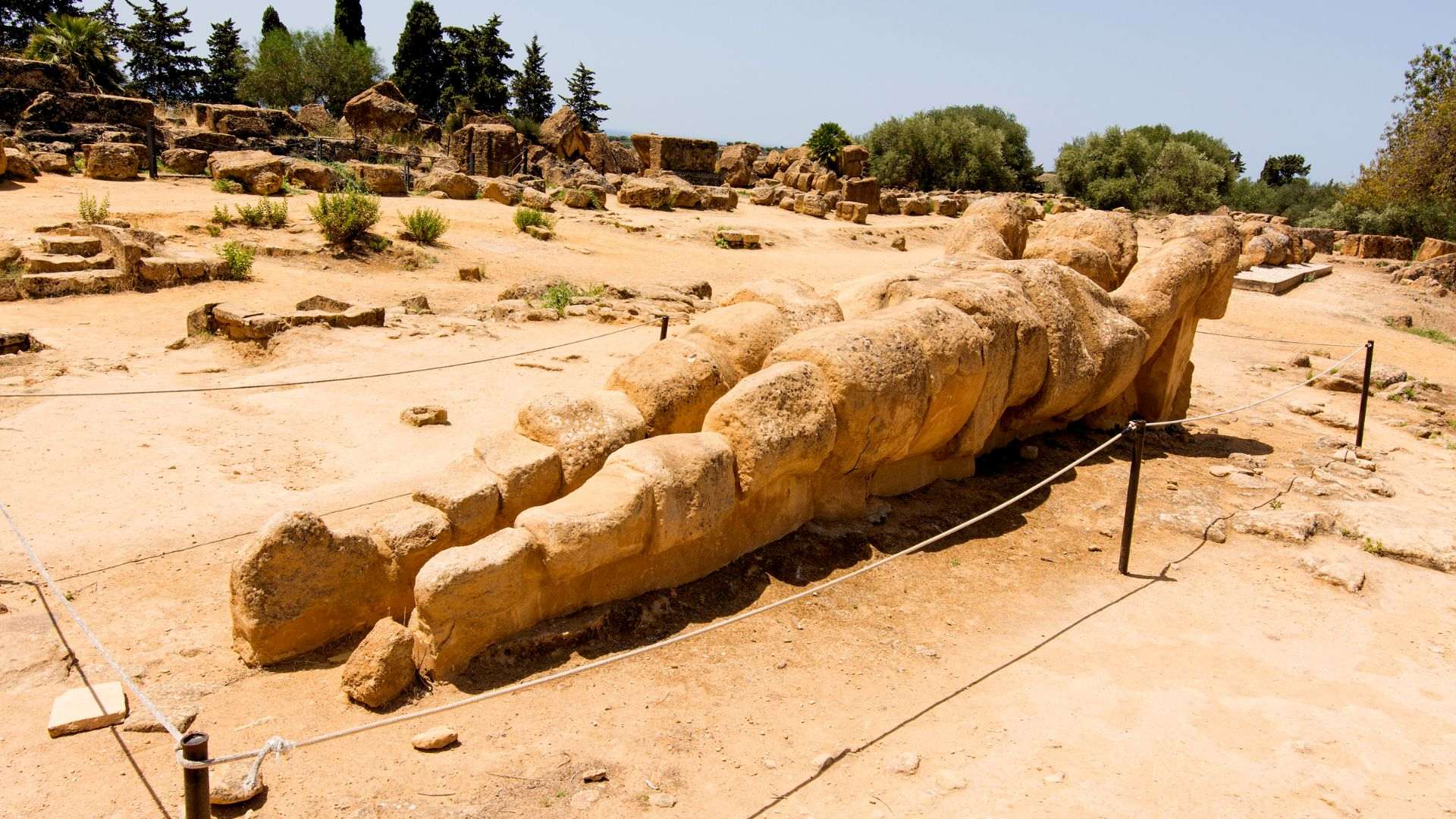
This was one of the largest Doric temples of antiquity, meant to commemorate the victory over the Carthaginians in the fifth century BC. Its construction was never fully completed, and now it stands as a striking reminder of the immense power and ambition of ancient Akragas.
The massive platform, measuring over 110 metres in length and around 56 metres in width, was surrounded by engaged demi‑columns and interspersed with giant telamons, giving a footprint comparable in size to a modern football field.
Particularly significant are its large stone figures known as telamons: colossal 26‑foot‑tall stone male statues once meant to help support the temple, which now lie on their backs, offering insight into the monumentality of the structure and its importance.
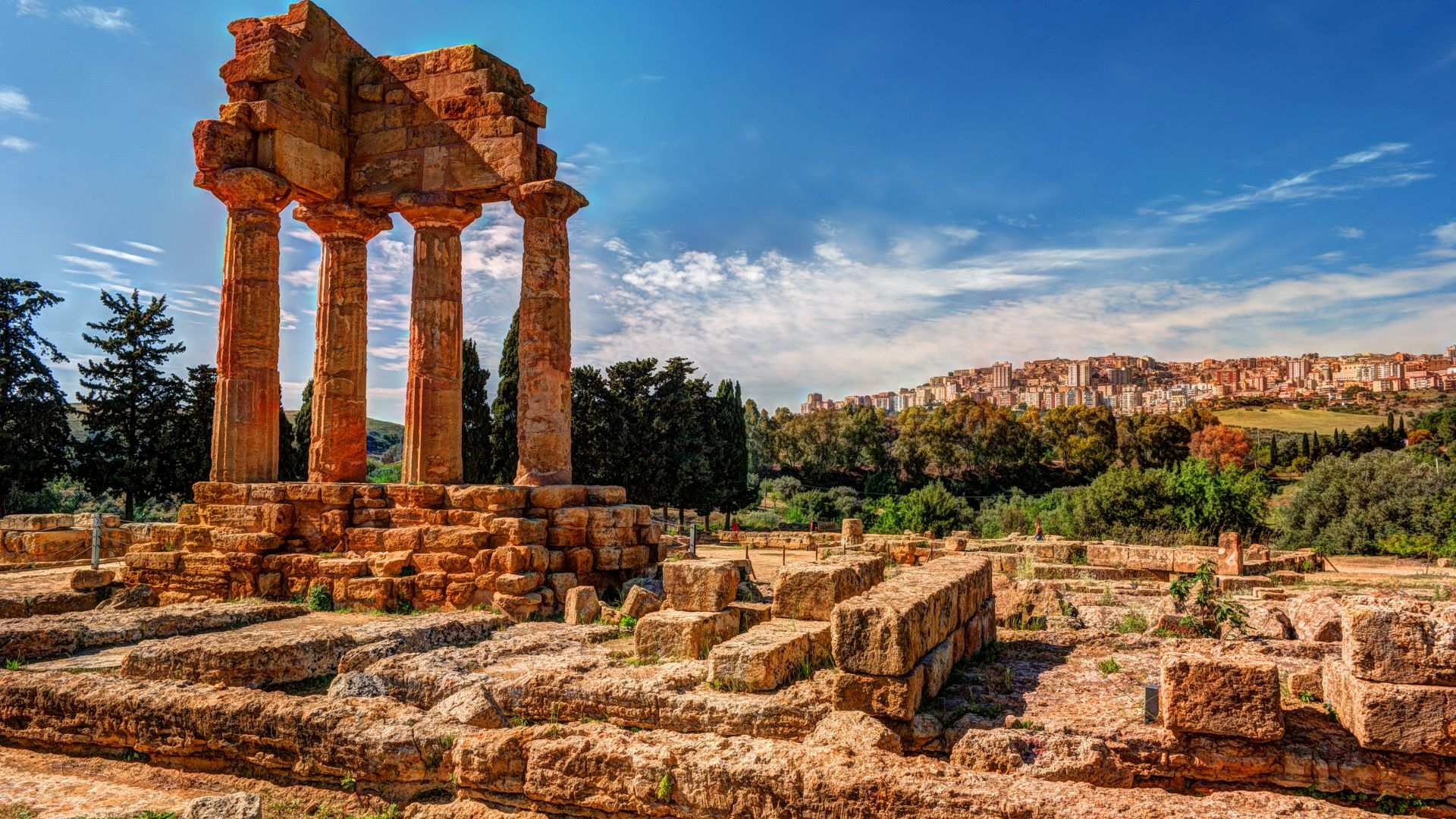
This temple is dedicated to the twins born from the union of Zeus and Leda, the queen consort of Sparta. Its reconstructed corner with columns is today one of the symbols of Agrigento.
Although these remains are just a small portion of the original structure, its image is often depicted on postcards and promotional photographs.
The standing section was re‑erected in the 19th century using original blocks and later additions, so it now serves both as a visual emblem of the Valley and as an example of how ruined temples can be partially rebuilt.
Beyond the main ridge of temples, the Valley also includes other important remains such as the Temple of Aesculapius, dedicated to the god of healing, which stood in the lower plain closer to the ancient city walls.
Nearby you can see the so‑called Tomb of Theron, a Hellenistic‑Roman funerary monument, and the ruins of the Temple of Vulcan, which today survive mainly as foundations and scattered blocks but still help complete the picture of how large and varied the sacred landscape of Akragas once was.
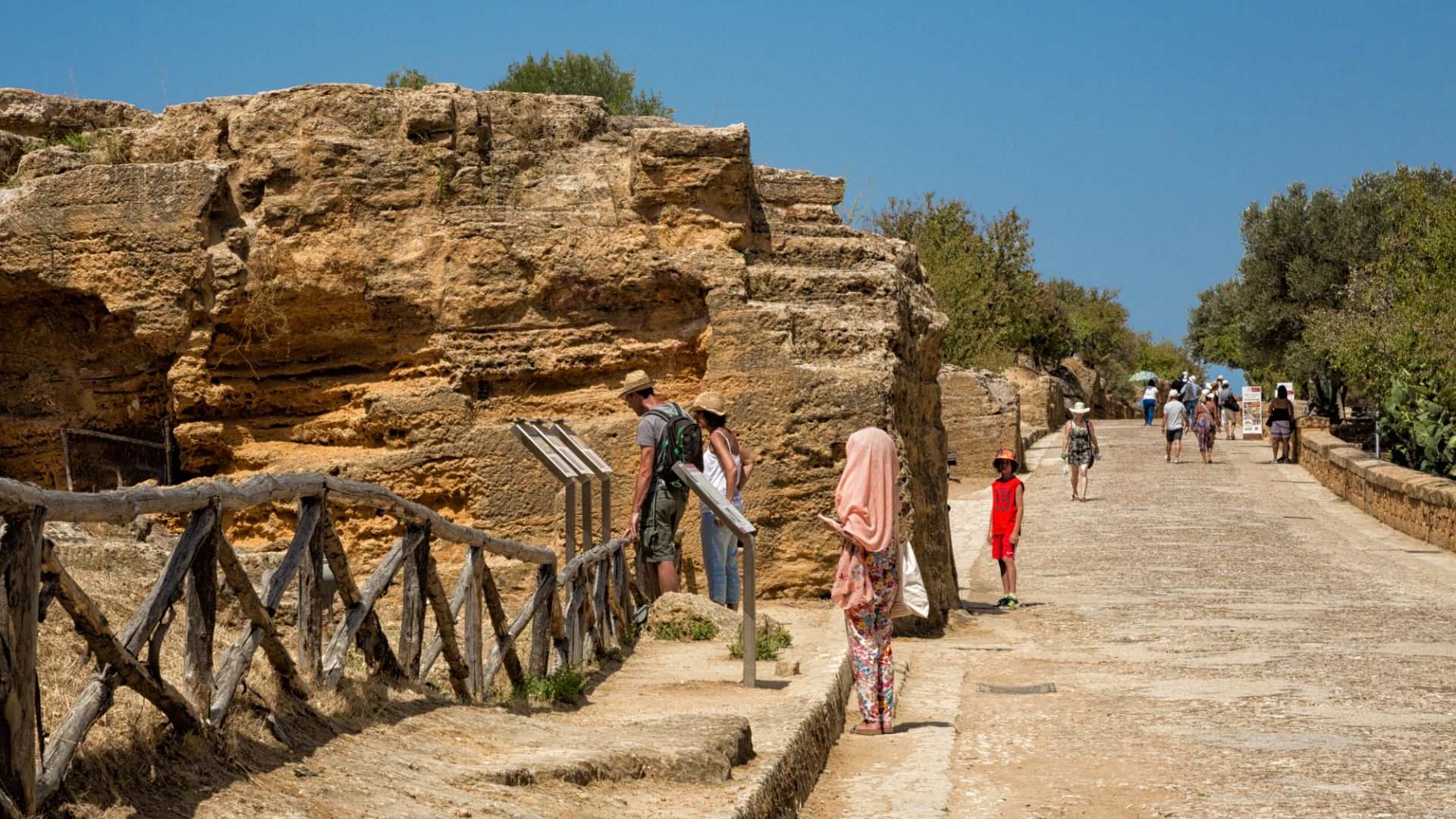
In ancient times, this road served as a place for processions and ceremonies. Today, it is the main walking path connecting the temples and sites of the Valley east–west.
It offers a wonderful experience of walking through a UNESCO site with 2,500 years of history, lined with the best of Mediterranean nature: olive groves, cypress trees and wildflowers. Plan around 45 minutes for the walk, more if you like to stop often for views or take side paths up to walls and terraces overlooking the former city of Akragas.
Although the museum is not part of the Valley itself, but situated in the town of Agrigento, it is an organic extension of the experience and should not be omitted from any visit to the temples.
It is one of the most important historical museums in Sicily dedicated to Greek and Roman archaeology. The museum holds numerous ceramics, statues, inscriptions and artefacts from the Valley excavations and beyond, including remains of the telamons from the Temple of Olympian Zeus.
I found the room dedicated to the techniques of temple building and ancient urbanism particularly interesting.
Although the Valley is one of the most significant ancient locations worldwide and the most prominent presence of Greek ancient culture in Italy, its full grandeur is experienced only once the combination of the architecture and the surrounding natural world sets in.
The ancient columns together with the sea view, the sun‑kissed stones next to olive groves and the soundscape of Mediterranean breeze along the paths of the site make the Valley of the Temples, Agrigento, one of those places that stay with you, especially if you love architecture, photography and ancient culture.
Head back to Agrigento’s many cafes, bars and restaurants for refreshments, drinks and delicious food.
Do not miss local wines, colorful Aperol and some of the gastronomic jewels of Sicilian cuisine:
🍽️ Mignolate / Mbriulate – rustic snail‑shaped bread or pastry from the Agrigento area, filled with savory stuffing such as black olives, minced pork or sausage, onion and pecorino cheese, quite different from the chickpea‑flour panelle you find in Palermo
🍽️ Macco – fava bean soup, simple and comforting.
🍽️ Sarde a beccafico – butterflied baked sardines with breadcrumbs, raisins and pine nuts.
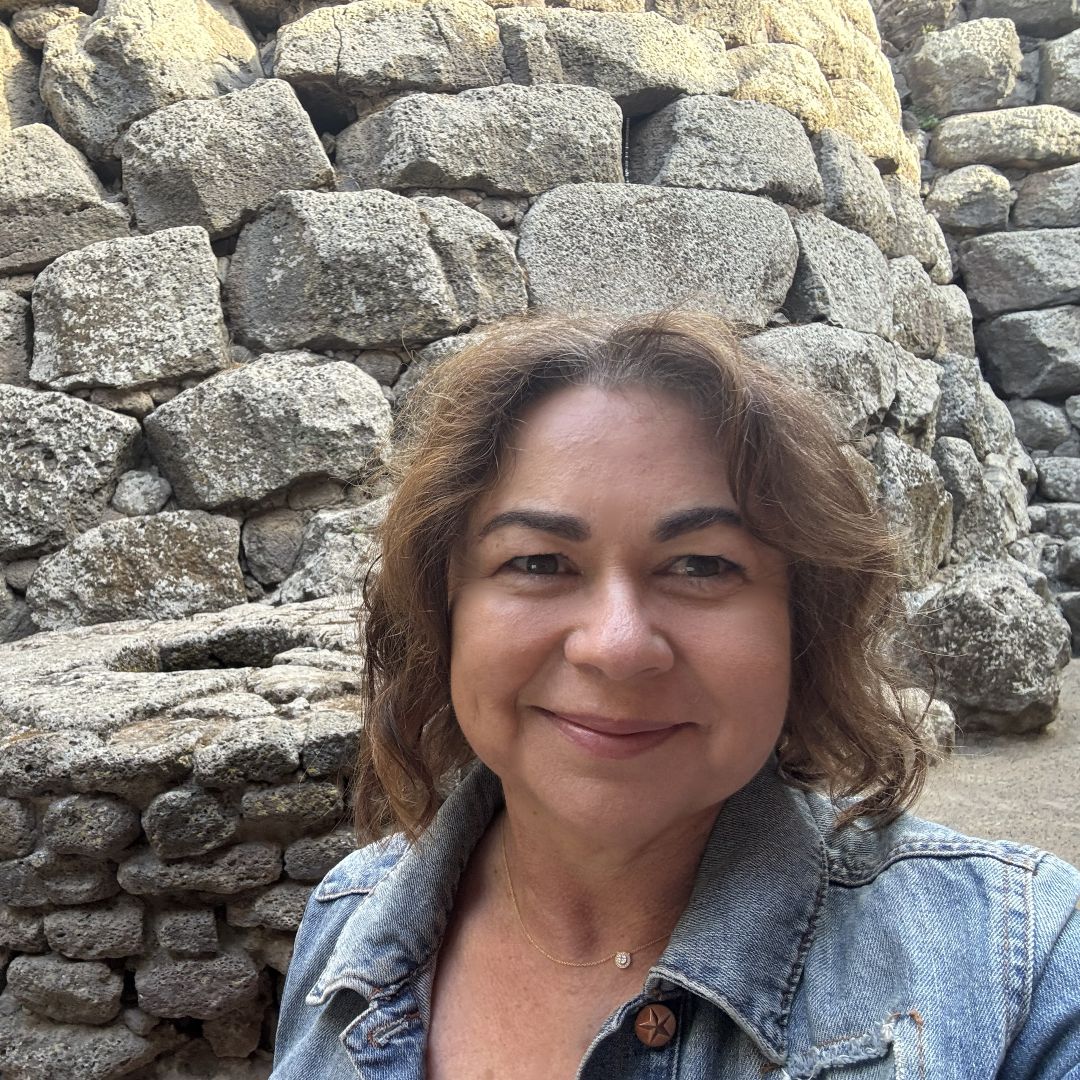
Professor Monique Skidmore is an award-winning anthropologist and travel expert who has spent more than 25 years exploring and documenting cultures around the world. As the founder of Take Me To Europe Tours, she combines her deep academic expertise with a passion for cultural immersion and archaeology. Monique leads annual small-group journeys across Greece, Italy, Malta, and the wider Mediterranean.
On her small‑group Sicily tour, she visits the Valley of the Temples and stays in the Agrigento countryside at a working winery agriturismo, and this guide draws on those visits as well as her own independent travels in and around Agrigento.
For more on her work and travels, visit her About Monique page.


Free 16-page guide
Written by archaeologists. Submerged Roman villas, underground cities and abandoned Greek quarries –, with maps, access details and what to see at each.
One email a week. Unsubscribe anytime.
Free 16-page guide
Written by archaeologists. Submerged Roman villas, underground cities and abandoned Greek quarries –, with maps, access details and what to see at each.
One email a week. Unsubscribe anytime.