
The Ħal Saflieni Hypogeum is Malta’s most exclusive archaeological site – an underground prehistoric burial temple ( a necropolis) that is also a UNESCO World Heritage marvel. With strictly limited daily visitors and tickets that sell out months in advance, here’s your complete guide to securing tickets and exploring this remarkable 6,000-year-old monument. It is for me perhaps the world’s most remarkable built structure and it is the highlight of any trip to Malta!
Discovered by accident during construction work on a cistern for a house in the Valletta suburb of Paola in 1902, the Hypogeum is the world’s only known prehistoric underground temple. This remarkable structure takes us back approximately 6,000 years to the Maltese Temple Period.
It was built in 3600–3300 BC. Its soft limestone chambers, halls, and passages cover 500 m2 (5,400 sq ft). The walls were covered with prehistoric art, there were statues and grave goods, and skeletons – more than 7000 of them found, and that doesn’t include all the ones that fell to dust as the Hypogeum was revealed and explored.
Remarkably, we can be in the 21st century and not know of the people who inhabited Malta and then died or sailed away when its Temple Culture collapsed, leaving Malta abandoned for several thousand years. It’s thought that these temple builders arrived on Malta as its first inhabitants around 5000 BC.
The long period of abandonment after the collapse of the Temple Culture saved the Megalithic temples of Malta. The Hypogeum survived in better condition than the other ancient structures built by the unknown peoples of early Malta (like Ħaġar Qim and Mnajdra)because its entrance was covered over. Once discovered, it only took a few years before it was open to visitors, but having spent almost 6000 years without light and humidity, its painted walls quickly degenerated.
This is why visitor numbers are so restricted and your visit is short and highly curated. But none of that matters when you get down there!
Securing tickets to visit the Hypogeum requires careful advance planning. Heritage Malta strictly controls access to protect this ancient site, allowing only 80 visitors per day in small groups of 10. Tours run for approximately 45 minutes, with adult tickets priced at €35 and children’s tickets (ages 6-11) at €20. Due to the site’s delicate nature and confined spaces, children under 6 are not allowed entry
The booking process opens three months in advance through Heritage Malta’s official website, and tours operate daily except for major holidays. Walk-ins are not possible at the Hypogeum — all visits must be booked in advance through Heritage Malta.
The first tour begins at 9:00, with the final group entering at 16:00. The site closes on December 24, 25, 31, January 1, and Good Friday.
There is at least a six-week wait for ticket availability. But if you’ve just arrived on Malta and learned about the Hypogeum, don’t lose hope, as there are three possible ways to get a ticket during your stay.
Heritage Malta occasionally releases cancellations through their website, and the winter months typically see lower visitor numbers. This means that you can go at opening time to one of three locations to get tickets for the next day.
The price of last-minute tickets is €50. (Prices correct as of 2026 – always verify on Heritage Malta’s website)
The easiest place to get tickets is at the St. Elmo Fort. Their main reception will sell you tickets. But try to get there as soon as they open. Alternatively, Heritage Malta also sells last-minute tickets at the Gozo Archaeological Museum and, after 12 pm (you got it – get there at 12 pm!) at the Hypogeum itself.
It’s truly worth the effort, it’s the highlight of our Malta tour!
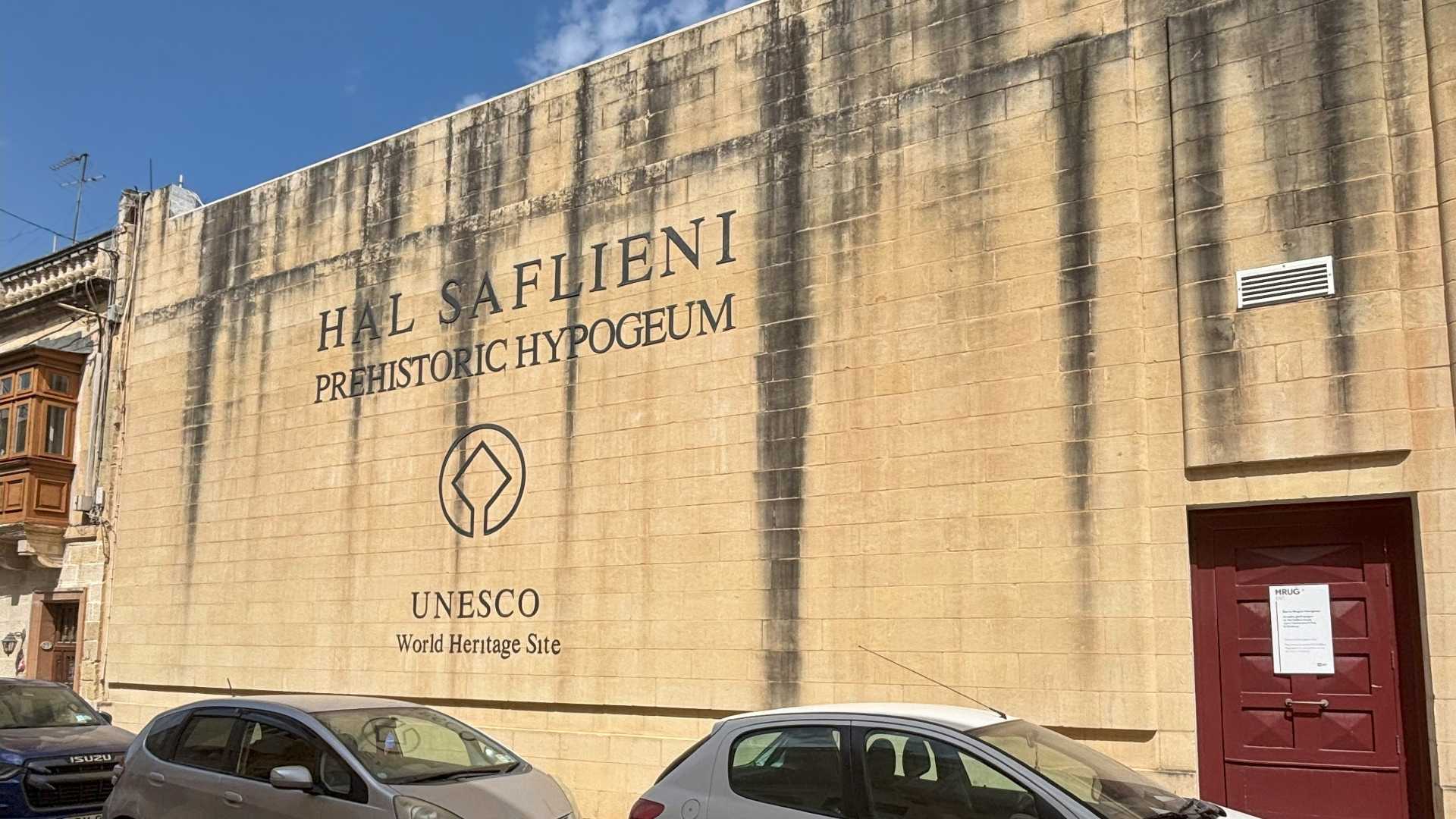
The Ħal Saflieni Hypogeum is located in Paola (Raħal Ġdid), a suburb approximately 3km south of Valletta. The easiest way to get there from Valletta, Sliema, or St Julian’s is by bus — Paola is well-served by Malta’s public transport network. If you’re driving, parking is available in the surrounding side streets during winter and shoulder seasons, but is almost impossible to find in summer. Remember that you can only park in white parking spaces.
Arrive at least 15 minutes before your scheduled tour time and travel light — you will not be able to bring anything into the Hypogeum itself.
The Hypogeum tour lasts approximately 45 minutes underground, plus a 15-minute multimedia introduction in the reception area — around one hour in total. The site maintains a constant temperature of 22°C (71.6°F), so light layers work best for comfort.
Before descending, all belongings — including your phone and camera — must be stored in lockers provided at reception. Staff will check you before you enter. No photography of any kind is permitted. You’ll be given an audio guide on a lanyard in your language of choice, and will move as a group through several stops where a guide explains what you’re seeing. You cannot linger or hang back from the group.
The first part of the tour involves putting on paper overshoes, so wear sneakers or comfortable walking shoes. Note that there are 65 steps to descend with handrails throughout.
A lift is available to access the audiovisual area; wheelchair access is not possible beyond that point. The underground site itself requires descending steps and ramps, and some passageways are as narrow as 72cm. Visitors with mobility concerns are advised to contact Heritage Malta before booking.
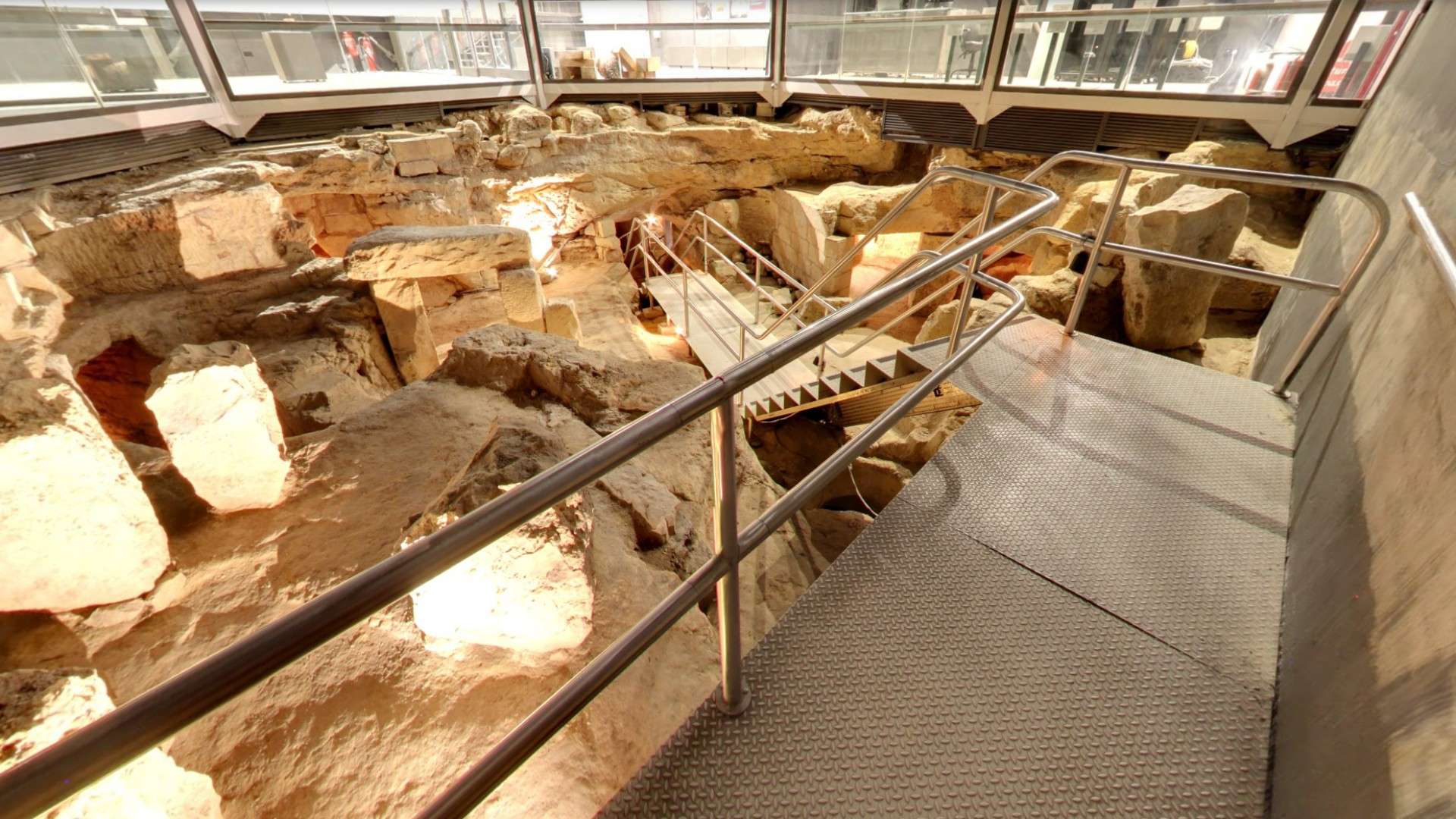
Your journey begins 5.3 meters underground in the Upper Level, where you’ll encounter the main entrance chamber and the initial burial chambers. The architecture here mirrors the style of Malta’s above-ground temples.
These upper levels were dug first, but the whole complex took centuries of human labor. You are only on this level for a few minutes.

Descending to the Middle Level, 7.3 meters below ground, you’ll discover the Hypogeum’s most significant features.
Here stands the famous Oracle Room, renowned for its intentional acoustic properties that demonstrate the sophisticated engineering knowledge of Malta’s Temple Period builders.
This level also houses the main ceremonial spaces and the site’s most extensive prehistoric artwork.
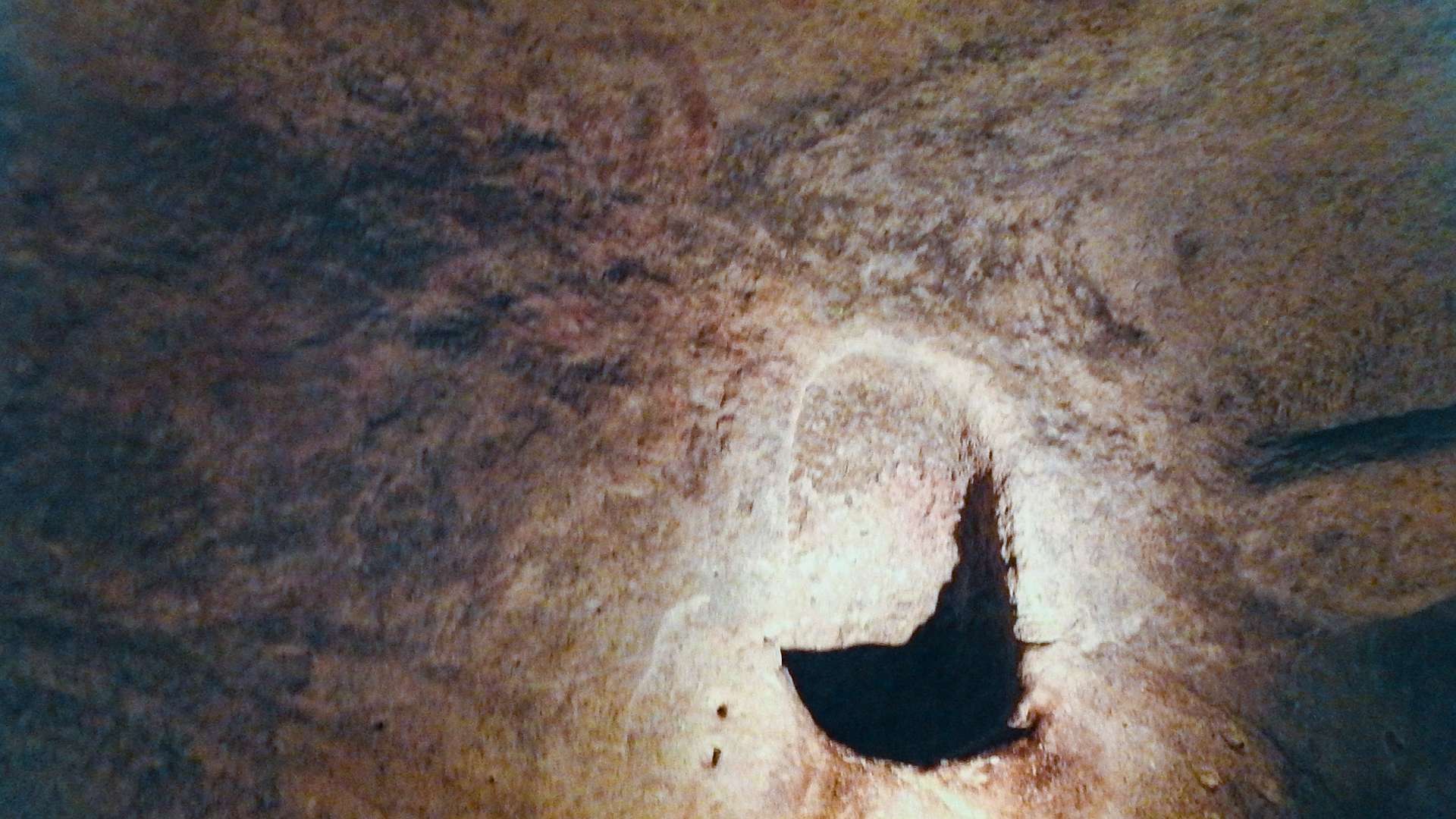
The Oracle Room represents one of humanity’s earliest known experiments with acoustics, and remarkably, it creates a frequency that causes the human body to vibrate.
The chamber’s sophisticated design shows how Malta’s Temple Period builders understood and manipulated sound, creating spaces that likely played crucial roles in prehistoric ceremonies.
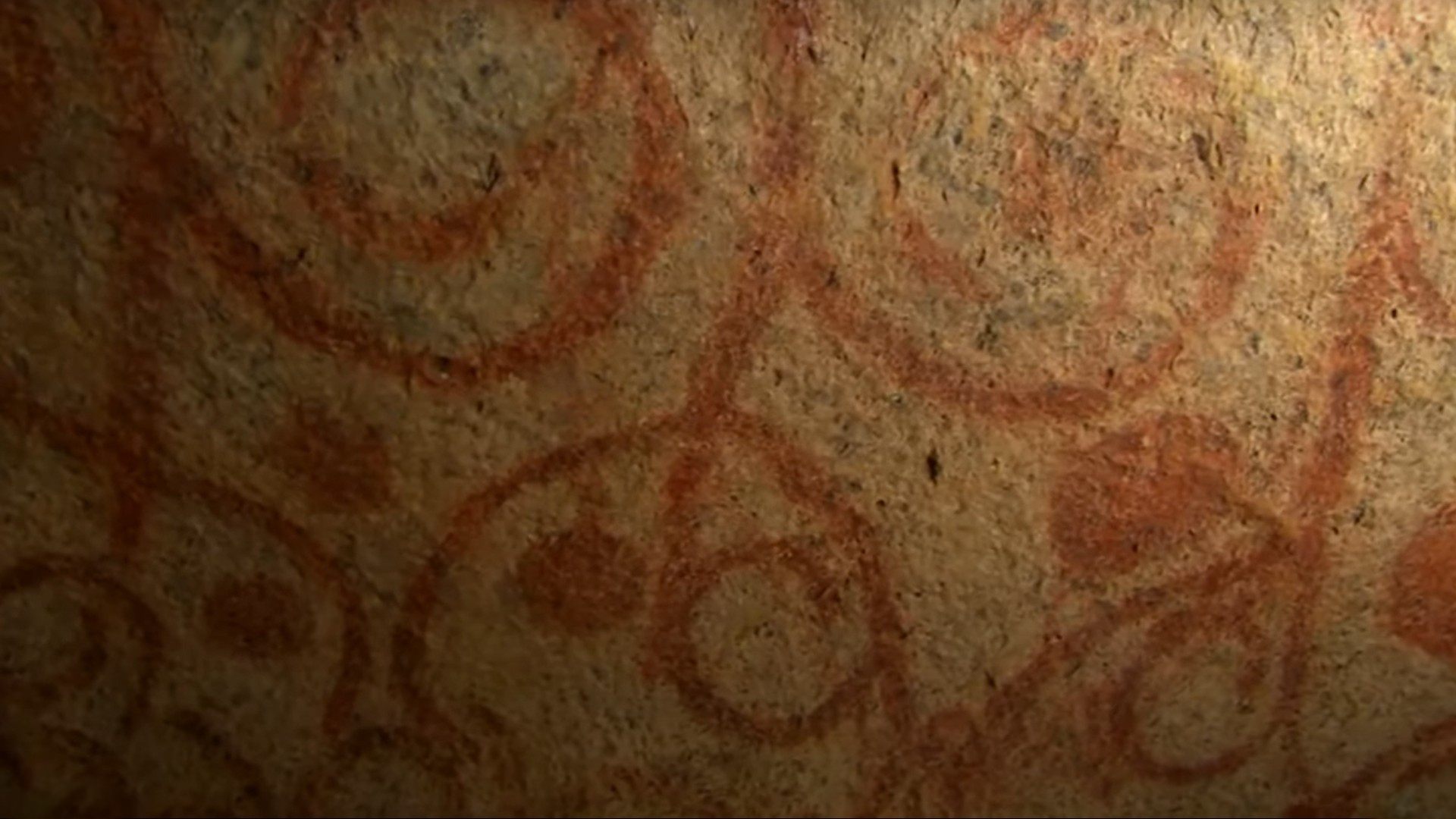
The chanting enhanced by the acoustics in the “resonance niche” would have been quite otherworldly when they were combined with what would have appeared to be red swirls (and dots and honeycomb patterns) rotating and flickering in the light of the flaming torches and drumming.
There are no niches for torches or fires, and archaeologists have not found any charcoal, so it is thought that lit torches were brought into the Hypogeum and then removed once work or ceremonies were complete.

The climax of the tour is seeing the room called the ‘Holy of Holies.’ It is, simply, breathtaking.
This room has an ingenious ceiling that shows us how the above-ground megalithic temples of Malta may have looked.
Only half the tour can fit on the small platform at one time, and your time here is limited to a few minutes. It is hard to stop staring.
You are more than 7 meters below the ground, and it’s thought that on the winter solstice, light streamed into this room from the original above-ground entrance to the Hypogeum.
The Lower Level, reaching 10.7 meters underground, reveals ancient storage areas and evidence of sophisticated water management systems and it’s here that the dead were buried.
This deepest accessible section is the last place on the tour and is adjacent to the Holy of Holies.
It is possible to peer down into this level but the steps end two meters above the ground. It’s believed this is because bodies were placed on top of each other in the lower level.
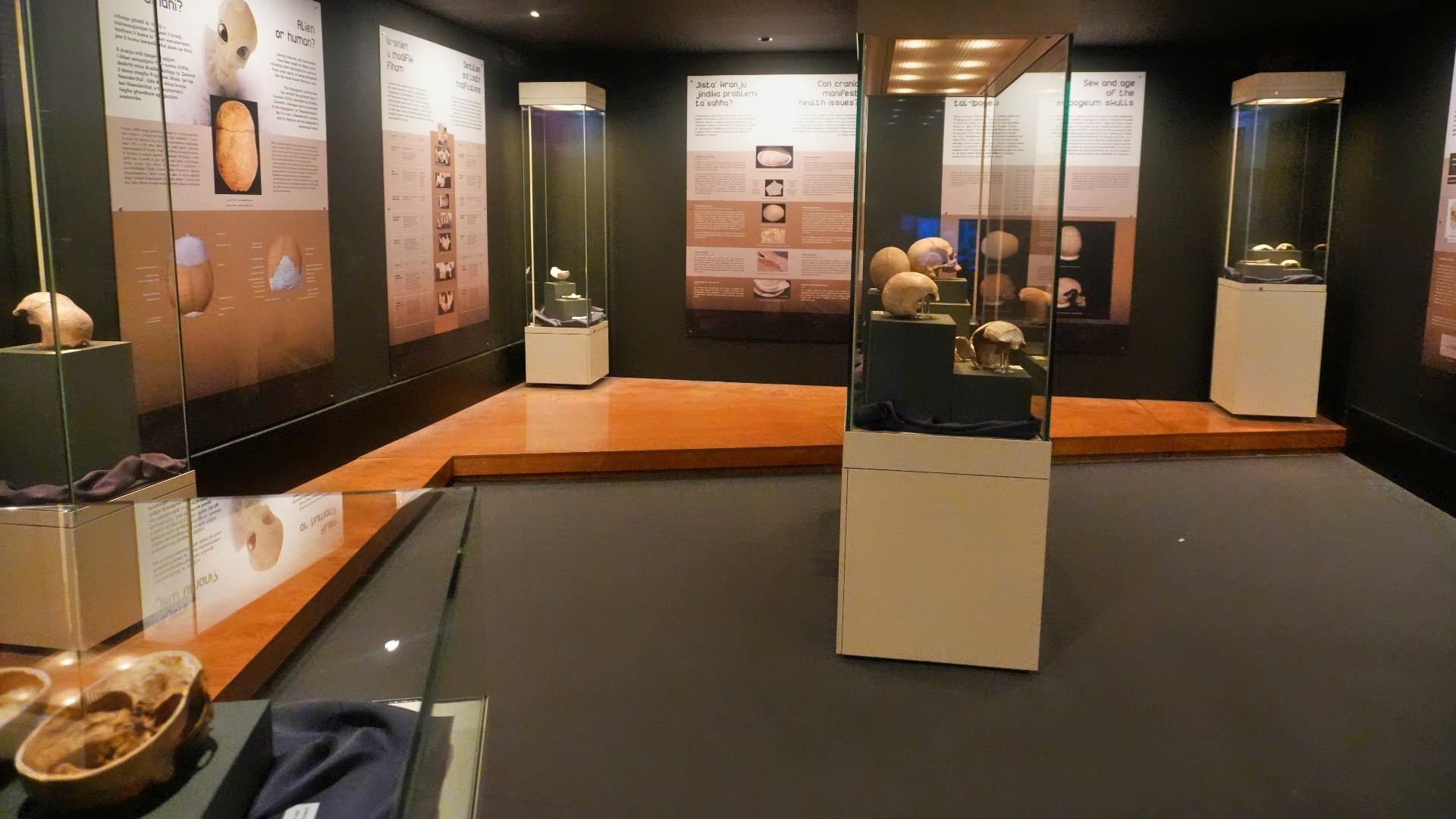
The National Archaeology Museum in Valletta contains some wonderful artefacts found in the Hypogeum as is a must-visit site on any Malta tour.
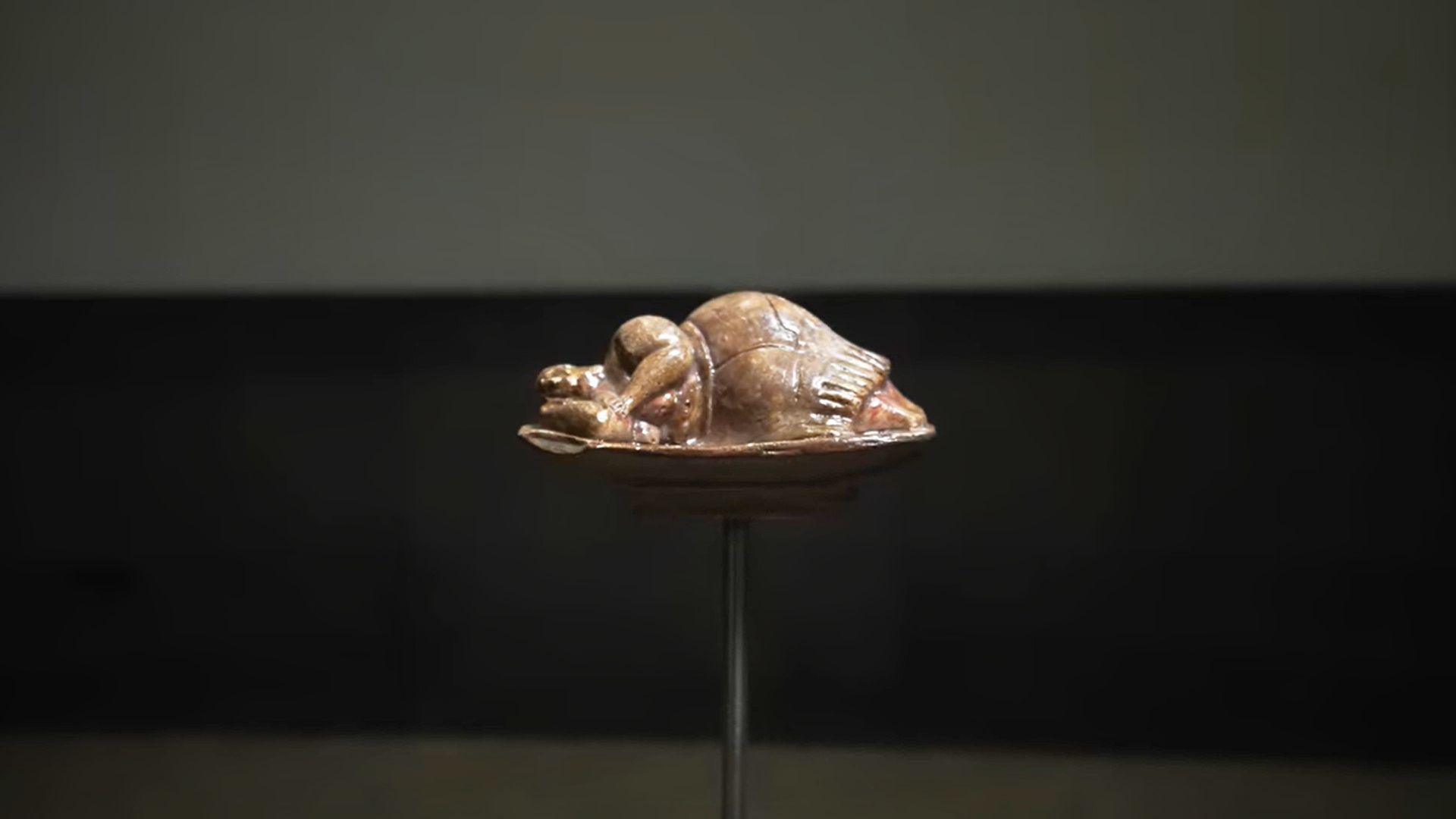
The most famous statue is the “Sleeping Lady” figurine. The museum also houses pottery vessels, decorative stone carvings, personal ornaments, and ritual objects found within the Hypogeum.
One of the most fascinating but macabre sections of the museum contains some of the skulls recovered from the Hypogeum. But not just any old skulls. Some of these skulls are very unusual.
At the end of the temple building period, the temple builders switched from burying their dead to creating them but the bones in the museum show us a worsening diet over time.
Some skulls are seriously elongated like the ancient skulls found in Egypt belonging to Egyptian priests. This gives us a clue about where these ancient temple builders may have come from and perhaps even where they moved back to once their civilization on Malta collapsed.

The Hypogeum is the superstar of Malta’s remarkable prehistoric heritage but the nearby Tarxien Temples are stunning. It’s a short walk to the Tarxian site and not to be missed.
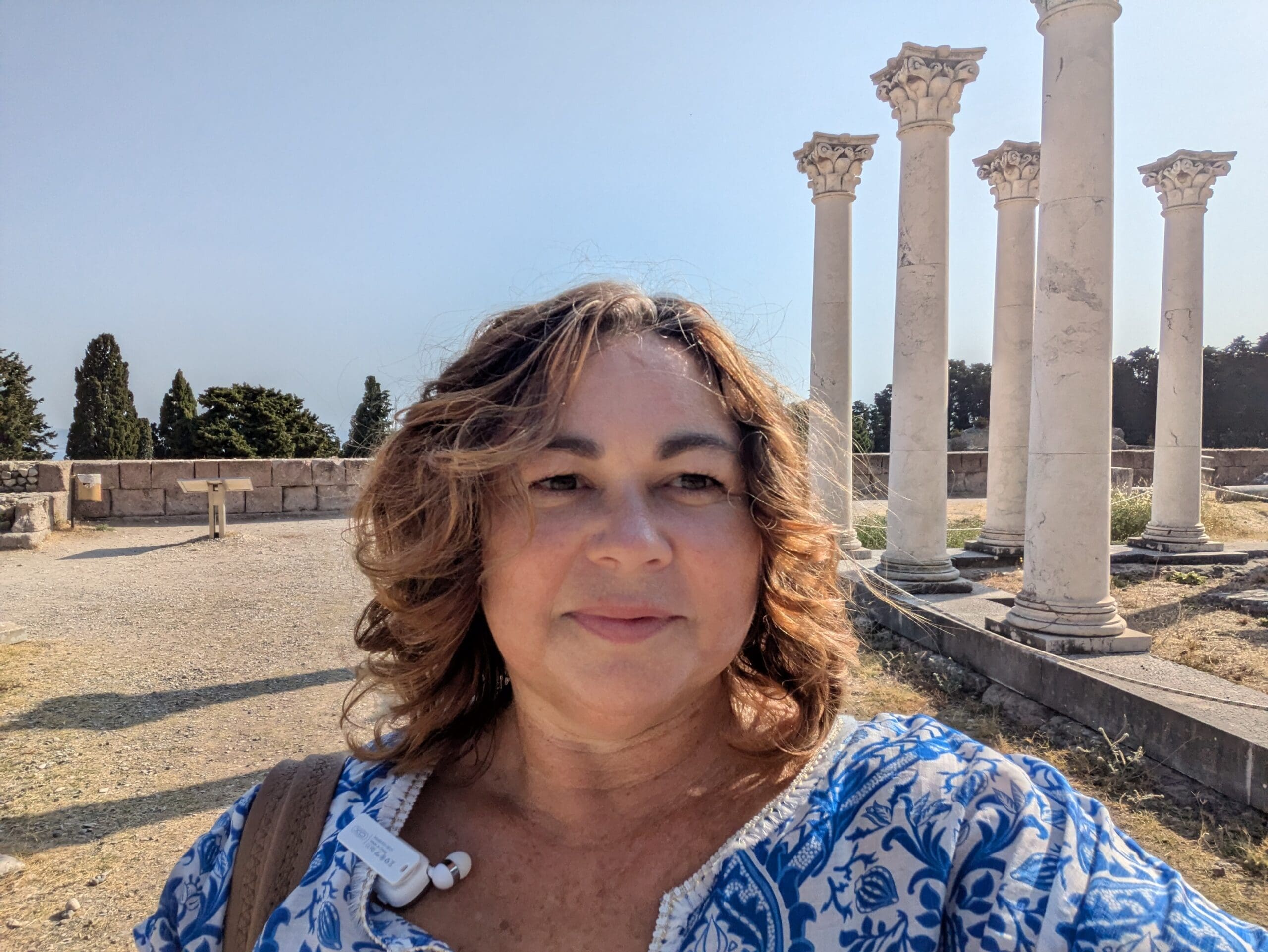
Professor Monique Skidmore, Ph.D. Anthropologist & Archaeological Tour Expert
Professor Monique Skidmore is the founder and CEO of Take Me To Europe Tours and an Honorary Professor at Deakin University’s Alfred Deakin Institute. Dr. Skidmore earned her Ph.D. in anthropology from McGill University.
With over three decades of academic expertise in anthropology and archaeological interpretation, she has authored 8 scholarly books and serves as a trusted expert for BBC, CNN, and major international media.
As founder of a premium archaeological tour company focused on Mediterranean prehistory, Professor Skidmore collaborates directly with archaeologists from regional universities. Her Malta tours provide expert-guided access to UNESCO World Heritage sites, combining scholarly insight with practical travel expertise.




Dear Professor Monique Skidmore,
Thank you very much for such a beautiful and useful description of the mystic and fascinating the Ħal Saflieni Hypogeum.
I much look forward to our visit planned for mid April 2026 (Hopefully I will be able to book the ticket in advance).
Thank you once again for your interesting article and for sharing your knowledge.
I have a group of 6 people in Malta on Friday, April 16. Would it be possible for us to get a tour of the fascinating exhibit. Friends of ours recently toured and highly recommended it. Appreciate your consideration. Thanks
Hi Steve, bookings can be made here: https://heritagemalta.mt/store/. But there are no tickets available for April. Please see the parts of my article that will help you get last minute tickets on that day.
regards
Monique